A Travelers Guide to Gaziantep, Turkey
Welcome to Gaziantep, a city where history is served on every plate and ancient stories are etched into every stone. Located in the Southeastern Anatolia region of Turkey, Gaziantep is one of the oldest continuously inhabited cities in the world, with a history stretching back thousands of years . But it's not just the past that makes this city vibrant; Gaziantep is a bustling, modern metropolis of about 2 million people, renowned as Turkey's culinary capital . Its incredible food culture, a legacy cultivated since the Iron Age, is so significant that it was designated a UNESCO Creative City of Gastronomy in December 2015, the first city in Turkey to receive this honor .
Over a year after the devastating February 2023 earthquake, the city is demonstrating remarkable resilience, with its vital tourism sector showing strong signs of recovery . While some historical sites were impacted, extensive restoration efforts are nearing completion, and the city is once again welcoming visitors with its renowned hospitality and vibrant culture .
This guide will walk you through everything you need to know to plan an unforgettable trip, from its world-famous cuisine and historical treasures to practical tips for your journey.
Getting to Gaziantep
By Air
Gaziantep is served by Gaziantep Oğuzeli International Airport (GZT), located about 15-20 km from the city center. Turkish Airlines and other carriers offer regular flights from Istanbul and Ankara. Upon arrival, you can reach the city center via the Havaş shuttle service, which coordinates with incoming flights, or by taxi.
By Bus
Turkey has an extensive and comfortable intercity bus network, making it an affordable and practical way to travel. The main bus station, Gaziantep Otogarı, is located about 6 km northeast of the city center. Numerous companies, including FlixBus and Metro Turizm, operate routes connecting Gaziantep to major cities like Istanbul (a 17-19 hour journey), Ankara, and nearby Şanlıurfa. From the bus station, you can take a local public bus or a taxi to your accommodation.
By Train
As of late 2022, long-distance passenger train services have been limited due to major track upgrades for the new Gaziray commuter rail system. While the Gaziray system now operates within the city, long-distance connections are gradually returning. A regional service to Nizip is available.
Best Time to Visit
The most pleasant times to visit Gaziantep are during the spring (April to June) and autumn (September to October). During these months, the weather is mild and sunny, perfect for exploring the city on foot.
- Spring & Autumn: Temperatures are comfortable, making it ideal for sightseeing.
- Summer (July-August): Can be extremely hot, with temperatures often soaring above 35°C (95°F).
- Winter (December-February): Generally mild but can be rainy, with occasional snow. Daytime temperatures typically range from 8°C to 11°C (46°F to 52°F).
Where to Stay
Gaziantep offers a wide range of accommodations to suit every budget, from restored Ottoman mansions to modern hotels. Hotels, restaurants, and other tourism-related businesses are open and operational .
Historic & Boutique Stays: The 'Konaks' of Bey Mahallesi
For an authentic experience, consider staying in a konak, a traditional stone mansion converted into a hotel. Many are located in the historic Bey Mahallesi district, one of the city's oldest settlements and a former melting pot of Armenian, Turkish, Jewish, and Syrian communities . This rich heritage is reflected in the architecture of the 'konaks', which were once the private enclaves of wealthy landowners .
These mansions are defined by their use of a local limestone called 'havara' or 'keymık', which provides natural insulation, keeping interiors cool in the summer and warm in the winter . A key feature is the central courtyard, the heart of the home, concealed behind high walls (up to 4-5 meters) that ensure privacy and create a serene oasis . While exteriors are often simple, the interiors can feature intricate details like decorative ceilings, birdhouses, and even secret passages .
- Anadolu Evleri: Comprising four restored Anatolian houses, each over 150 years old, this hotel offers a tranquil escape in the heart of the old city . Its 14 unique rooms are arranged around peaceful courtyards where guests can enjoy a traditional Turkish breakfast . Staying here is like being in a living museum, with some rooms featuring caves and secret passages, all while providing modern comforts like air-conditioning and WiFi . Its location is perfect for exploring the city's bazaars and museums on foot .
- Ali Bey Konagi: This century-old mansion, a historical monument near the castle, offers a homely atmosphere with warm hospitality . It features 12 rooms, each decorated with a different traditional concept, a relaxing garden and terrace, and serves a delicious Gaziantep breakfast . Modern amenities like air conditioning and free parking are included .
Luxury Hotels
For those seeking premium amenities, Gaziantep has several high-end options.
- Divan Gaziantep: This luxury hotel provides a full-service spa, an indoor pool, a fitness center, and multiple dining venues, including a patisserie . The spacious rooms feature premium comforts like a pillow menu and rainfall showerheads, with 24-hour room service available .
Mid-Range & Budget Options
Reliable and comfortable stays can be found at various price points.
- Hampton by Hilton Gaziantep: A reputable mid-range choice known for its excellent service and clean, comfortable rooms . It offers a complimentary hot breakfast, a 24-hour gym, free WiFi, and is pet-friendly . Its central location is convenient for exploring the city .
- Hotel Kaleli: A great budget-friendly option in the Alaybey neighborhood, close to historical sites . It provides essential amenities like free WiFi, an on-site restaurant and bar, and family rooms, making it a solid choice for comfort and value .
What to Do and See
While food may be the main draw, Gaziantep is rich with historical and cultural attractions. The city has worked tirelessly to restore its treasured heritage after the 2023 earthquake, and the majority of its attractions are accessible .
Museums
- Zeugma Mosaic Museum: This is an absolute must-see. As the largest mosaic museum in the world, it houses a breathtaking collection of Roman mosaics rescued from the ancient city of Zeugma . The famous "Gypsy Girl" mosaic, with her haunting eyes, is the museum's centerpiece. Crucially, the museum was assessed as undamaged by the 2023 earthquake and reopened shortly after the event, continuing to draw visitors .
- Gaziantep Archaeology Museum: While often overshadowed by the Zeugma Museum, this museum is a treasure trove for history buffs, offering a comprehensive journey from the Paleolithic era to the Ottoman period . Reopened in 2017 after a major redesign, its modern layout guides visitors chronologically through the region's history . Highlights include a complete skeleton of a Maraş Mammoth, artifacts from the ancient city of Carchemish, the 8th-century BC Kuttamuwa Stele used in a mortuary cult, and the world's largest collection of clay seal impressions from Zeugma . The museum's garden also features an outdoor exhibition of Hittite statuary and Roman sarcophagi .
- Bayazhan Gaziantep City Museum: Housed in a stunning stone building constructed in 1909 by a tobacco merchant named Bayaz Ahmed Efendi, this museum offers a comprehensive look into the city's rich history and culture . The building itself is a beautiful example of classical Ottoman inn design, built by Armenian stone masters with an architectural style inspired by the merchant's travels to Aleppo . Before becoming a museum in 2009, it served as a tobacco ranch, a battle headquarters, and even a temporary prison . Exhibits showcase the city's history, economy, and renowned handicrafts like kutnu fabric weaving and mother-of-pearl work . Audio guides are available in several languages .
- Gaziantep Culinary Museum (Emine Göğüş Mutfak Müzesi): Housed in a historic stone house, this museum offers a fascinating look into the city's celebrated food culture and culinary traditions.
- Hamam Museum (Turkish Bath Museum): Located in a restored Ottoman bathhouse from 1577, this museum provides insight into the traditions and rituals of the Turkish hammam . The building was part of a complex commissioned by Lala Mustafa Pasha and opened as a museum in 2015 . It preserves the classic Ottoman hamam architecture with its cold (soğukluk), warm (ılıklık), and hot (sıcaklık) sections . Lifelike wax figures illustrate rituals like the celebratory "bride's bath" (gelin hamamı), while exhibits display 509 historical artifacts related to bathing culture .
Historical Sites & Bazaars
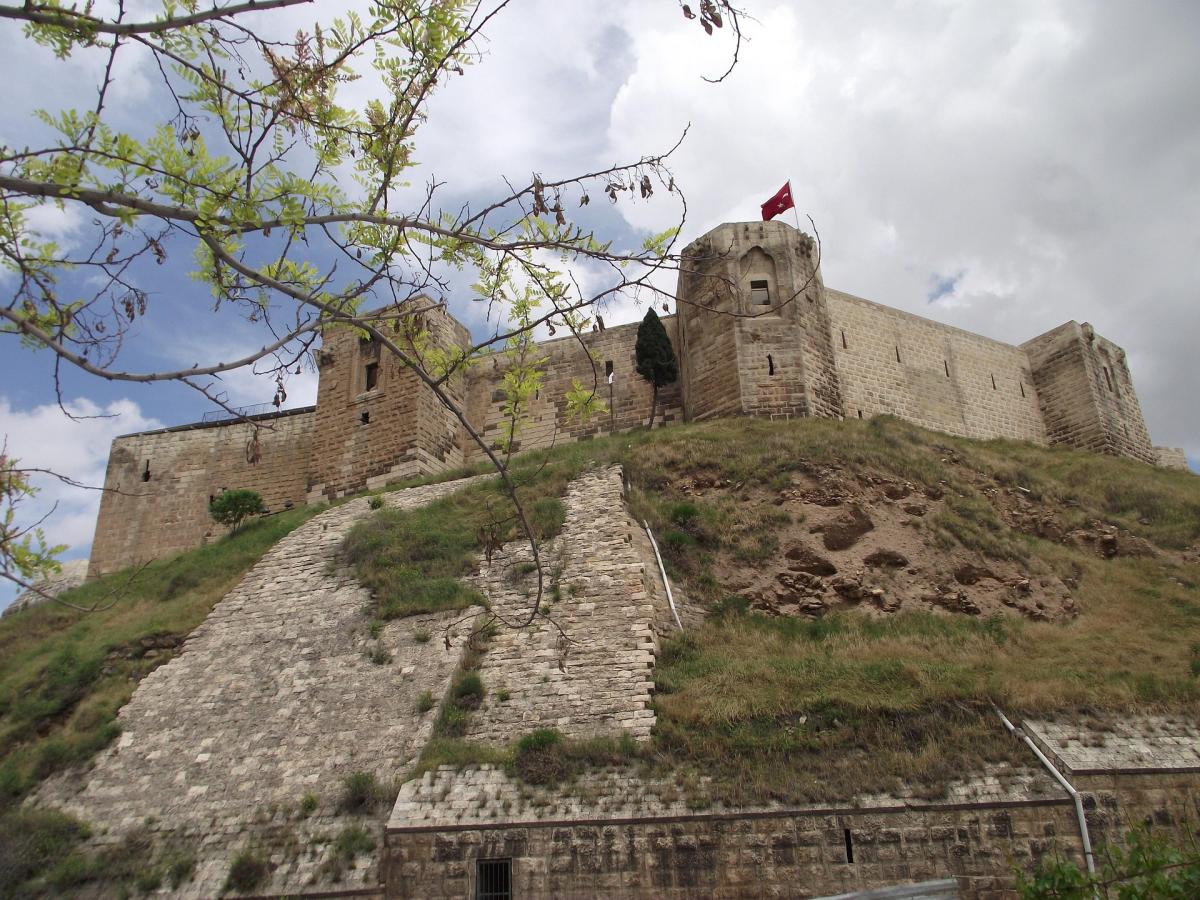
- Gaziantep Castle (Gaziantep Kalesi): A symbol of the city, this ancient fortress suffered severe damage in the February 2023 earthquake, with the collapse of some of its eastern, southern, and southeastern bastions and retaining walls . Intensive restoration work began in May 2023, and as of late 2024, over 90% of the work on the bastions and rampart walls was finished, with the castle regaining its former appearance . The official reopening is anticipated in 2025 following the completion of landscaping and reinforcement against future seismic events .
- Coppersmiths' Bazaar (Bakırcılar Çarşısı): Get lost in the lively atmosphere of this historic market, which is vibrant and fully operational . With a history stretching back at least 400-500 years, its stone-paved streets have preserved their historical texture . The rhythmic sound of hammers striking copper fills the air as artisans practice a trade passed down through generations, crafting beautiful handmade goods from ornate coffee pots to intricate trays in shops that often double as workshops .
- Zincirli Bedesten (Covered Bazaar): This historic covered market, built in 1718 by Darendeli Hüseyin Pasha, is a prime example of Ottoman bazaar architecture . Originally a wholesale market for meat and produce, it was restored and now houses 73 shops . Here you can find everything from spices and textiles to local handicrafts and traditional leather shoes known as yemeni . Its stone structure provides a cool respite in summer and warmth in winter .
- Elmaci Bazaar (Apple Market): Adjacent to the Coppersmiths' Bazaar, this vibrant market is a feast for the senses . Despite its name, it's the go-to place for local specialties like spices, nuts, dried fruits, and grape molasses . The air is filled with the aroma of spices like cumin and sumac, and colorful strings of dried eggplants and peppers hang from the stalls .
- Historic Mosques: The city is home to many beautiful mosques. The 17th-century Şirvani Mosque, located next to the castle, saw its dome and eastern wall partially collapse and is undergoing restoration . Visitors may notice that many mosques in the historic center are covered in scaffolding, a visible sign of the extensive and ongoing restoration work across the city . Don't miss the Liberation Mosque (Kurtuluş Camii), a former Armenian cathedral with striking architecture.
Further Afield
- Rumkale: Perched dramatically where the Euphrates River meets the Merzimen Stream, this fortress-settlement has a history stretching back to the Hellenistic and Roman eras . Rumkale, meaning "Roman Castle," holds deep significance in Christian history, as it is believed that the Apostle John lived here and copied the Bible . From 1150 to 1292, it was the seat of the Armenian Patriarch . A visit today requires a boat tour, as the Birecik Dam has turned the fortress into a peninsula accessible only by water . Tours, often departing from the nearby town of Halfeti, offer stunning views of the fortress ruins-including the Church of Saint Nerses-and the partially submerged village of Savaşan . The journey from Gaziantep is about an hour (62 km), and a glass terrace near the site offers panoramic views before you embark .
- Yesemek Quarry and Sculpture Workshop: This remarkable open-air museum, located about 113 km from Gaziantep, is the largest ancient stonemasonry workshop in the Near East and is on the UNESCO World Heritage Tentative List . First established by Hittite Emperor Suppiluliuma I in the 14th century BC, the site was abandoned after the Assyrian conquest in the 8th century BC, leaving over 300 sculptures "frozen in time" in various stages of completion . Visitors can walk among unfinished gate guardians like sphinxes and lions, as well as reliefs of mountain gods and hunting scenes, offering a unique insight into the entire ancient sculpture-making process . The drive from Gaziantep takes about an hour to an hour and a half, and comfortable shoes are recommended for the uneven terrain .
A Taste of Gaziantep: The Culinary Capital
Gaziantep's designation as a UNESCO Creative City of Gastronomy is well-deserved, recognizing a culinary tradition that has been central to its identity since the Iron Age and remains a primary driver of its economy . The city boasts over 500 unique recipes, a rich fusion of Anatolian, Arab, and Ottoman influences from its time on the Silk Road . The city's renowned culinary scene has been a key part of its recovery, with local restaurants playing a role in supporting the community . The annual GastroAntep Festival continues to be held, signaling the city's rebound and celebrating its rich culinary heritage .
Must-Try Dishes
- Baklava: Gaziantep is the undisputed home of baklava. This sweet pastry, made of paper-thin phyllo dough layers filled with the region's famous pistachios and soaked in syrup, is a true art form. It's even protected by the EU as an authentic product of the city.
- Beyran Çorbası: More than a soup, Beyran is a culinary institution. This spicy, hearty breakfast dish is made with tender, slow-cooked lamb meat (from the neck and cheek), rice, and a potent, garlicky broth infused with Aleppo pepper . The lamb is cooked for hours until it falls off the bone, then served over rice and drenched in the fiery broth, finished with a sizzle of spiced butter . It's a powerful and delicious way to start the day .
- Katmer: A Sweet Beginning: This crispy, flaky pastry is a breakfast staple and a cultural symbol .
- The Art of Preparation: The process is a craft in itself. A simple dough is kneaded until soft, then stretched by hand and air-tossed until it becomes almost transparent . This delicate sheet is generously filled with crushed Antep pistachios and dollops of rich clotted cream (kaymak), ideally made from water buffalo milk . The pastry is folded into an envelope and baked at a high temperature until golden and crisp .
- Cultural Significance: Traditionally, katmer is the first meal eaten by a newlywed couple, symbolizing the hope for a sweet marriage . Its full name, damat katmeri, even translates to "groom's katmer" .
- Kebabs: Gaziantep offers over 30 varieties.
- Ali Nazik: A mouthwatering dish of tender lamb served over a smoky, garlicky puree of eggplant and yogurt.
- Küşleme: Often called the "filet mignon" of lamb, this is an exceptionally tender and flavorful cut of meat with no nerves or fat, simply grilled .
- Patlıcanlı Kebap: Skewers of lamb meatballs alternated with thick slices of eggplant, grilled to perfection.
- Other Delights:
- Lahmacun: A thin, crispy flatbread topped with minced meat, vegetables, and herbs.
- İçli Köfte (Kibbeh): Delectable stuffed meatballs with a crispy bulgur shell and a savory filling of minced meat and walnuts or pistachios.
- Yuvalama: A yogurt-based soup with meatballs that is a staple in every home during the festival at the end of Ramadan .
Where to Eat
- İmam Çağdaş: A legendary institution since 1887, famous for both its kebabs (try the Ali Nazik) and its incredible baklava.
- Kebapçı Halil Usta: A city institution for an authentic kebab experience .
- History: The founder, Halil Usta, began as a butcher's apprentice at age eight and opened his restaurant in 1972 . His deep knowledge of meat is evident in every dish .
- The Experience: This is a no-frills lunch spot, as it closes by late afternoon (around 5 PM) and is closed on Sundays . The service often follows a fixed menu format, starting with a fresh salad, followed by a selection of the day's best kebabs served in traditional copper dishes .
- What to Order: The restaurant is famous for its küşleme (lamb tenderloin), so much so that the owner is often called "Küşlemeci Halil Usta" . Other celebrated dishes include simit kebabı and kuşbaşı (diced meat) . The meal can be perfectly concluded with baklava and tea in the adjacent garden .
- Katmerci Zekeriya Usta: The go-to place for the perfect katmer. Watching the masters skillfully prepare the paper-thin dough is part of the experience.
- Metanet Lokantası: The most famous spot to try the traditional Beyran soup for breakfast.
Practical Information
- Getting Around: The city center is walkable, but for longer distances, Gaziantep has an efficient public transport system of buses and trams operated by Gaziulaş. You can use a contactless credit card or a local transit card for payment. Taxis are also readily available.
- Language: The official language is Turkish. English is spoken in major tourist areas and hotels, but learning a few basic Turkish phrases will be appreciated.
- Currency: The currency is the Turkish Lira (TRY). Credit cards are widely accepted, but it's wise to carry some cash for smaller purchases, especially in the bazaars.
- Safety and Post-Earthquake Status: Gaziantep is open and actively encouraging tourists to return . The city is described as having a strong spirit of recovery, and visitors report a welcoming atmosphere and a sense of normalcy in the streets and markets . In fact, a first-time visitor in late 2024 might not even be aware of the extent of the damage the city endured . While the majority of attractions are accessible, some sites like the castle remain closed for the final stages of restoration . Given its proximity to the Syrian border, it is always prudent to check your government's latest travel advisories before your trip, though recent visitor experiences within Gaziantep city have been positive .
Executive Summary
Gaziantep is a destination that truly engages all the senses, offering a journey through millennia of history and a world-renowned culinary landscape. In the wake of the February 2023 earthquake, the city has shown incredible resilience, with a robust and rapid recovery that is a testament to its spirit . While the iconic Gaziantep Castle undergoes the final stages of a meticulous restoration with a planned reopening in 2025, the city's other treasures are open and welcoming . The world's largest mosaic museum, the Zeugma Mosaic Museum, was thankfully unharmed and remains a must-see attraction . Beyond Zeugma, the comprehensive Gaziantep Archaeology Museum offers a chronological journey from the Paleolithic era to the Ottoman period .
For an immersive stay, visitors can choose a restored stone mansion, or konak, in the historic Bey Mahallesi district, experiencing unique architecture with central courtyards and modern comforts . The city's historic bazaars, from the 500-year-old Coppersmiths' Bazaar to the aromatic Elmaci Bazaar, are bustling with activity . Gaziantep's culinary scene-a key part of its identity and a UNESCO-recognized heritage-continues to thrive, playing a central role in its revival . Indulge in the art of Katmer, a symbolic breakfast pastry, or visit a city institution like Kebapçı Halil Usta for an unforgettable lunch of world-class kebabs like küşleme . A trip to Gaziantep is more than just a vacation; it's an immersive experience into the heart of Turkish culture and a poignant look at a community that has worked tirelessly to restore its treasured heritage. Pack your bags-and your appetite-for an adventure you won't soon forget.
Fatal error: Uncaught mysqli_sql_exception: You have an error in your SQL syntax; check the manual that corresponds to your MariaDB server version for the right syntax to use near ') AND behi_taxonomy_rel.content_type = 'post' AND behi_post.post_active = 1 A...' at line 14 in /var/www/vhosts/rahtours.com/httpdocs/module/template/rahtours/post.php:387 Stack trace: #0 /var/www/vhosts/rahtours.com/httpdocs/module/template/rahtours/post.php(387): mysqli_query() #1 /var/www/vhosts/rahtours.com/httpdocs/index.php(31): require_once('...') #2 {main} thrown in /var/www/vhosts/rahtours.com/httpdocs/module/template/rahtours/post.php on line 387