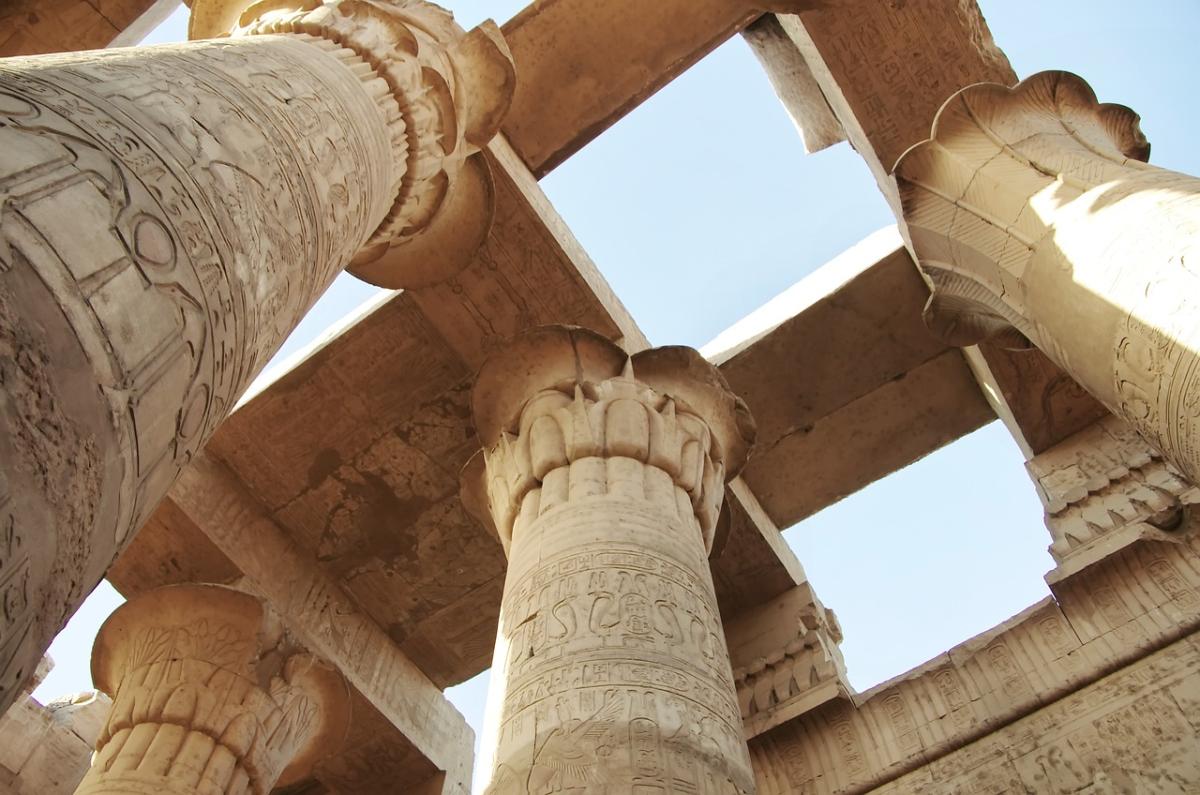
Exploring the Magnificence of Karnak Temple
The Karnak Temple Complex, located on the east bank of the Nile River in modern-day Luxor, stands as a testament to the enduring power and religious devotion of ancient Egypt. For over 2,000 years, this vast and intricate site served as the epicenter of religious life, a place of pilgrimage, and a monumental canvas for the architectural ambitions of generations of pharaohs. Known to the ancient Egyptians as "Ipet-isut," or "The Most Select of Places," Karnak is not a single temple but a sprawling city of temples, chapels, pylons, and obelisks dedicated primarily to the Theban Triad: the great god Amun-Ra, his consort Mut, and their son Khonsu. The site's location may have been symbolic, as it was built on a naturally elevated terrace that would appear to rise from the annual Nile floods, mirroring the Egyptian creation myth of the primeval mound emerging from the waters of chaos.
A Legacy Etched in Stone: The Architectural Evolution of Karnak
The construction of Karnak began during the Middle Kingdom and continued for approximately two millennia, with contributions from around thirty pharaohs. This extended period of development resulted in a complex of unparalleled size and intricacy, reflecting the fluctuating fortunes and artistic sensibilities of the Egyptian empire.
The Middle Kingdom Foundations (c. 2055-1650 B.C.E.)
While the area was considered sacred before the 11th Dynasty, with early shrines likely dedicated to the local war god Montu, the first significant structures for Amun-Ra emerged during the Middle Kingdom. The earliest tangible evidence of a temple for Amun dates to the reign of Intef II of the 11th Dynasty.
A pivotal figure in Karnak's early history was Senusret I of the 12th Dynasty, who undertook a massive temple-building program across Egypt. His most celebrated contribution is the White Chapel, a jubilee chapel made of fine white limestone to commemorate his 30th year of rule. Its exquisite, high-quality reliefs depict Senusret I being crowned and embraced by gods such as Amun, Horus, Min, and Ptah. Although later dismantled and its blocks used as filler for a New Kingdom pylon, the chapel has been meticulously reconstructed and is now a highlight of the Karnak Open Air Museum. Senusret I is also credited with building the Middle Kingdom court that formed the core of the growing temple.
The New Kingdom Expansion: An Era of Monumental Building (c. 1550-1070 B.C.E.)
The New Kingdom marked the golden age of Karnak, as pharaohs, enriched by imperial expansion, undertook massive construction projects that transformed the site into a symbol of their power and piety.
The 18th Dynasty: This dynasty initiated a period of major expansion. Amenhotep I constructed a bark shrine, a gateway, and a set of remarkable limestone monuments that are currently being reconstructed. His successor, Thutmose I, erected an enclosure wall around the Middle Kingdom temple and built the Fourth and Fifth pylons, the earliest pylons still standing in their original location. The female pharaoh Hatshepsut added the Eighth Pylon on the southern axis and erected two magnificent red granite obelisks, one of which remains the tallest standing in Egypt. Her successor, Thutmose III, added the Akh-menu, or Festival Hall, a unique structure with columns resembling tent poles, possibly referencing his military campaigns. He also continued the southern axis with the Seventh Pylon and encased Hatshepsut's obelisks within walls. Later, Amenhotep III began construction of the Tenth Pylon and initiated the Great Hypostyle Hall. He also commissioned hundreds of black granite statues of the goddess Sekhmet, likely for his mortuary temple, which would later find their home in the Precinct of Mut. The religious revolution of his son, Akhenaten, saw the construction of several temples to the sun disk Aten at Karnak, which were swiftly demolished by his successors and their materials reused in later projects, such as the Ninth Pylon built by Horemheb.
The 19th Dynasty: The Ramesside pharaohs continued the monumental building projects. The dynasty is best known for the Great Hypostyle Hall, a breathtaking forest of 134 massive sandstone columns, largely decorated by Seti I and his son Ramesses II. Ramesses II, a prodigious builder, also usurped and moved numerous statues to Karnak to immortalize his long reign. Within the Mut Precinct, he was responsible for "Temple A," dedicated to himself and Amun-Re. His successor, Merenptah, commemorated his victories on the walls of the Cachette Court, while Seti II added two small obelisks, a triple bark shrine, and a richly carved wall that was later conserved and reconstructed.
The 20th Dynasty and Later Periods: Building activities continued, though at a slower pace. Ramesses III built a large bark shrine before the Second Pylon and also began construction on the Temple of Khonsu. Within the Mut Precinct, he built the smaller "Temple C". Subsequent pharaohs, including Ramesses IV and Ramesses XI, focused primarily on expanding and decorating the Temple of Khonsu. The Kushite king Taharqa of the 25th Dynasty later constructed a gateway within the Mut Precinct. The last major additions to the temple's layout were the massive First Pylon and the final mudbrick enclosure walls, built by Nectanebo I of the 30th Dynasty.
The Layout of a Divine City
The Karnak complex is divided into three main precincts, each enclosed by a massive mudbrick wall.
The Precinct of Amun-Ra
This is the largest and most central precinct, covering over 61 acres and the only area fully open to the public. Its scale was intended to inspire awe and underscore the power of Amun-Ra. Key features include the Sacred Lake, a series of ten massive pylons, and several smaller temples in addition to the main structure.
The Great Hypostyle Hall: A Forest of StoneThis colossal structure, initiated by Seti I and largely completed by Ramesses II, is a masterpiece of New Kingdom architecture and symbolism.
- Architectural Grandeur: Covering an immense 5,000 square meters (1.2 acres), the hall's roof was supported by 134 massive sandstone columns arranged in 16 rows. A central nave is formed by 12 colossal columns soaring to 24 meters (79 feet) with a circumference of 10 meters (33 feet). These are crowned with massive, bell-shaped capitals resembling open papyrus flowers. The remaining 122 columns in the side aisles are smaller, at 14 meters (46 feet) high, with capitals shaped like closed papyrus buds. This height difference created a clerestory with grilled windows, allowing light to filter into the dim interior.
- Symbolism of the Creation Myth: The hall is a physical representation of the Egyptian creation myth, symbolizing the primeval papyrus swamp that grew on the first mound of earth to emerge from the chaotic waters of Nun. The rising floor level throughout the temple mimics this primordial mound. Walking through the columns was meant to evoke navigating this mythical landscape. The open-flower capitals represent mature plants reaching for the sun, while the closed-bud capitals symbolize younger shoots. The stone ceiling was painted with stars, representing the sky and completing the cosmic recreation.
- Engineering Marvels: Construction was an extraordinary feat of engineering. To raise the colossal column drums and 70-ton architraves, workers built massive mudbrick and earth ramps, which were raised layer by layer as the structure grew. This provided an inclined surface for teams to drag the stones upward, likely using wooden sledges. Once the roof was in place, the ramps were dismantled to reveal the finished hall.
- A Tale of Two Pharaohs' Reliefs: The decorations were executed by both Seti I and Ramesses II, each with a distinct style. Seti I decorated the northern wing with exquisite, high-quality bas-relief (raised relief). His themes are primarily religious, showing the king performing rituals. The exterior northern wall features magnificent battle scenes from his campaigns in Syria, Canaan, and Libya. Ramesses II completed the southern wing using sunk relief, a faster technique where images are carved into the stone. While also depicting religious scenes, his inscriptions are often more focused on his own power, with a profusion of cartouches, and he famously inscribed his peace treaty with the Hittites on the southern exterior wall.
The Temple of Khonsu: A Lunar SanctuarySituated in the southwestern corner of the Amun-Re precinct is the remarkably well-preserved Temple of Khonsu, dedicated to the moon god, son of Amun and Mut. As the god of the moon, Khonsu's name means "traveler," symbolizing the moon's journey across the night sky. He was also revered as a healing deity and a protector against evil spirits. The temple follows a classic Egyptian architectural plan along a central axis :
- Pylon: A massive gateway, about 18 meters high and 35 meters wide, decorated with reliefs of the High Priest of Amun, Pinedjem I, and his wife.
- Courtyard: An open peristyle court surrounded by colonnades of 28 pillars with closed-bud papyrus capitals.
- Hypostyle Hall: A hall with eight columns whose capitals alternate between open and closed papyrus forms. The ceiling was decorated with astronomical scenes, reflecting Khonsu's celestial nature.
- Sanctuary: The innermost part of the temple, featuring a barque shrine and the sanctuary proper. The design employs "telescoping," where the floor rises and the ceiling lowers as one moves deeper into the temple, enhancing the sense of sacredness.
- Construction and Decoration: Construction began under Ramesses III on the site of an earlier 18th Dynasty temple. Later rulers, including Ramesses IV, Ramesses XI, and the high priest Herihor, contributed to its fine bas-reliefs. The hypostyle hall was added by Nectanebo I. The decorations depict pharaohs making offerings to the Theban Triad and myths surrounding Khonsu.
The Karnak Open Air Museum: Reassembled TreasuresLocated in the northwestern corner of the Amun-Re precinct, this museum houses a collection of shrines and chapels that were dismantled in antiquity and their blocks reused as filler in later constructions, particularly the massive pylons. Archaeologists have painstakingly reassembled these structures, offering a unique glimpse into different periods of Karnak's history. In addition to the famous White Chapel of Senusret I, key monuments include:
- The Red Chapel of Hatshepsut: A red quartzite barque shrine whose blocks were recovered from the Third Pylon.
- The Alabaster Chapel of Amenhotep I: A finely crafted chapel also reconstructed from blocks found within the Third Pylon.
- Chapels of the Thutmoside Pharaohs: These include a calcite shrine of Amenhotep II, a barque shrine of Thutmose III, and a portico court of Thutmose IV with superbly preserved painted reliefs.
- A Wall of Akhenaten: A large limestone wall built from small blocks known as talatat, displaying the distinctive Amarna art style from his reign.
The Precinct of Mut: A Sanctuary for the Mother Goddess
Located to the south and connected to the Amun precinct by an avenue of ram-headed sphinxes, this sprawling 20- to 22-acre enclosure was the sacred domain of the mother goddess Mut. The precinct was a major religious center for over 1,600 years. It contained at least six temples, including the main Mut Temple, and is defined by its unique, crescent-shaped sacred lake, the Isheru. This lake was specifically associated with leonine goddesses like Mut and her fierce alter-ego, Sekhmet, and was believed to have a pacifying effect on their volatile natures. The precinct is also renowned for the hundreds of black granite statues of Sekhmet commissioned by Amenhotep III, likely to appease the fearsome goddess and invoke her protective, healing powers. Stelae found on the site indicate construction continued into the Roman period under emperors Augustus and Tiberius.
The Precinct of Montu: A Dedication to the God of War
The smallest precinct is dedicated to the original chief deity of Thebes, the falcon-headed war god Montu. Located north of the Amun-Ra precinct and covering approximately 20,000 square meters, this area predates the ascendancy of Amun.
- Religious Significance of Montu: Montu was a god of war who embodied the conquering vitality of the pharaoh. Originally a personification of the sun's scorching heat, he evolved into a warrior deity who attacked the enemies of Ma'at (cosmic order). Pharaohs sought his blessing before battle, and his image-a falcon-headed man with a sun disk and two plumes-was a symbol of their military prowess.
- Architectural History: The sanctuary's origins date to the Middle Kingdom. Amenhotep III significantly rebuilt the main temple, dedicating it to Montu-Re. Ramesses II later added a forecourt and two obelisks. The precinct also housed a temple to the goddess Ma'at, which was uniquely used as a court to try tomb robbers during the reign of Ramesses IX.
Later Additions: The Ptolemaic and Roman Eras
Construction at Karnak did not cease with the New Kingdom, as Ptolemaic and Roman rulers continued to add to the complex to legitimize their rule by honoring Egypt's ancient gods.
- The Gateway of Ptolemy III Euergetes: This monumental gateway, built by Ptolemy III and Ptolemy IV, is the most prominent standing structure in the Precinct of Montu. An avenue of sphinxes once led to this grand entrance, which was connected by a dromos to a channel linking to Montu's temple at Medamud.
- The Temple of Opet: Located west of the Khonsu Temple, this was the last important cult building constructed at Karnak, primarily by Ptolemy VIII Euergetes II. It was dedicated to the hippopotamus goddess Opet, a helper of women in childbirth, but its function was tied to the resurrection myth of Amun-Osiris. The temple stands on a raised platform and contains hidden crypts that served as a symbolic "tomb" for the god.
- Other Modifications: Alexander the Great's successor, Philip Arrhidaeus, replaced a shrine of Thutmose III with a new red-granite one. Roman emperors continued to have themselves depicted in pharaonic style on temple walls until the second century CE. The complex's final decline began in 323 CE when Constantine the Great recognized Christianity, leading to the closure of pagan temples and the founding of Christian churches among the ruins.
The Sacred Service: Rituals and Festivals
The architectural grandeur of Karnak served as the stage for complex rituals essential for maintaining maat-the cosmic order.
Daily Rituals of the Priesthood
Ceremonies performed by a hierarchy of priests focused on the care of the cult statue of Amun-Ra, which was believed to contain the god's ka, or life force. The high priest would enter the sanctuary before dawn, purify himself in the sacred lake, and perform the "divine toilette"-cleansing, anointing, and dressing the cult statue. A version of the "Opening of the Mouth" ceremony was performed to animate the statue before a lavish meal was presented, whose spiritual essence was consumed by the god. Less elaborate ceremonies with incense and libations occurred at midday and evening.
The Opet Festival: A Divine Journey of Renewal
One of ancient Egypt's most significant religious spectacles was the annual Opet Festival, held during the Nile's inundation season to symbolically link divine renewal with the life-giving flood. The festival's centerpiece was a grand procession of the sacred barques of Amun-Re, Mut, and Khonsu from Karnak to Luxor Temple. The journey, accompanied by the pharaoh, musicians, and cheering crowds, was made along the Avenue of Sphinxes or by river on ceremonial barges. The festival's main purpose was a mystical union between the pharaoh and Amun-Re, resulting in the king's ceremonial rebirth and re-crowning, which powerfully reaffirmed his divine right to rule. Initially lasting 11 days, the festival expanded to 27 days by the reign of Ramesses III.
Karnak Today: Discoveries and Conservation
The Karnak complex remains a dynamic site of archaeological discovery and preservation efforts, ensuring its legacy endures for future generations.
Recent Archaeological Discoveries
- Sacred Lake in Montu Precinct: A joint Egyptian-Chinese mission recently unearthed a previously unknown sacred lake within the Montu Temple precinct. The well-preserved, man-made reservoir covers over 50 square meters and offers new insights into ritual purification practices, as it represents the primordial waters of Nun. It is unique for being the only such lake in Egypt discovered through systematic, scientific excavation.
- 26th Dynasty Jewelry: A Franco-Egyptian mission discovered a cache of gold jewelry from the 26th Dynasty in a small pottery container. The find included gold rings, amulets, and a rare triptych depicting the Theban triad.
Ongoing Conservation Efforts
- Great Hypostyle Hall Restoration: A major project has focused on cleaning and restoring the 134 columns of the Great Hypostyle Hall. This meticulous work by Egyptian restorers has removed centuries of dust and grime, revealing the original vibrant colors and intricate details of the engravings for the first time in the modern era.
- The Egyptian-French Center (CFEETK): Since 1967, the CFEETK has been instrumental in the study and preservation of Karnak. Recent projects include renovating the Open-Air Museum, reconstructing limestone monuments of Amenhotep I, and, in partnership with the World Monuments Fund, rebuilding a collapsing wall of Seti II, a process that uncovered brilliantly colored blocks from the reign of Thutmosis III hidden within.
- Site Management: Other ongoing efforts focus on mitigating damage from the rising water table and salt weathering, as well as modernizing tourist routes and installing new lighting systems to enhance the visitor experience.
Summary
The Karnak Temple Complex is an unparalleled architectural and religious monument of ancient Egypt, evolving over 2,000 years through the contributions of some thirty pharaohs. Its construction began in the Middle Kingdom with foundational structures like Senusret I's White Chapel. The New Kingdom saw an explosion of monumental building, most notably the Great Hypostyle Hall, a symbolic stone forest of 134 columns representing the primeval swamp of creation. Constructed by Seti I and Ramesses II, the hall features distinct artistic styles, from Seti I's elegant bas-reliefs to Ramesses II's faster sunk reliefs.
The complex is divided into three precincts. The massive Precinct of Amun-Ra contains not only the main temple but also the well-preserved Temple of Khonsu, a classic New Kingdom structure begun by Ramesses III, and the Open Air Museum, which houses reassembled treasures like Hatshepsut's Red Chapel. The Precinct of Montu, dedicated to the Theban war god, dates back to the Middle Kingdom and was significantly rebuilt by Amenhotep III. The Precinct of Mut, a sanctuary for the mother goddess, is notable for its crescent-shaped Isheru lake and hundreds of Sekhmet statues. Building continued into the Ptolemaic era with additions like the Temple of Opet. This grand architecture served as the backdrop for intricate daily rituals and the grand Opet Festival, an annual procession to Luxor Temple that renewed the pharaoh's divine kingship. Today, Karnak remains a living site of discovery and conservation, with recent finds like a new sacred lake and ongoing projects to restore the Great Hypostyle Hall's columns, ensuring the magnificence of ancient Egypt continues to inspire.
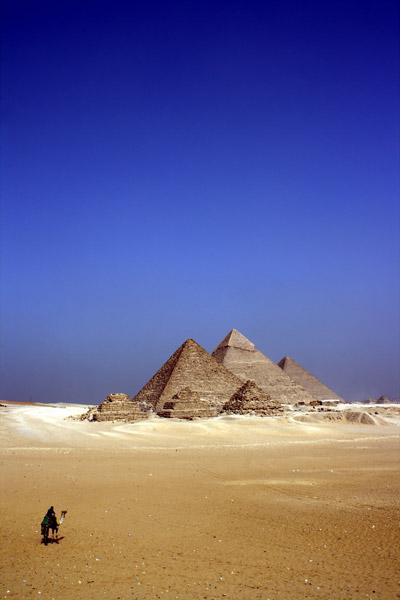
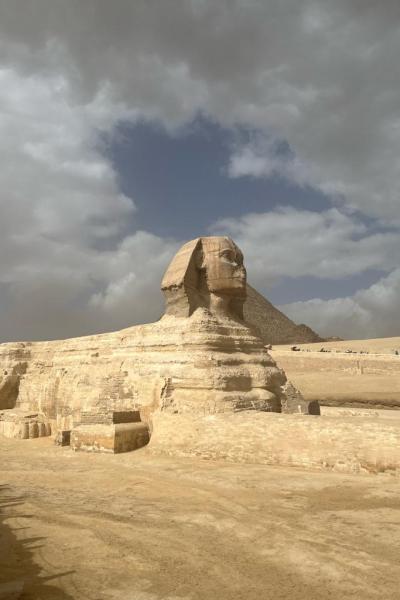
Across the Nile River from the bustling modern city of Luxor lies a landscape of dramatic dualities that shaped the beliefs and lives of the ancient Egyptians . The West Bank presents a stark transition from a verdant, life-giving floodplain, created by millennia of the Niles annual deposit of fertile...
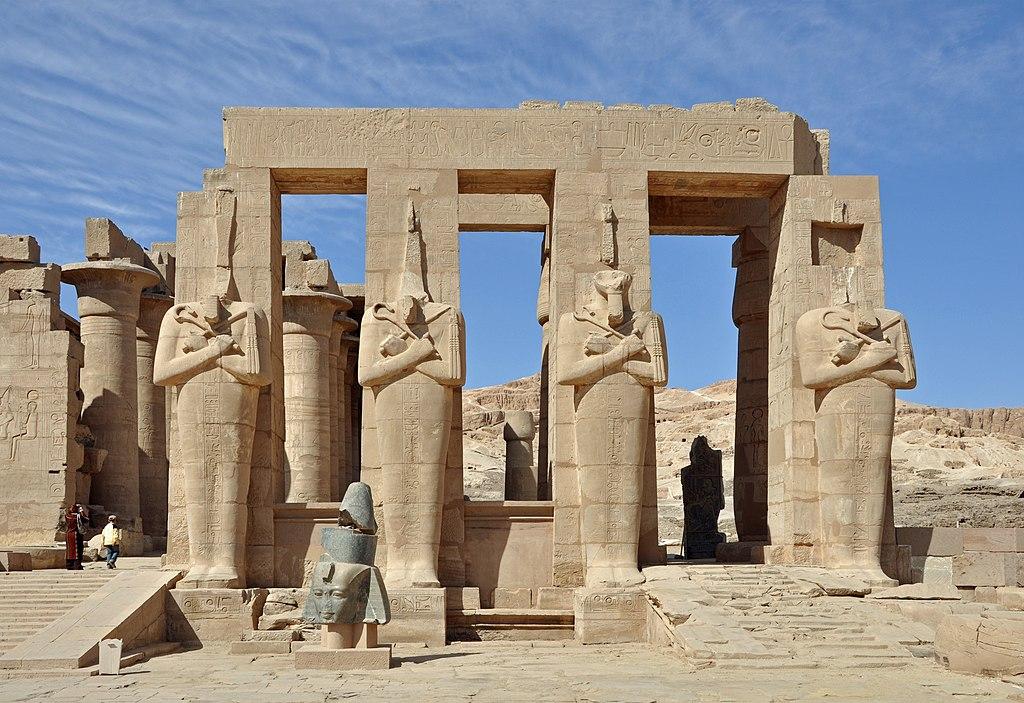
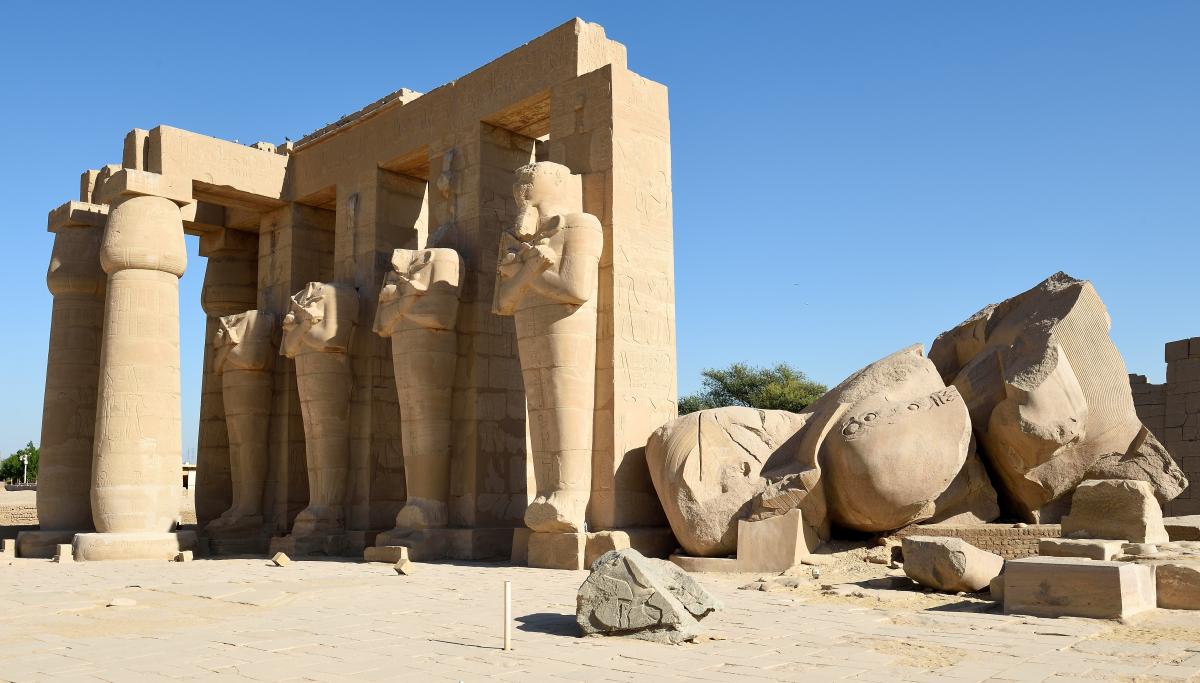
The Ramesseum Temple is a grandiose monument located in Luxor, Egypt. Built by Ramses II during the 19th Dynasty of ancient Egypt, it was designed as an homage to the great pharaoh and his accomplishments. The temple complex consists of two main structures: a large pylon gateway and a hypostyle hall...
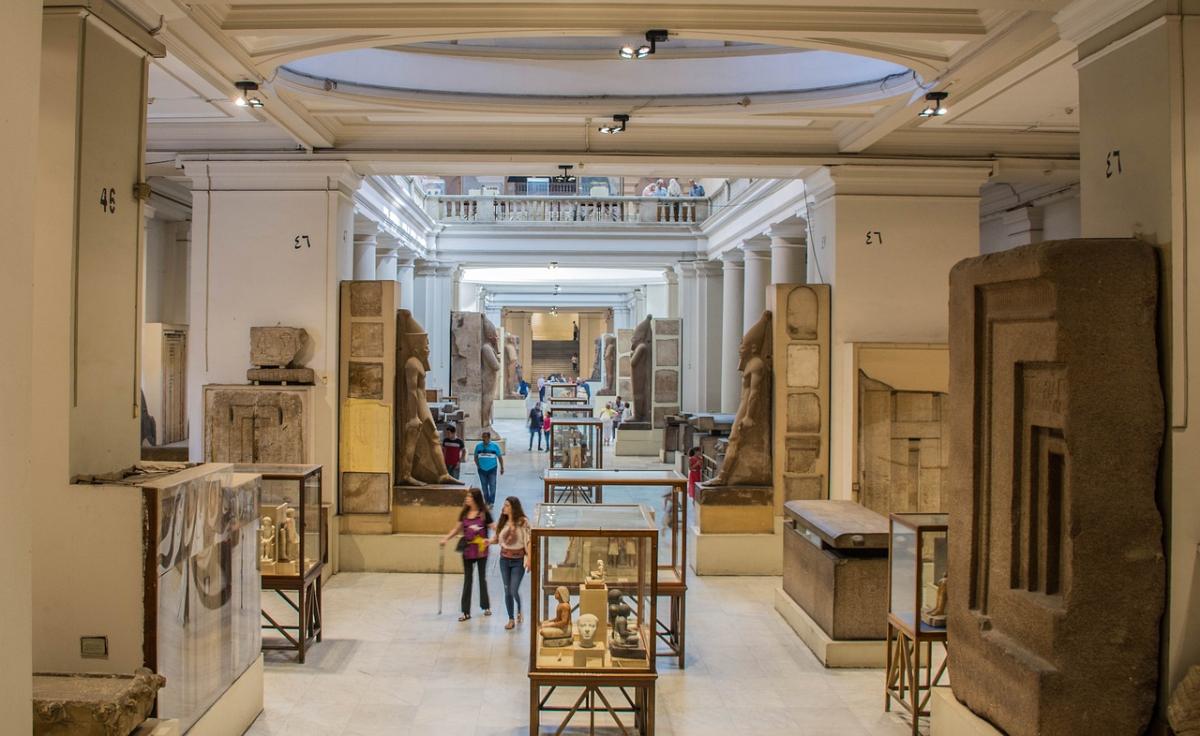
Luxor Museum is a world-famous museum located in Thebes, Egypt. Its main attraction is its Tutankhamun Collection, which consists of the artifacts found in the tomb of this ancient Egyptian pharaoh. It also houses many other artifacts from different periods of Ancient Egypt history as well as contemporary...