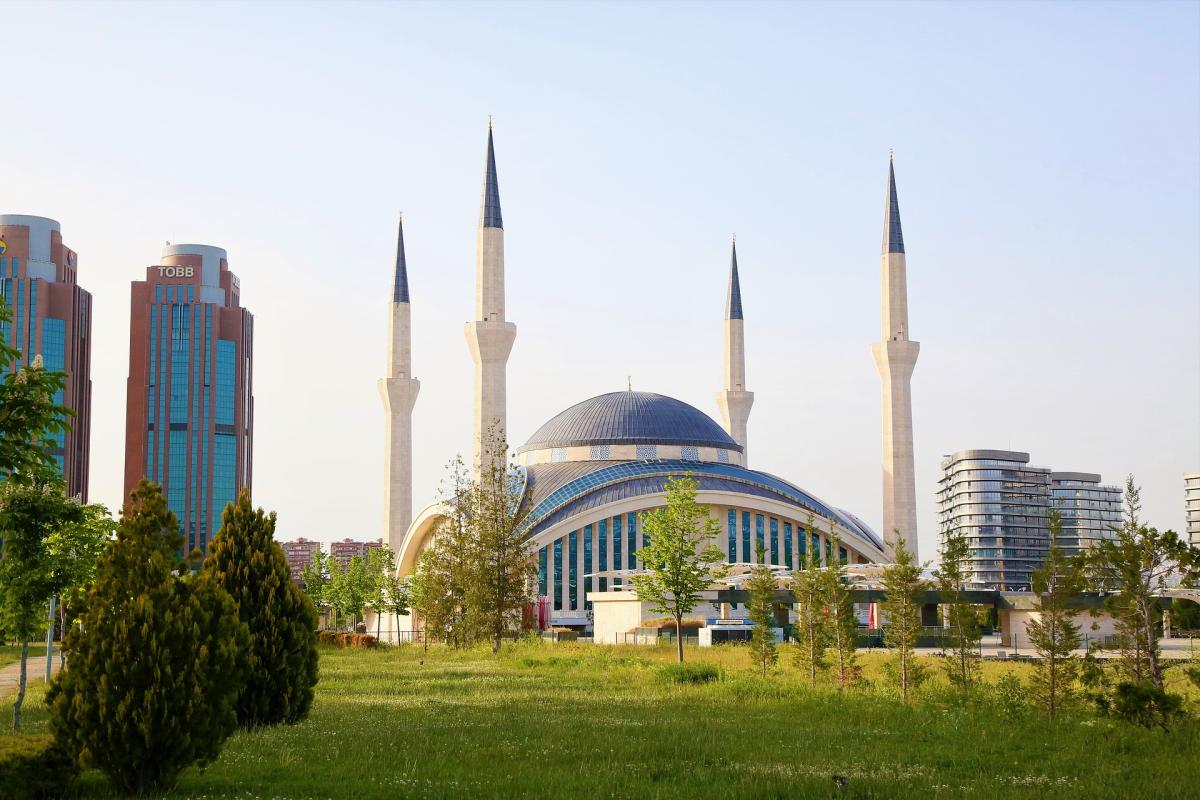
Ankara: Where Ancient Streets Meet Modern Dreams
Ankara, the heart of the Republic of Turkey, is a city of compelling contrasts . It is a sprawling, modern metropolis, the nation's political and administrative center, yet its foundations are sunk deep into the soil of ancient Anatolia . This is a place where the echoes of Roman legions and Hittite kings can still be heard along cobblestone streets, just a short walk from the vibrant boulevards and monumental structures that embody the forward-looking vision of a 20th-century republic . To explore Ankara is to journey through time, witnessing the seamless, and sometimes abrupt, convergence of its ancient past and its modern aspirations . This duality is vividly embodied in its modern landmarks, from the monumental, traditionally-styled Kocatepe Mosque to the innovative CerModern arts center, which repurposes industrial heritage for contemporary culture .
The city's modern dreams are now accelerating with newfound ambition. Designated as the "Tourism Capital of the Turkic World" for 2026 by the Organization of Turkic States (OTS), Ankara is on the cusp of a major transformation . This prestigious title has catalyzed a suite of urban development projects, tourism initiatives, and infrastructure upgrades aimed at showcasing its rich heritage and cementing its status as a premier international destination .
I. Tracing the Ancient Streets: A Journey Through History and Renewal
The historical soul of Ankara resides in the old quarter of Ulus, clustered around and within the city's magnificent citadel . This is where the layers of history are most tangible, revealing the city's past as a strategic stronghold for a succession of powerful empires . Today, these ancient streets are not just relics but are the focus of ambitious renewal projects designed to preserve their character while revitalizing them for the future .
Ankara Citadel (Ankara Kalesi)
Perched on a commanding hill with panoramic views, the Ankara Citadel is the city's most prominent historical landmark . Its origins are ancient, with fortifications laid by the Phrygians and later rebuilt by the Galatians, Romans, Byzantines, Seljuks, and Ottomans . The impressive inner walls, largely dating from the Byzantine era, feature a fascinating use of spolia-repurposed Roman columns, inscribed marble, and even sarcophagi embedded in the fortifications .
Inside the walls lies a preserved "Turkish village," a charming labyrinth of narrow cobblestone streets and traditional red-roofed Ottoman houses . This area is currently undergoing significant revitalization projects aimed at preserving its historic urban texture while making it more accessible and attractive to visitors . Plans include demolishing derelict buildings adjacent to the castle walls to create green spaces and new areas for activities, with the goal of turning the castle into a new symbol of Ankara .
The Old City (Ulus) and Hamamönü
The area surrounding the citadel, known as Ulus, was the center of Roman Ancyra and remains a hub of historical significance .
Roman Ancyra: During the Roman Empire, Ancyra was the capital of the province of Galatia, established in 25 B.C.E. . Its strategic location at the intersection of major trade and military routes made it a vital administrative hub, connecting Black Sea ports with regions like Assyria and Persia . It grew into a grand metropolis with an estimated population of 200,000, and in late antiquity, emperors sometimes used it as a summer resort .
- The Temple of Augustus and Rome, built between 25 and 20 B.C.E., was a center for the imperial cult . It is famous for the Monumentum Ancyranum, the most complete copy of Emperor Augustus's record of his accomplishments, inscribed in both Latin and Greek on its walls . Built on a former Phrygian holy site, it served to legitimize Roman rule and was later converted into a church in the 5th century .
- The ruins of a large 3rd-century Roman Bath complex, constructed during the reign of Emperor Caracalla, showcase the advanced engineering of the era . The large complex included a palaestra (exercise ground), frigidarium (cold bath), tepidarium (warm bath), and a large caldarium (hot bath), serving as a center for socializing and hygiene for at least five centuries . A major project is now underway to restore the ancient Roman Theatre, part of a plan to create a 30,000-square-meter archaeological park that will host cultural and artistic events .
- Julian's Column, a 15-meter-high column with a Corinthian capital, is believed to have been erected in 362 C.E. to honor a visit by Emperor Julian, underscoring the city's continued importance in the later Roman Empire .
Museum of Anatolian Civilizations (Anadolu Medeniyetleri Müzesi): Housed in two restored 15th-century Ottoman buildings, this world-class museum is an essential stop . Its creation was a wish of Mustafa Kemal Atatürk, who directed its founding in 1921 with the initial goal of creating a Hittite museum . The museum's unparalleled collections earned it the "European Museum of the Year" award in 1997 .
- The Buildings: The museum occupies the Kurşunlu Han, a former caravanserai (c. 1467) that now serves as the administrative building, and the Mahmut Paşa Bedesteni, a covered bazaar (1464-1471) with 10 domes that now serves as the main exhibition hall . Both were built by grand viziers of Sultan Mehmed the Conqueror, with the bazaar once being a trade center for valuable goods like Angora wool .
- The Collections: The museum's collection of nearly 200,000 artifacts is organized chronologically, guiding visitors from the Paleolithic era onwards .
- Neolithic Era (8000-5500 B.C.E.): Artifacts from Çatalhöyük, one of the world's earliest proto-cities, include the famous "Seated Woman of Çatalhöyük" fertility goddess figurine, early pottery, and wall paintings, one of which is considered among the earliest city plans .
- Hittite Era (1750-1200 B.C.E.): The museum boasts one of the world's most important Hittite collections . Key artifacts include a bronze copy of the Kadesh Peace Treaty, the oldest known written peace treaty in the world , and the İnandık Vase, a large ceremonial vessel depicting a wedding ceremony in four detailed friezes .
- Phrygian Era (1200-700 B.C.E.): Finds from the capital, Gordion, are famous for their exceptionally preserved wooden artifacts from the "Midas Mound" tumulus . This includes intricately inlaid tables and serving stands, considered the most important collection of ancient wooden finds from the Near East .
Ottoman Heritage: The 15th-century Hacı Bayram Mosque, built next to the Temple of Augustus, is one of Ankara's most revered religious sites . The surrounding area has been beautifully restored, creating a spiritual and authentic atmosphere. Nearby, the Hamamönü district is a shining example of successful urban renewal . Known for its restored Ottoman-era houses, the neighborhood gained European Destinations of Excellence (EDEN) status in 2011 and is now a lively hub of cafes, art streets, and handicraft markets .
These efforts are part of the broader "Ulus Historical City Center Conservation and Improvement Plan," which aims to revitalize the entire historic core through a strategic, action-oriented approach .
II. Embracing Modern Dreams: The Republic's Capital and Future Vision
Ankara's modern identity was forged on October 13, 1923, when it was declared the capital of the new Republic of Turkey . This was a strategic and symbolic choice by Mustafa Kemal Atatürk to distance the new republic from the Ottoman imperial past embodied by Istanbul . Atatürk envisioned a capital that would be a blank canvas for the ideals of a modern, Western-oriented, and secular nation-state, making urban planning a core component of the nation-building project .
A Capital by Design: The Jansen Plan and Republican Architecture
To translate this vision into a physical reality, an international competition for a comprehensive urban plan was held in 1927 . The winning proposal by German architect and urban planner Hermann Jansen was chosen in 1928 and approved in 1932 for its realistic and sensitive approach, which sought to create a modern city while respecting its historical context .
The core principles of the Jansen Plan were a socio-urban manifesto for a new way of life:
- Preservation and Integration: Jansen advocated for the preservation of the historic core around the citadel, which he called the "crown of the city" . The new city was to be developed adjacent to the old, creating a dialogue between past and future rather than erasing it .
- A New Urban Center: The plan proposed a southward expansion from the old city (Ulus) to create a new modern center, Yenişehir ("New City"), which would house the governmental and administrative functions of the new state .
- The Green City: Influenced by the Garden City movement, Jansen's plan emphasized a "scattered development" with integrated green belts, parks, and recreational areas to promote a healthy urban environment for a planned population of around 300,000 . This included proposals for residential housing with gardens and the repurposing of marshlands into public spaces like Gençlik Park (Youth Park) .
- Functional Zoning: A key feature was the division of the city into distinct zones for residential, industrial, and administrative purposes-a novel concept in Turkish urban planning that broke from the mixed-use fabric of Ottoman cities .
- The Central Artery: The plan established a major north-south axis, Atatürk Boulevard, to connect the old city of Ulus with the new administrative and residential areas in the south, including Çankaya, where the presidential residence was located .
The Architectural Face of the Republic
The architectural styles that flourished in early Republican Ankara mirrored the nation's evolving identity in two distinct phases:
- First National Architectural Movement (1920s): This style, also known as Turkish Neoclassical, sought to create a modern yet distinctly Turkish architectural language by incorporating elements from Seljuk and Ottoman traditions . Buildings like the first Grand National Assembly building (now the War of Independence Museum) and the Ethnography Museum feature wide eaves, grand arches, and decorative tile work, aiming to instill a sense of national pride .
- Modernist and International Style (1930s): As the Republic became more secular and Western-facing, there was a shift to a "Cubic" or "New Objectivity" style . European architects like Clemens Holzmeister, Bruno Taut, and Ernst Egli were invited to design buildings characterized by clean lines, geometric forms, and a lack of ornamentation . These functional, monumental structures, such as the ministry buildings in the Government Quarter, were designed to represent the rationality and progressiveness of the new state .
This synergy between Jansen's plan and the new architectural styles is most evident in the layout of modern Ankara. The Government Quarter in Yenişehir became a powerful visual statement of the new state's authority . Atatürk Boulevard became the ceremonial and social spine of the capital, lined with government buildings and modern apartments, physically representing the journey from tradition to modernity . The area around Kızılay Square, named after the Turkish Red Crescent headquarters, evolved from semi-rural land into the bustling commercial and social hub of the new city, standing in stark contrast to the narrow, winding streets of Ulus .
Divergence from the Dream: Urban Sprawl and the Gecekondu
From the 1950s onwards, Ankara's development radically diverged from Jansen's master plan . The plan's human-scale vision for a city of 300,000 was rendered inadequate by an unforeseen explosion in population, driven by rapid industrialization and mass migration from rural areas . This uncontrolled growth had profound social and physical consequences:
- Emergence of Gecekondu Settlements: Unable to provide adequate housing, the government saw the proliferation of gecekondu (literally "built overnight") settlements . These informal, self-built squatter communities were rapidly constructed by migrants, often on public land on the city's periphery . By the 1950s, an estimated 100,000 people-34% of the city's population-lived in these settlements, which often lacked basic services like clean water and sanitation .
- Urban Sprawl and Social Segregation: This unplanned growth led to massive urban sprawl that consumed surrounding agricultural land and created a stark social and physical separation between the affluent, planned city center and the low-income migrant communities . Over time, subsequent "amnesty laws" and urban transformation projects have aimed to redevelop these areas, often replacing them with high-rise apartments and leading to new forms of social restructuring and displacement .
Anıtkabir: The Mausoleum of Atatürk
No site better represents modern Ankara than Anıtkabir, the monumental mausoleum of Mustafa Kemal Atatürk. Completed in 1953, this vast complex is a masterpiece of modern architecture, blending ancient Anatolian and classical styles into a powerful symbol of the Republic . The journey through the "Road of Lions" to the vast Ceremonial Plaza and the Hall of Honor, which houses Atatürk's sarcophagus, is a profound experience. Anıtkabir is more than a tomb; it is a place of national pilgrimage and a symbol of Turkish identity .
The Republican City and UNESCO Ambitions
The unique modern heritage created by the Jansen plan and the architectural styles of the early Republican era is now gaining international recognition. Ankara's Republican-era urban landscape has been added to the UNESCO World Heritage Tentative List . This recognition, focusing on the area from Ulus to Çankaya including Atatürk Boulevard and the Government Quarter, is a key part of the city's strategy to gain acknowledgment for its 20th-century identity, and work is underway to achieve full World Heritage status .
Kocatepe Mosque: A Modern Landmark of Tradition
The Kocatepe Mosque is a commanding feature of the Ankara skyline and one of the largest mosques in the world, but its journey was a four-decade process reflecting deep debates within Turkish society . The idea for a grand mosque in the capital emerged in the 1940s . A 1957 design competition was won by Vedat Dalokay with a revolutionary modernist proposal, but this was deemed too radical by conservative circles and construction was halted . This rejection highlighted the tension between secular progressivism and a resurgent Islamic identity . A new, traditional neo-classical Ottoman design was selected in 1967 and completed in 1987 .
- Architectural Grandeur: The mosque can hold 24,000 worshippers and is inspired by the 16th-century Selimiye and Blue Mosques . It features four soaring 88-meter minarets and a majestic 48.5-meter central dome .
- Symbolic Role: Located in the Kızılay district, the Kocatepe Mosque stands as a powerful statement of national and religious identity in the heart of the modern republic .
CerModern: Industrial Heritage Reimagined
In stark contrast to Kocatepe's traditionalism, CerModern represents Ankara's forward-looking cultural identity through the adaptive reuse of its industrial past .
- From Workshop to Art Hub: CerModern is housed in the "Cer Ateliers," former railway maintenance workshops built in the 1920s . The name "Cer" is a railway term for hauling or locomotives . The workshops were transformed into a contemporary art center, completed in 2010 .
- Architectural Transformation: The design by Uygur Architects preserves the original stone walls and steel trusses, unifying them with a new, curvilinear structure of exposed concrete and skylights .
- Cultural Significance: The 11,500-square-meter facility is now a vital hub for contemporary art and Turkey's first "Green and Sustainable Museum," positioning Ankara as a city that supports modern cultural infrastructure .
Ankara 2026: Tourism Capital of the Turkic World
Ankara's designation as the "Tourism Capital of the Turkic World" for 2026 is the catalyst for its most ambitious modern dream: to transform from an administrative center into a global cultural and tourist hub .
- A Year of Celebration: A year-long calendar of cultural and artistic events is planned for 2026, including a modern dance adaptation of the Turkic legend "Deli Dumrul" and the Ankara Culture Route Festival .
- Global Promotional Campaigns: Ankara is launching extensive international promotional campaigns, including a ten-film series, hosting over 100 journalists and influencers, and launching major digital campaigns on platforms like GoTürkiye and CTrip .
- Enhancing Connectivity: Transportation Upgrades: To handle the expected influx of visitors, Ankara is making massive investments in its transportation infrastructure .
- Aviation: Esenboğa Airport is undergoing a major expansion with a ~€300 million investment, including a new runway and terminal expansion . AJet is launching new direct international flights .
- Urban Transit: The city's metro network is expanding significantly, with construction on the M7 metro line to Esenboğa Airport planned to start in 2026 . The "SMART Ankara" project also aims to develop a Sustainable Urban Mobility Plan .
- Railways: The national high-speed rail network is expanding, and a "Super High-Speed Train Project" to Istanbul is planned .
III. The Synthesis: Where Old and New Converge
Ankara's unique character is defined by the constant dialogue between its ancient soul and its modern mind . This convergence was deliberately planned from the Republic's inception, with Hermann Jansen's masterplan preserving the old city while creating a new, modern capital adjacent to it . It is a city where you can gaze upon the sprawling modern metropolis from the ancient battlements of the Citadel or see the sleek silhouette of the Atakule Tower from the ruins of a Roman bath.
This convergence is visible everywhere. The restoration of Hamamönü has turned historic Ottoman houses into trendy cafes frequented by students . The plan to transform the Roman Theatre into a venue for modern cultural events is another perfect example of this synthesis . The Kocatepe Mosque, a modern construction, reaches back into Ottoman history for its aesthetic, while CerModern physically fuses a historic industrial building with a contemporary cultural purpose . Even the urban fabric tells this story, with the orderly, green boulevards of the planned Republican city standing in stark contrast to the organic, dense texture of the gecekondu neighborhoods that grew around them .
Ankara's identity is not one of conflict between past and present, but of a rich, layered synthesis . The initiatives for 2026 are a stepping stone in Türkiye's broader goal to become one of the world's top three travel destinations by 2028 . By leveraging its deep Anatolian roots, Ankara is fully embracing its role as the dynamic, forward-looking capital of modern Turkey, confidently building its future on the foundations of its ancient past .
Summary
Ankara presents a multifaceted identity, standing as both a living museum of Anatolian history and the vibrant heart of the modern Turkish Republic . Its story is one of transformation, from a strategic Roman provincial capital named Ancyra to the deliberately chosen capital of a new nation . This modern identity was meticulously planned after 1923 to embody the secular, progressive ideals of the Republic . The visionary Hermann Jansen Plan provided the blueprint, creating a new city, Yenişehir, with functional zones and green spaces, while consciously preserving the old city . This new urban fabric was given form by an initial National Neoclassical architectural style and a subsequent shift to a stark European Modernism . However, from the 1950s, rapid migration led to a divergence from this plan, resulting in massive urban sprawl and the rise of informal gecekondu (squatter) settlements that created a new, complex urban reality .
Today, this transformation is accelerating as Ankara prepares to become the "Tourism Capital of the Turkic World" in 2026, a title that is driving ambitious urban renewal and development . The city's ancient past is palpable in the Ankara Citadel and the Ulus district, home to Roman ruins and the world-renowned Museum of Anatolian Civilizations, which houses priceless Neolithic, Hittite, and Phrygian artifacts in restored Ottoman buildings . Ankara's modern identity is embodied by Anıtkabir, the mausoleum of Mustafa Kemal Atatürk, and is further illustrated by landmarks like the Kocatepe Mosque and CerModern . The city's unique Republican-era architecture is now on the UNESCO World Heritage Tentative List . The 2026 designation has spurred massive investments in infrastructure, including a major expansion of Esenboğa Airport and a new airport metro line .
Ultimately, a visit to Ankara is an exploration of this fascinating duality. It is a journey from ancient streets being thoughtfully restored for the future to the planned boulevards of a modern dream, now interwoven with the complex, organic growth of a metropolis confidently stepping onto the global stage .
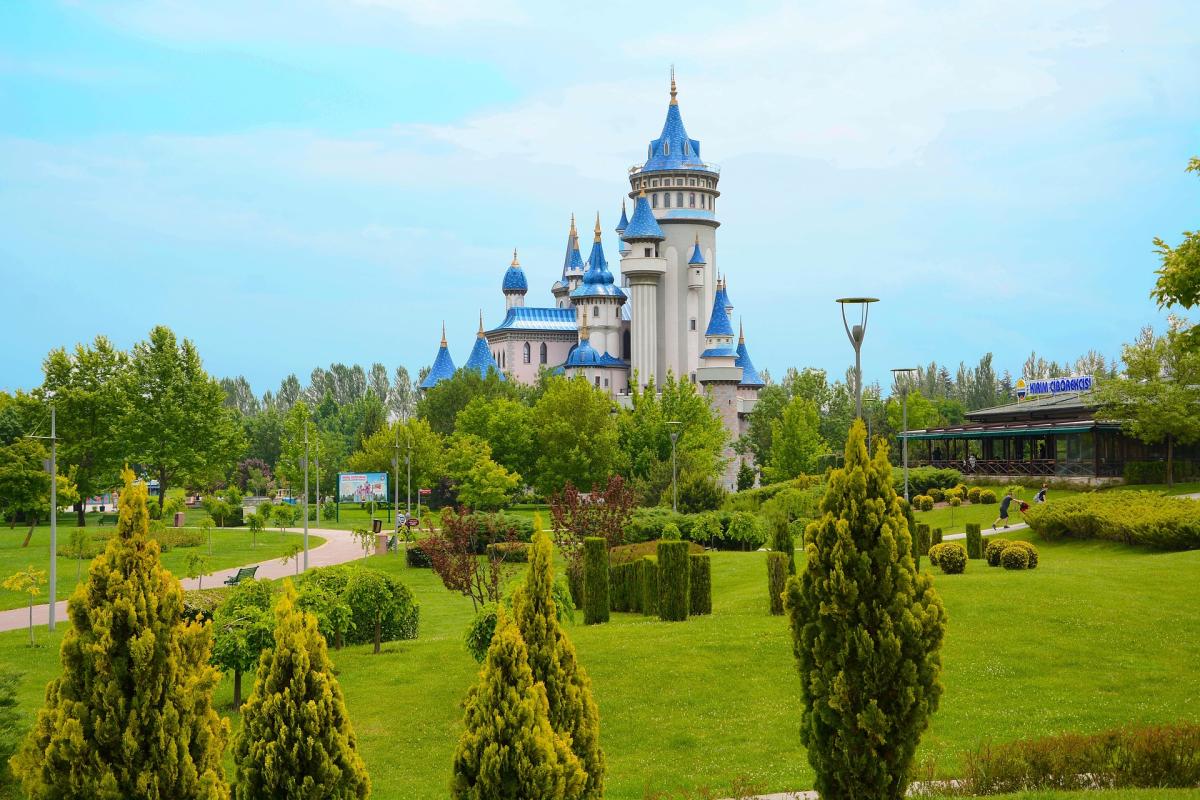
Welcome to Eskişehir! Often called the Student City or the Venice of Anatolia, this vibrant and modern city in northwestern Turkey is a delightful surprise for many travelers . With the picturesque Porsuk River flowing through its heart, a youthful energy fueled by its large university population, and...
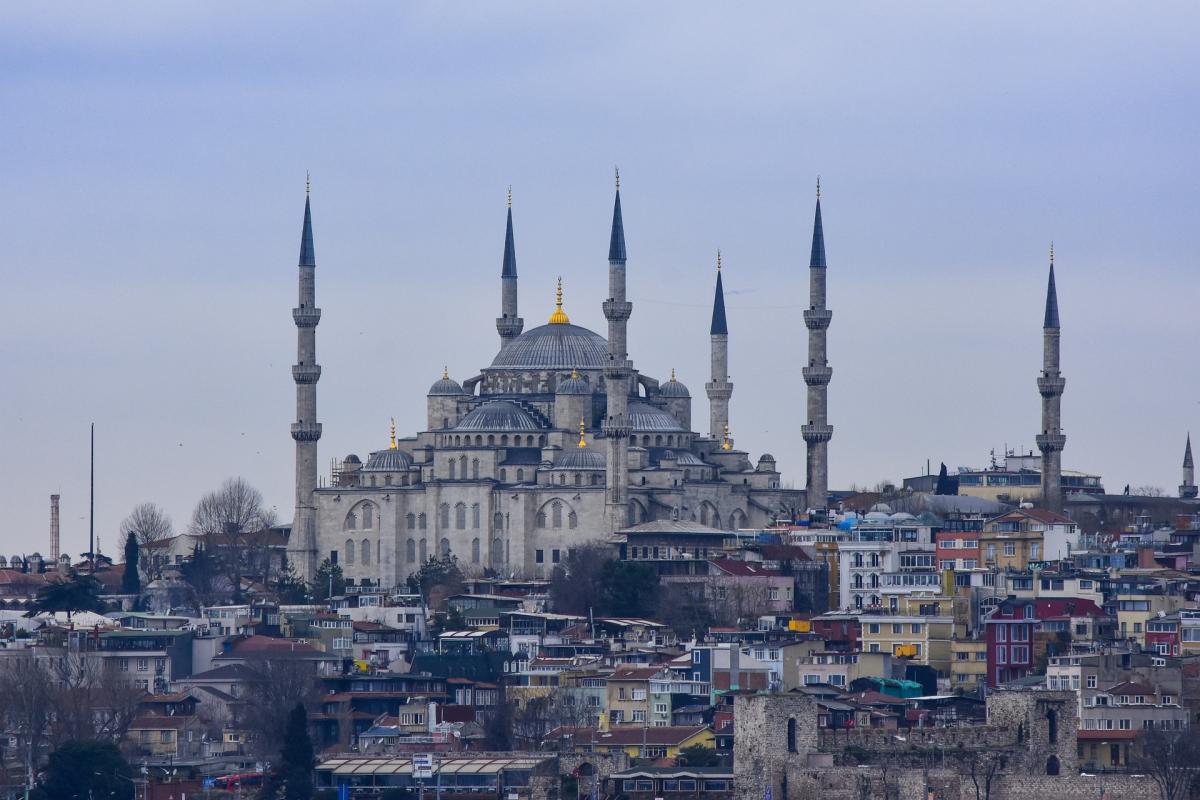
For the Toronto resident with a heart set on the historic and vibrant landscapes of Turkey, a journey of discovery awaits. This guide provides a comprehensive overview for planning your Turkish adventure, from pre-departure preparations in Toronto to immersing yourself in the rich culture, iconic destinations,...

Konya, a city that resonates with deep historical and spiritual significance, invites travelers to explore its rich Seljuk heritage and the profound legacy of the poet and mystic, Rumi . Located in Turkeys Central Anatolia region, Konya is a captivating blend of ancient mosques, traditional bazaars,...