
Exploring the Coptic Christian Heritage of Luxor: From Ancient Thebes to Egypt’s Monastic Traditions
Luxor is celebrated around the world for its monumental temples, royal tombs and extraordinary connections to ancient Egyptian civilization. Yet beyond the grandeur of Karnak, Luxor Temple and the Valley of the Kings lies another remarkable chapter in the city's past: its transformation into an important centre of early Egyptian Christianity. During the centuries following the rise of Christianity, the ancient landscape of Thebes acquired a new religious identity. Pharaonic temples became places of Christian worship, royal tombs attracted monks and hermits, and settlements on the western bank of the Nile developed into thriving religious communities.
This history is particularly significant because Luxor preserves some of the most compelling archaeological evidence of Christianity in Late Antique Egypt. Churches, monastic buildings, inscriptions, Coptic graffiti and traces of everyday religious life reveal how Christianity gradually became established in a region once dominated by the religious traditions of ancient Egypt. Rather than simply replacing one civilization with another, this transformation involved centuries of adaptation, coexistence and changing uses of sacred spaces.
Today, the remains of this Christian heritage offer visitors a different perspective on Luxor. They tell the story of a city that continued to evolve long after the age of the pharaohs, becoming part of the wider religious and cultural history of the Coptic Christian world.
Understanding the Coptic Christian Roots of Ancient Thebes
The history of Christianity in Luxor is closely connected to the broader development of the Coptic Church in Egypt. The term Coptic refers to Egypt's Christian communities and their distinctive religious, cultural and linguistic traditions. The Coptic language, the final historical stage of the ancient Egyptian language, became an important means of expressing Christian beliefs, translating religious texts and recording everyday affairs.
Christianity gradually spread throughout Egypt during the Roman period. Although Alexandria emerged as the country's principal Christian centre, the faith also found followers in Upper Egypt, where towns and villages along the Nile developed their own Christian communities.
The Theban region followed a particularly interesting path. Archaeological evidence suggests that Christian communities were established in the wider area from at least the fourth century AD. However, the documentary evidence for an organised Christian presence in Western Thebes becomes much clearer from the late sixth century onwards. Earlier scholars often regarded the region's Christianisation as relatively late because surviving written records from earlier centuries were scarce. More recent archaeological investigations have helped broaden that understanding.
The Council of Chalcedon in 451 also played an important role in shaping the religious identity of Egyptian Christians. The theological disagreements that followed led to competing ecclesiastical hierarchies in Egypt. The non-Chalcedonian Church, which became central to the development of the Coptic Orthodox tradition, established particularly strong connections with monastic communities in Upper Egypt.
By the late sixth and early seventh centuries, Western Thebes had become an important centre of this religious movement. Its monasteries were not simply isolated places of prayer; they were also centres of education, administration, manuscript production and regional communication.
How Ancient Egyptian Temples Became Christian Sacred Spaces
One of the most fascinating aspects of Luxor's Coptic history is the way early Christians adapted the monuments of ancient Egypt.
For centuries, the temples and tombs of Thebes had served religious, ceremonial and funerary purposes. When Christianity gradually became established in the region, some of these structures acquired new functions. Buildings that had once been associated with pharaonic religious traditions were transformed into churches, chapels, monasteries and places of residence.
This transformation was not always straightforward. Some structures underwent substantial architectural modifications, while others were occupied with relatively little alteration. In certain locations, Christian communities established small prayer spaces inside existing buildings. Elsewhere, they constructed churches within ancient temple enclosures or converted abandoned tombs into individual hermitages.
The western bank of the Nile was particularly suitable for this development. Its rocky hills, extensive necropolis, abandoned mortuary temples and natural shelters provided places where monks could live away from the busy settlements along the river.
Importantly, these Christian communities did not exist entirely apart from the surrounding population. They depended on connections with nearby villages, agricultural settlements and other religious institutions. Roads, desert paths and Nile transport routes helped monks exchange supplies, communicate with religious leaders and maintain relationships with distant communities.
A major archaeological study published by Cambridge University Press in 2026 illustrates the remarkable scale of this Christian occupation. Research conducted by the Coptic Project documented more than 1,517 Coptic graffiti and inscriptions and 163 Christian structures, including churches, monasteries and hermitages, across its survey area on Luxor's West Bank.
These findings demonstrate that Christian activity was not limited to a handful of famous religious buildings. It had become an extensive part of the region's cultural and physical landscape.
The Monastery of Saint Phoibammon at Deir el-Bahari
Among the most significant centres of early Christianity in Luxor was the Monastery of Saint Phoibammon, established within the ancient mortuary temple of Queen Hatshepsut at Deir el-Bahari.
The location is particularly striking. The temple, originally constructed during the Eighteenth Dynasty, stands beneath enormous limestone cliffs on the western bank of the Nile. Long before its Christian occupation, the complex had been associated with religious activities and local traditions of healing.
During the third and fourth centuries AD, parts of the temple were used for burials and other activities. By the end of the sixth century, however, the site had become the centre of an important Christian monastic establishment dedicated to Saint Phoibammon.
The monastery developed into a significant religious institution in the Theban region. Its importance is reflected in the documentary evidence associated with its monks, superiors and ecclesiastical connections.
One particularly important figure was Abraham, Bishop of Hermonthis, who was closely associated with the monastery during the early seventh century. Hermonthis, now known as Armant, was another important settlement south of Luxor. Abraham's activities demonstrate how monastic leaders and bishops participated in the wider religious organisation of Upper Egypt.
The monastery also left behind an impressive documentary legacy. Coptic manuscripts, legal documents, inscriptions and other written materials provide information about its administration, ownership of property and internal organisation.
Research published in the Journal of Coptic Studies has examined monastic wills associated with Saint Phoibammon, shedding light on how abbots were appointed, how authority passed between religious leaders and how monastic property was managed.
Unfortunately, much of the monastery's physical architecture disappeared during nineteenth-century archaeological clearance. Excavations concentrated on uncovering the earlier pharaonic monument, and substantial Christian-period structures were removed in the process.
Consequently, much of what historians know about the monastery comes from manuscripts, archaeological documentation, photographs and earlier excavation records rather than an intact surviving complex.
The Monastery of Epiphanius and the Christian Communities of the Theban Necropolis
Another important chapter in Luxor's Christian history is associated with the Monastery of Epiphanius, situated in the Theban necropolis near Sheikh Abd el-Qurna.
Unlike a conventional monastery constructed as a single large building, the establishment associated with Epiphanius developed through the adaptation of existing funerary spaces.
Ancient tombs were modified to accommodate the requirements of monastic life. Their interiors could be divided into living quarters, prayer areas and working spaces. Mud-brick walls, additional architectural features and religious decorations helped transform these earlier structures into functional Christian environments.
The archaeological investigation of this site became particularly important in the early twentieth century. Herbert E. Winlock and Walter Ewing Crum published a substantial two-volume study, The Monastery of Epiphanius at Thebes, in 1926. Their work remains a significant reference for understanding Christian occupation of the western Theban necropolis.
The monastery also provides valuable evidence of the intellectual life of early Egyptian monks. Manuscripts, inscriptions and written exercises indicate that religious communities were involved in reading, copying texts, writing correspondence and preserving theological knowledge.
The surrounding hills contained other hermitages and small religious establishments. Some monks lived in groups close to churches, while others occupied individual tombs or secluded shelters.
This pattern is often described by historians as semi-eremitic monasticism: a form of religious life in which individual monks maintained a degree of solitude while remaining connected to a larger religious community.
The geographical arrangement of these settlements reveals that Western Thebes had developed a sophisticated monastic environment rather than a collection of unrelated hermitages.
Deir el-Bakhit and the Monastery of Saint Paul
The Monastery of Saint Paul, identified with the archaeological site of Deir el-Bakhit at Dra Abu el-Naga, represents another important form of Christian monastic settlement in Luxor.
Unlike the smaller hermitages scattered throughout the necropolis, Deir el-Bakhit appears to have been a substantial organised monastery. Archaeological investigations undertaken during the early twenty-first century have revealed a complex containing numerous buildings and features associated with communal religious life.
Among the architectural discoveries were structures interpreted as possible communal dining facilities, suggesting that monks lived and worked together rather than maintaining completely independent households.
The excavations also uncovered more than 2,500 ostraca. These objects, generally fragments of pottery or limestone used as inexpensive writing surfaces, are particularly valuable to historians because they preserve information about ordinary activities that might otherwise have disappeared from the historical record.
The written material associated with Western Theban monasteries includes letters, administrative documents, accounts, legal records and religious texts. Such discoveries help researchers understand how monastic institutions functioned beyond their spiritual responsibilities.
Deir el-Bakhit is especially important because it demonstrates that communal monasticism flourished alongside the more secluded forms of religious life found in the surrounding tombs and mountains.
Together, the monasteries of Saint Paul, Epiphanius and Phoibammon reveal the diversity of Christian religious organisation in ancient Luxor.
Medinet Habu: The Christian Village of Djeme
While the western hills became home to numerous monastic establishments, the area surrounding the Temple of Ramesses III at Medinet Habu developed into an important Christian settlement.
In antiquity, the settlement was known as Djeme, also written as Jeme or Djema. It occupied an area around the monumental temple complex and became one of the most significant centres of Christian life in Western Thebes.
The archaeological and documentary records indicate that Djeme supported a flourishing Christian population. Coptic inscriptions, papyri and ostraca provide evidence of religious institutions and everyday activities within the settlement.
A particularly interesting discovery was a large Christian basilica constructed inside the second court of the Temple of Ramesses III.
The building was a five-aisled church, an architectural arrangement that reflects the importance of the Christian community that worshipped there. Although its precise construction date remains debated, scholars have proposed dates ranging from the fifth to the sixth century.
Unfortunately, the church was removed in 1891 before the pharaonic temple underwent further restoration. Its architecture was never documented as thoroughly as the ancient Egyptian monument, leaving researchers dependent on earlier drawings, photographs and descriptions.
The archaeological record identifies several other Christian religious buildings within the Medinet Habu enclosure. One particularly interesting chapel contains paintings depicting episodes from the life and martyrdom of Saint Menas, a widely venerated Christian saint in Egypt.
A further Christian feature identified within the temple complex is the Chapel of Saint Anthony, which provides another example of the adaptation of the ancient structure for Christian religious purposes.
The significance of Djeme extends beyond its churches. The settlement's Coptic documents reveal the presence of scribes, religious officials and ordinary inhabitants whose activities connected the village to the wider administrative and economic life of the region.
A specialist archaeological database maintained through the 4CARE and DEChriM research initiatives identifies Medinet Habu as an important Late Roman and Coptic-period settlement, with evidence of occupation extending approximately from the sixth to the ninth century.
For anyone interested in the Christian history of Luxor, Medinet Habu is therefore much more than an ancient Egyptian temple. It represents the remains of a settlement where two very different historical periods became closely intertwined.
Christian Life Inside the Valley of the Kings
Perhaps one of the most unexpected aspects of Luxor's Christian heritage is the evidence of Christian occupation inside the Valley of the Kings.
The valley is primarily associated with the burial places of New Kingdom pharaohs, including Ramesses IV, Ramesses VI and Tutankhamun. Yet centuries after the royal burials had been abandoned, some of these ancient tombs attracted Christian visitors, monks and hermits.
During Late Antiquity, a small Christian community reused certain tombs as places of residence and for religious activities. The remains of inscriptions, painted symbols and Christian graffiti provide evidence of this occupation.
The tomb of Ramesses IV, known to archaeologists as KV2, is particularly noteworthy. A Christian cross appears among the later markings on its walls, demonstrating that the ancient burial chamber had acquired a new religious significance.
Other tombs in the Valley of the Kings and surrounding Theban necropolis also preserve evidence of Christian use. Some were adapted as living quarters, while others appear to have served devotional purposes.
This reuse was part of a much broader phenomenon throughout Western Thebes. Ancient Egyptian tombs offered sheltered spaces in an otherwise harsh landscape, making them practical locations for individuals seeking a secluded religious existence.
It is important, however, not to assume that every Christian inscription indicates permanent monastic occupation. Some may have been left by visitors or temporary residents. Archaeologists therefore examine inscriptions alongside architectural modifications, pottery, manuscripts and other archaeological evidence to establish how individual sites were used.
The Christian presence in the Valley of the Kings offers a striking reminder that the history of these monuments did not end with the burial of the pharaohs. They continued to attract people from different cultures and religious traditions for many centuries.
The Coptic Heritage of Deir el-Medina
Deir el-Medina, the celebrated settlement of the workers who constructed royal tombs during the New Kingdom, also preserves traces of Luxor's Christian past.
The site is particularly valuable because it offers an opportunity to examine how a settlement originally associated with royal tomb construction was reused during later historical periods.
Christian inscriptions and graffiti have been documented on the walls of the Temple of Hathor. These markings include evidence of the presence of people who visited or occupied the ancient structures during the Christian period.
Recent investigations have placed particular emphasis on recording such inscriptions because they provide information about the movement of Christian communities through the Theban landscape.
The Coptic graffiti at Deir el-Medina should not be regarded merely as incidental markings. When studied alongside inscriptions from nearby tombs, temples and monasteries, they help reconstruct a wider pattern of Christian settlement and religious activity.
The 2026 research published in Antiquity specifically identifies the Temple of Hathor at Deir el-Medina as one of the locations where Coptic graffiti were recorded during the recent survey of Luxor's West Bank.
The site therefore contributes to an understanding of Christian history that extends beyond the major monasteries and churches. It demonstrates that smaller and older archaeological locations also formed part of the religious geography of Western Thebes.
The Church Beneath the Mosque of Abu'l-Haggag at Luxor Temple
One of the clearest examples of the religious transformation of Luxor's sacred spaces can be found on the eastern bank of the Nile, within the famous Luxor Temple complex.
Today, the Mosque of Abu'l-Haggag stands above the ancient structures of the temple. Its presence creates an unusual architectural landscape in which ancient Egyptian, Christian and Islamic religious traditions can be traced within the same monumental enclosure.
The story began during the Roman period, when Luxor Temple underwent substantial changes in its function. During the fourth century AD, the complex was adapted for use as a military installation. It subsequently became home to several Christian churches constructed within its walls.
One of these churches occupied part of the great court of Ramesses II. Archaeological research indicates that the Christian building dates to Late Antiquity, probably around the sixth century.
The arrival of Islam in Egypt introduced another transformation to the site.
Sheikh Yusuf Abu'l-Haggag, a Muslim religious scholar who migrated from Baghdad to Luxor, became an important spiritual figure in the local community. He died in 1244, and his mausoleum was established above the remains of the ancient church.
His son subsequently erected an early structure associated with the mosque at the site. The present mosque, however, largely reflects a much later construction phase: the main building was reconstructed in the 1820s, while its second minaret dates to 1851-1852.
This architectural history was investigated in detail by the American Research Center in Egypt (ARCE) through a conservation and documentation project undertaken in 2007-2008.
During restoration work, researchers uncovered hieroglyphic inscriptions and ancient architectural blocks beneath layers of plaster and cement. These discoveries helped clarify the relationship between the mosque and the earlier buildings incorporated into Luxor Temple.
The Mosque of Abu'l-Haggag remains an active place of worship today. Its continued use makes it an especially compelling example of how a sacred location can retain religious significance even as its architectural appearance and cultural identity change over time.
For visitors, the mosque offers a rare opportunity to appreciate the layered religious history of Luxor without leaving the grounds of one of its most celebrated ancient monuments.
Everyday Life, Education and Written Culture in Coptic Luxor
The Christian history of Luxor is not defined solely by impressive monasteries and reused temples. The written records discovered throughout Western Thebes provide an unusually detailed picture of how monks and other inhabitants lived.
Among the most valuable archaeological materials are ostraca and papyri.
Ostraca were commonly used for short messages, exercises, receipts and administrative notes. Papyri, meanwhile, were suitable for longer documents, including correspondence, legal agreements and religious texts.
Together, these materials reveal that monastic communities were involved in a wide range of activities.
Education and manuscript production were important parts of monastic life. Monks copied religious books, studied languages and developed their writing skills. Some documents also show the use of both Coptic and Greek, particularly in legal and liturgical contexts.
Textile production was another important activity. Archaeological discoveries include loom pits and textile-related equipment, while written records refer to the production and exchange of linen materials and burial shrouds.
Trade and transportation connected monasteries to nearby settlements. Monks required food, clothing, writing materials and other necessities. The transportation of water and supplies, sometimes involving camel drivers, demonstrates that these communities depended on organised networks rather than complete isolation.
Religious administration also played an important role. Bishops, priests and abbots maintained relationships with one another, while legal documents recorded property transfers, appointments and other institutional matters.
A particularly interesting historical figure is the priest Mark, who was active in Western Thebes during the early seventh century. His surviving written work includes correspondence, administrative records and inscriptions. One ostracon associated with him records a solar eclipse dated to AD 601, providing researchers with a valuable chronological reference.
Such discoveries bring the history of ancient Luxor closer to everyday human experience. They reveal a community of educated religious figures, skilled workers, administrators and ordinary inhabitants whose lives extended well beyond the walls of their monasteries.
What Happened to Christianity in Luxor After the Arab Conquest?
The Arab conquest of Egypt in the seventh century marked a major political and cultural transition. Alexandria fell to Arab forces in 641, bringing an end to Byzantine political rule in Egypt.
However, the arrival of Muslim rulers did not immediately bring an end to Christianity or the Coptic Church.
Christian communities continued to exist throughout Upper Egypt, and Coptic remained an important language for religious, legal and administrative purposes. In fact, some aspects of Coptic written culture flourished during the early centuries of Islamic rule.
The documents discovered at Medinet Habu and elsewhere in Western Thebes provide evidence of continued Christian activity during the eighth century.
Djeme became an important administrative centre for the surrounding region, and Coptic scribes continued to produce documents and maintain institutional records.
Nevertheless, the political and economic circumstances of Christian communities gradually changed. Taxation pressures increased, Arabic became increasingly important in administration and everyday communication, and the religious composition of Egyptian society evolved over subsequent centuries.
The transition from a predominantly Christian society to one in which Muslims formed the majority was a long and uneven process. It involved different social, economic and political developments rather than a single historical event.
Despite these changes, the Coptic Church survived and maintained its religious institutions, traditions and cultural identity.
The history of Luxor is therefore part of a much wider story: the continued presence of Egyptian Christianity under successive political systems and its contribution to the country's cultural development.
Where Can Visitors Discover Luxor's Coptic Christian Heritage?
Although Luxor is internationally famous for its pharaonic monuments, visitors interested in Christian history can explore several locations that preserve evidence of this lesser-known chapter.
Some of the most significant places include:
- Deir el-Bahari: The location of the former Monastery of Saint Phoibammon, associated with Queen Hatshepsut's ancient mortuary temple.
- Medinet Habu: An important Christian settlement known as Djeme, with archaeological evidence of churches, chapels and a flourishing Coptic community.
- Dra Abu el-Naga: The location of Deir el-Bakhit, identified with the Monastery of Saint Paul, an important communal monastic establishment.
- Sheikh Abd el-Qurna: An extensive area of the Theban necropolis where ancient tombs were adapted for Christian monastic occupation.
- Valley of the Kings: Several royal tombs preserve evidence of Christian occupation, including later inscriptions and crosses.
- Deir el-Medina: The Temple of Hathor contains Coptic graffiti documenting Christian activity in the ancient settlement.
- Luxor Temple: The Mosque of Abu'l-Haggag stands above the remains of an earlier Christian church, illustrating the site's successive religious uses.
Not all these places preserve standing Christian buildings. In several cases, the original structures were removed during archaeological excavations or survive only through written and photographic records. Nevertheless, the archaeological evidence makes them essential to understanding the religious history of ancient Thebes.
Conclusion
Luxor's Coptic Christian history reveals a side of ancient Thebes that is often overlooked by visitors who concentrate exclusively on the pharaohs and their monuments. Beyond the monumental temples and royal tombs, the region became an important landscape of churches, monasteries, hermitages and Christian settlements.
The communities that developed here transformed abandoned tombs into places of prayer, established monasteries within ancient religious complexes and created networks that connected monks, bishops, scribes and ordinary inhabitants. Their manuscripts, inscriptions and everyday objects preserve a fascinating record of religious life in Upper Egypt.
Perhaps the most remarkable feature of this history is the continuity of sacred space. A temple could become a church, an ancient tomb could provide shelter for a monk, and a Christian religious building could eventually become part of a later Islamic monument. Each transformation added another chapter to the story of the city.
Today, the Coptic heritage of Luxor provides an essential perspective on Egypt's cultural and religious diversity. It reminds us that the history of Thebes did not end with the decline of the pharaohs. The city continued to evolve, adapting to new beliefs and communities while preserving traces of the remarkable civilizations that came before them.
To explore Luxor fully, therefore, is to look beyond its ancient Egyptian splendour and discover the Christian communities that helped shape its history for more than a thousand years.

On the western bank of the Nile in Luxor, surrounded by the remarkable archaeological landscape of ancient Thebes, stands one of Egypts most impressive and historically significant monuments: Medinet Habu. Built during the reign of Pharaoh Ramesses III, this extraordinary temple complex is renowned for...

Few places in the world offer such an extraordinary connection to the ancient past as Luxor, a city in southern Egypt where monumental temples, royal tombs, and centuries-old religious traditions remain woven into the landscape. Situated along the banks of the Nile, Luxor is often described as the worlds...
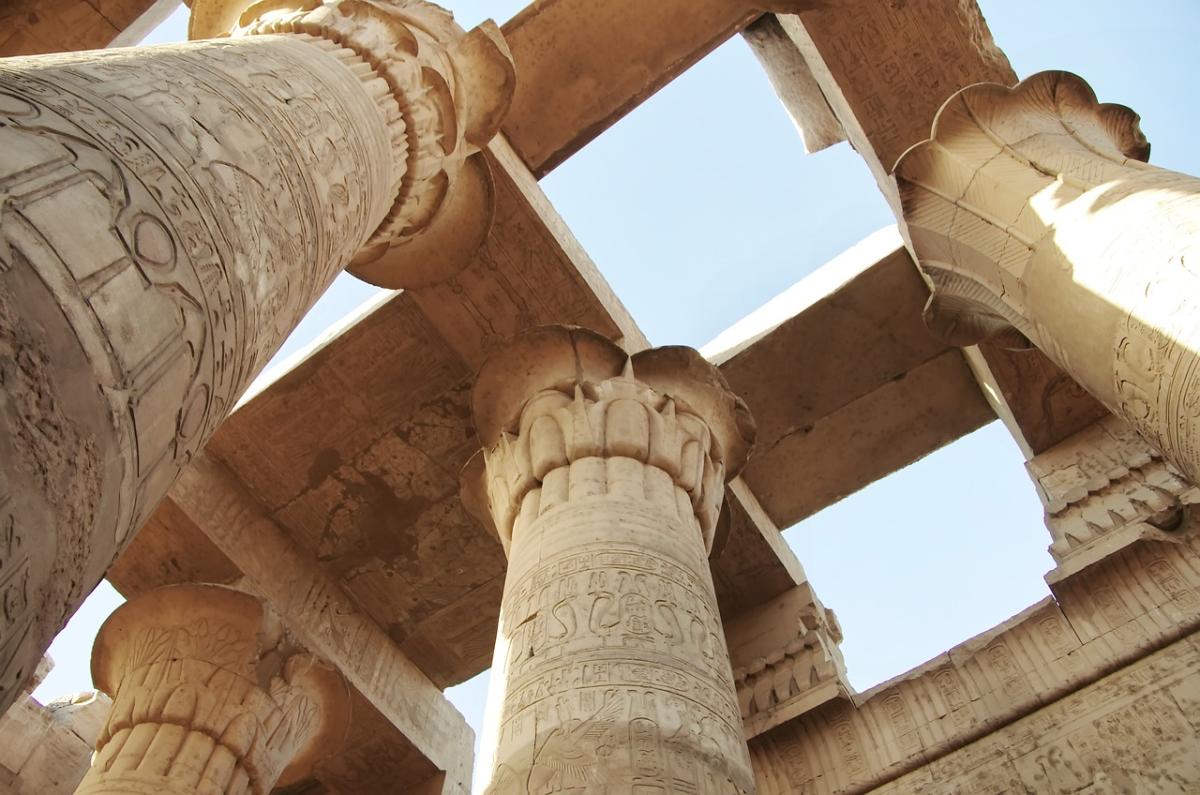
The Karnak Temple Complex, located on the east bank of the Nile River in modern-day Luxor, stands as a testament to the enduring power and religious devotion of ancient Egypt. For over 2,000 years, this vast and intricate site served as the epicenter of religious life, a place of pilgrimage, and a monumental...