
What Is the History of Luxor, Egypt? Exploring the Ancient City of Thebes and Its Remarkable Legacy
Few places in the world offer such an extraordinary connection to the ancient past as Luxor, a city in southern Egypt where monumental temples, royal tombs, and centuries-old religious traditions remain woven into the landscape. Situated along the banks of the Nile, Luxor is often described as the world's greatest open-air museum. Yet this familiar expression hardly captures its historical importance. Beneath its magnificent monuments lies the story of a city that witnessed the rise of powerful pharaohs, the expansion of an Egyptian empire, profound religious transformations, and the gradual passage from the ancient world into the modern age.
Known to the ancient Egyptians as Waset and to the Greeks as Thebes, Luxor was once among the most influential political and religious centres of the ancient world. Its significance reached a remarkable height during the Middle and New Kingdoms, when Theban rulers helped reunify Egypt and later presided over an era of military expansion, artistic achievement, and architectural ambition.
Today, the city preserves an exceptional collection of archaeological treasures on both sides of the Nile. The temples of Karnak and Luxor stand on the eastern bank, while the western landscape contains the Valley of the Kings, the Valley of the Queens, the mortuary temple of Hatshepsut, and numerous other monuments associated with ancient Egyptian beliefs about kingship, death, and eternal life.
Understanding Luxor's history means looking beyond individual monuments. It means exploring the people, religious ideas, political ambitions, and cultural changes that transformed a settlement in Upper Egypt into one of the most celebrated centres of ancient civilization.
From Waset to Thebes: The Early History of Luxor
The history of Luxor stretches back thousands of years, long before the enormous temples that define its skyline today were constructed. In ancient Egyptian records, the city was known as Waset. It occupied an important position in Upper Egypt, serving as the administrative centre of the fourth nome, or provincial district.
Although the region had settlements and religious significance during the Old Kingdom (approximately 2686-2181 BCE), its rise to national prominence came later. During the First Intermediate Period, Egypt experienced political fragmentation, with competing rulers controlling different parts of the country. The rulers of Thebes gradually strengthened their position, eventually challenging the northern dynasties.
A decisive moment came under Mentuhotep II, a ruler of the Eleventh Dynasty who succeeded in reunifying Upper and Lower Egypt around 2055 BCE. His achievement established the foundations of the Middle Kingdom and elevated Thebes to the position of Egypt's capital. The city consequently became an important centre of royal authority, religious activity, and monumental construction.
Mentuhotep II also left a lasting architectural legacy on the western bank of the Nile. His funerary complex at Deir el-Bahari, built against a dramatic limestone cliff, demonstrated the growing ambition of Theban rulers to create monumental burial places that expressed both their earthly authority and their hopes for the afterlife.
The political importance of Thebes changed during the Twelfth Dynasty. Amenemhat I moved the royal administrative centre north to a new residence known as Itj-tawy, near modern Lisht. Thebes consequently lost its position as the principal political capital, but it retained considerable religious significance. Its association with the god Amun would become increasingly important in the centuries that followed.
The early development of Thebes is therefore a story of gradual transformation rather than sudden greatness. Its geographical position, royal connections, and growing religious prestige provided the foundations for its extraordinary future.
The Rise of Thebes During the New Kingdom
The most celebrated period in Luxor's ancient history began with the emergence of the New Kingdom, conventionally dated to approximately 1550-1069 BCE.
During the Second Intermediate Period, Egypt was divided between competing political powers. The Hyksos, rulers of western Asian origin, controlled much of the north from their centre at Avaris in the eastern Nile Delta. Meanwhile, Egyptian dynasties based in Thebes maintained authority in the south.
The Theban royal family eventually led the campaign that expelled the Hyksos and restored political unity. Ahmose I is traditionally regarded as the founder of the Eighteenth Dynasty and the New Kingdom. His military success opened the way for a period of extraordinary prosperity and expansion.
Egyptian rulers subsequently extended their influence into Nubia and the eastern Mediterranean. Military campaigns brought wealth, valuable resources, foreign goods, and political influence into the country. Thebes benefited enormously from this expansion, particularly because the god Amun had become closely associated with the royal dynasty and its victories.
Under successive pharaohs, the city developed into a magnificent religious and ceremonial centre. Its temples were expanded, new royal monuments appeared along the western cliffs, and the surrounding landscape became one of the most important sacred regions in Egypt.
Thebes was not simply a royal residence or administrative centre. It was also a place where political authority and religious legitimacy were closely connected. The pharaoh's relationship with Amun was represented through temple ceremonies, inscriptions, statues, and monumental architecture. The city's religious institutions accumulated considerable wealth and influence, reflecting the close relationship between the Egyptian state and its principal deities.
UNESCO recognizes Ancient Thebes and its Necropolis as an exceptional testimony to Egyptian civilization at its height, when the country exercised influence over territories extending from the Euphrates region to northern Sudan.
Karnak: The Sacred Heart of Ancient Egyptian Religion
Among all the monuments that preserve the legacy of ancient Thebes, few are as impressive as the vast temple complex of Karnak. Located on the eastern bank of the Nile, Karnak was not a single temple constructed by one ruler. Rather, it was an enormous religious centre that developed over nearly two thousand years, with successive pharaohs adding sanctuaries, courtyards, obelisks, statues, and ceremonial halls.
The ancient Egyptians called the complex Ipet-Sut, meaning "The Most Select of Places." Its principal sanctuary was dedicated to Amun, the god whose growing importance closely followed the political rise of Thebes. Amun was eventually associated with the sun god Ra, becoming Amun-Ra, one of the most powerful deities in the Egyptian pantheon.
The earliest surviving evidence of royal building activity at Karnak dates to the reign of Intef II, around 2112-2063 BCE. However, the complex experienced its greatest expansion during the New Kingdom. Almost every major ruler of that period sought to leave a lasting mark on its sacred grounds.
One of Karnak's most extraordinary features is the Great Hypostyle Hall. Covering approximately 5,000 square metres, it contains 134 enormous stone columns arranged in sixteen rows. The twelve central columns rise approximately 21 metres, while the surrounding columns are somewhat shorter. Their capitals imitate the shape of papyrus plants, creating an architectural impression of a monumental forest.
The hall was developed under several rulers, with Seti I and his son Ramesses II responsible for much of its construction and decoration. Its carved walls portray religious ceremonies, royal achievements, and military campaigns, offering valuable insight into the political and spiritual life of ancient Egypt.
Karnak also contains the impressive obelisks of Hatshepsut, including one that rises almost 30 metres above the ground. Other important features include the sacred lake, where priests performed purification rituals, and the temple of Thutmose III, which reflects the architectural and religious ambitions of one of Egypt's most successful military rulers.
The complex was not exclusively dedicated to Amun. Separate precincts honoured other deities, including Mut, his divine consort, and Montu, a god associated with warfare. These different sanctuaries formed part of a broader religious landscape that connected the royal court, the priesthood, and the divine world.
Karnak's importance extended far beyond religious ceremonies. The temple possessed substantial land, wealth, agricultural resources, and an influential priesthood. At certain points in Egyptian history, the high priests of Amun exercised considerable political authority, demonstrating how closely religion and government were intertwined.
Luxor Temple and the Opet Festival
While Karnak represented the religious power of Amun, Luxor Temple played a distinctive role in the ceremonial life of ancient Thebes.
Known to the ancient Egyptians as Ipet-Resyt, or the Southern Sanctuary, Luxor Temple was situated approximately three kilometres south of Karnak. Unlike many Egyptian temples, its principal orientation was not simply determined by the east-west movement of the sun. Its layout was closely connected with Karnak and the religious ceremonies that linked the two sanctuaries.
The temple's earliest surviving structures date to the Eighteenth Dynasty. Hatshepsut established an early shrine, but the principal architectural development took place during the reign of Amenhotep III, around 1390-1352 BCE.
One of the temple's most fascinating features is its representation of the divine birth of the pharaoh. Reliefs inside the sanctuary describe how Amun-Ra assumed the appearance of the previous king, Thutmose IV, to father Amenhotep III. Such scenes were more than decorative religious imagery. They communicated the idea that the pharaoh's authority was supported by divine ancestry.
Later rulers continued to develop the complex. Tutankhamun and Horemheb completed important decorative work in the Great Colonnade, including scenes depicting one of the most significant celebrations in the Theban religious calendar: the Opet Festival.
During this annual celebration, the sacred images of Amun, Mut, and their son Khonsu were transported from Karnak to Luxor Temple in an elaborate procession. The journey symbolically renewed the relationship between the gods, the pharaoh, and the city.
The festival was not simply a religious parade. It was an occasion of enormous public and political importance. The presence of the divine images reinforced the legitimacy of kingship, while the ceremonies celebrated the renewal of divine power and the continued prosperity of Egypt.
Ramesses II made further substantial additions to Luxor Temple, including its impressive entrance pylon, a large courtyard, colossal royal statues, and two obelisks. One of these obelisks remains in Luxor, while its companion was transported to Paris in the nineteenth century and erected in the Place de la Concorde in 1836.
The relationship between Karnak and Luxor Temple can still be appreciated through the Avenue of Sphinxes, an approximately 2.7-kilometre ceremonial road lined with sphinxes and ram-headed statues. Its construction and decoration developed over several dynasties, and it was used for religious processions.
Following extensive archaeological excavation and restoration, the avenue was officially reopened on 25 November 2021. The restoration reconnected two of Egypt's most important ancient monuments and gave visitors a much clearer understanding of how the ceremonial landscape of Thebes once functioned.
The West Bank: Where the Pharaohs Prepared for Eternity
Crossing the Nile from the temples of Karnak and Luxor brings visitors into a very different landscape. The eastern bank was associated with the rising sun, daily life, and the world of the living. The western bank, where the sun disappeared at the end of each day, was associated with death, regeneration, and the afterlife.
This religious symbolism influenced the location of royal tombs and funerary temples. Ancient Egyptians believed that death was not an absolute ending but a transition into another form of existence. The deceased required proper burial rituals, offerings, and protection to achieve a successful journey into the next world.
Consequently, the western landscape of Thebes developed into an enormous funerary region containing royal tombs, private cemeteries, mortuary temples, religious structures, and settlements associated with the people responsible for constructing the burial monuments.
The Theban Necropolis is one of the most remarkable archaeological landscapes in the world. Its remains provide evidence not only of royal ceremonies and religious beliefs but also of ordinary working life, artistic traditions, and the administrative organization of ancient Egypt.
The Valley of the Kings and the Secrets of Royal Tombs
Perhaps no location in Luxor has attracted more international attention than the Valley of the Kings.
Situated in a secluded desert valley west of the Nile, this royal necropolis became the principal burial ground for many pharaohs of the Eighteenth, Nineteenth, and Twentieth Dynasties, approximately 1550-1069 BCE.
The decision to bury kings in this isolated location reflected both religious beliefs and practical concerns. Earlier Egyptian rulers had constructed enormous pyramids, but these monuments were vulnerable to tomb robbers. The New Kingdom pharaohs increasingly favoured concealed underground tombs cut into the limestone cliffs.
The valley's natural surroundings also carried religious significance. A pyramid-shaped mountain peak rises above the surrounding landscape, reinforcing the association between the burial ground and ideas of resurrection and eternal life.
The first ruler confirmed to have been buried in the Valley of the Kings was Thutmose I, who reigned during the Eighteenth Dynasty. His burial established a tradition that would continue for centuries.
More than sixty tombs have been identified in the valley, along with approximately twenty unfinished tomb structures. Their architecture varies considerably. Some are relatively simple, while others contain elaborate corridors, chambers, pillars, and richly decorated walls.
The paintings and inscriptions inside these tombs provide an extraordinary record of ancient Egyptian religious thought. Scenes from funerary compositions such as the Book of the Dead and the Amduat describe the sun god's nightly journey through the underworld, the dangers encountered along the way, and the transformations necessary for rebirth.
One of the most famous discoveries in the valley was the tomb of Tutankhamun.
Tutankhamun was a relatively young pharaoh whose reign followed the religious upheaval associated with Akhenaten. His restoration of traditional religious practices helped return Egypt's principal temples and priesthoods to their former importance.
Although his reign was comparatively short, his burial would eventually become one of the most celebrated archaeological discoveries in history.
On 4 November 1922, British archaeologist Howard Carter discovered the entrance to the tomb after years of searching. When the burial chambers were examined, the archaeological team encountered an extraordinary collection of furniture, jewellery, chariots, ceremonial objects, statues, and other royal possessions.
The tomb had experienced ancient robbery, so it was not entirely untouched. Nevertheless, much of its extraordinary funerary collection survived.
The excavation revealed more than 5,000 objects, and the process of documenting, conserving, and removing them took approximately ten years. The discovery transformed international interest in ancient Egypt and established Luxor as one of the world's most important destinations for archaeological tourism.
Hatshepsut's Temple at Deir el-Bahari
Among the most architecturally distinctive monuments on Luxor's western bank is the mortuary temple of Queen Hatshepsut at Deir el-Bahari.
Hatshepsut was one of the most remarkable rulers of ancient Egypt. Initially serving as regent for the young Thutmose III, she eventually assumed the title and authority of pharaoh. Her reign, approximately 1473-1458 BCE, was characterized by considerable economic activity, diplomatic engagement, and monumental construction.
Her funerary temple, known as Djeser-Djeseru, meaning "Holy of Holies", was designed by her chief steward and architect Senenmut.
The structure consists of three broad terraces connected by ramps, rising gradually towards the dramatic limestone cliffs behind it. Its harmonious relationship with the surrounding landscape makes it one of the most distinctive examples of ancient Egyptian architecture.
The temple's decorative programme reveals important aspects of Hatshepsut's reign.
One particularly fascinating series of reliefs depicts her famous expedition to the land of Punt, a region generally associated with areas around the southern Red Sea and the Horn of Africa. The scenes portray foreign settlements, local inhabitants, exotic animals, and valuable goods brought back to Egypt.
The expedition returned with products such as incense trees and other precious commodities, demonstrating Egypt's interest in international trade and diplomatic exchange.
Other reliefs present Hatshepsut's claim to legitimate kingship. They emphasize her relationship with the god Amun and portray her authority as divinely sanctioned.
The temple was not exclusively dedicated to Hatshepsut. Its sanctuaries also honoured Amun, Hathor, Anubis, and her father, Thutmose I.
Deir el-Bahari therefore offers a fascinating insight into the relationship between architecture, religious symbolism, royal authority, and the natural environment in ancient Egypt.
The Valley of the Queens and the Royal Families
Although the Valley of the Kings was primarily associated with pharaohs, the Valley of the Queens served as an important burial ground for royal women and other members of the royal family.
The necropolis contains numerous tombs dating principally to the New Kingdom. Its most celebrated burial is that of Queen Nefertari, the beloved Great Royal Wife of Ramesses II.
Nefertari's tomb, designated QV66, is particularly admired for the quality and richness of its decoration. Its walls are covered with colourful scenes showing the queen interacting with Egyptian deities and undertaking the spiritual journey required for eternal life.
The paintings demonstrate an exceptional understanding of colour, composition, and religious symbolism. They also illustrate the privileged position occupied by certain royal women within the religious and political structure of ancient Egypt.
The Valley of the Queens is an important reminder that the history of Thebes was not exclusively about kings and military achievements. Royal women played significant roles in religious ceremonies, dynastic relationships, and the cultural life of the Egyptian court.
The Ramesseum and Medinet Habu: Monuments of Royal Power
Beyond the royal tombs and Hatshepsut's temple, the western bank contains several enormous mortuary complexes that reveal the ambitions of Egypt's most powerful rulers.
One of the most significant is the Ramesseum, the funerary temple of Ramesses II. Constructed during the Nineteenth Dynasty, the complex was intended to preserve the king's religious legacy and maintain his cult after death.
Ramesses II, who ruled from approximately 1279 to 1213 BCE, is often regarded as one of the most influential pharaohs of ancient Egypt. His long reign was associated with extensive construction programmes, military campaigns, and diplomatic activity.
The Ramesseum's walls depict scenes from his famous conflict with the Hittites at the Battle of Kadesh. These reliefs present the pharaoh as a powerful military leader protected by the gods.
The complex also contained enormous royal statues. One particularly impressive statue of Ramesses II originally stood more than 17 metres high. Its broken remains illustrate the immense scale of royal sculpture during the New Kingdom.
Another important monument is Medinet Habu, the mortuary temple of Ramesses III, who ruled during the Twentieth Dynasty.
Built around 1184-1153 BCE, the complex is particularly valuable because of its remarkable state of preservation. Its massive enclosure walls, monumental gateways, courtyards, and decorated chambers provide an unusually complete picture of a New Kingdom religious establishment.
Ramesses III fought a series of important campaigns against the Libyans and the groups commonly referred to as the Sea Peoples. The temple's walls preserve extensive military scenes, including representations of battles and captured enemies.
These images are valuable historical sources, although they must also be understood as royal propaganda designed to celebrate the pharaoh's achievements and demonstrate his divinely supported authority.
Medinet Habu was more than a funerary monument. It included administrative buildings, storage areas, workshops, chapels, and the remains of a royal palace. Its layout demonstrates how large religious institutions also functioned as economic and administrative centres.
Together, the Ramesseum and Medinet Habu reveal the extraordinary importance of royal commemoration in ancient Thebes.
Deir el-Medina: Discovering the Lives of the People Behind the Monuments
The great temples and royal tombs of Luxor are often associated with pharaohs, queens, and powerful priests. However, their construction depended on thousands of skilled workers, architects, sculptors, painters, stonecutters, and administrators.
One of the most fascinating archaeological discoveries on the western bank is Deir el-Medina, the settlement where many of the craftsmen responsible for decorating the royal tombs lived.
The village was established during the New Kingdom and remained active for several centuries. Its inhabitants worked under a specialized royal institution responsible for excavating and decorating the royal burial chambers in the Valley of the Kings and the Valley of the Queens.
Unlike many other ancient settlements, Deir el-Medina has produced an extraordinary collection of written records. Archaeologists have recovered papyri, pottery fragments bearing inscriptions, personal letters, administrative documents, and legal records.
These documents offer an unusually intimate picture of everyday life in ancient Egypt.
They reveal details about workers' wages, food supplies, family relationships, religious practices, property disputes, and disagreements with government officials. They also show that the craftsmen possessed considerable technical expertise and often had opportunities to develop their own artistic traditions.
The village contained houses, workshops, chapels, and a cemetery. Many of the workers created beautifully decorated tombs for themselves and their families, sometimes using the same artistic skills employed in royal burial chambers.
Deir el-Medina is particularly important because it shifts attention away from the pharaohs and towards the ordinary people whose labour made the monuments possible.
Through its surviving records, visitors and researchers can gain a much more human understanding of ancient Egyptian society. The craftsmen who created the extraordinary royal tombs were not anonymous figures. They were individuals with families, responsibilities, ambitions, and personal beliefs.
The Decline of Thebes and the Changing Political Landscape
The end of the New Kingdom did not mean the immediate disappearance of Thebes' religious importance. However, Egypt gradually experienced political and economic difficulties that transformed the city's position.
Following the reign of Ramesses III, the authority of the central government weakened. Economic pressures, regional power struggles, and administrative difficulties contributed to the fragmentation of the Egyptian state.
During the Third Intermediate Period, approximately 1069-664 BCE, Egypt was frequently divided between competing political authorities.
The northern pharaohs generally ruled from centres such as Tanis, while Thebes remained an important southern religious and administrative centre under the influence of the high priests of Amun.
The priesthood became increasingly powerful, sometimes exercising authority comparable to that of the royal government. This development reflected the enduring importance of Amun's religious establishment, even as Thebes lost some of its former political prominence.
The period also witnessed the rise of rulers of Libyan and Nubian origin. The Twenty-Fifth Dynasty, established by Kushite rulers from Nubia, brought a significant revival of Egyptian religious traditions and monumental construction.
However, the expansion of the Assyrian Empire eventually brought this period of Nubian rule to an end.
In 663 BCE, the Assyrian army under Ashurbanipal captured and sacked Thebes. The event was a major turning point in the city's history and became famous beyond Egypt, even appearing in the biblical Book of Nahum.
Although Thebes continued to possess religious significance, its position as a major political centre had substantially diminished.
The Greek and Roman Periods: Thebes Enters a New World
The arrival of Alexander the Great in Egypt in 332 BCE introduced another important chapter in the country's history.
Following Alexander's death, Egypt came under the rule of the Ptolemaic dynasty, a Greek-speaking royal family that maintained its authority for nearly three centuries.
During this period, Thebes continued to function as an important religious centre, although it was no longer the principal administrative capital of southern Egypt. The Ptolemaic rulers supported traditional Egyptian religious institutions and continued to make additions to several major temples.
However, Thebes also became associated with political resistance. The region experienced serious revolts against Ptolemaic authority, particularly in 207-206 BCE and again in 88 BCE.
Following the Roman conquest of Egypt in 30 BCE, Thebes remained a place of historical and religious interest, but its political influence continued to decline.
Roman visitors were fascinated by the ancient monuments. The Colossi of Memnon, two enormous statues originally associated with the mortuary temple of Amenhotep III, became particularly famous.
One statue was believed to produce a mysterious sound around sunrise following damage caused by an earthquake. Greek and Roman visitors associated the phenomenon with Memnon, a legendary hero of the Trojan War. Inscriptions left by ancient visitors demonstrate how popular the site became among travellers from across the Roman world.
The Romans also altered the religious and military character of Luxor's monuments. During the late third century CE, a military fort was established around Luxor Temple. Some of its ancient religious chambers were adapted for Roman use, and earlier Egyptian decorations were covered with painted plaster depicting the emperor Diocletian and his co-rulers.
These developments demonstrate that Luxor's monuments were never simply abandoned relics. They continued to serve different religious, political, and practical purposes as successive civilizations occupied the region.
Christianity, Islam, and the Transformation of Luxor's Sacred Landscape
The spread of Christianity throughout Egypt brought another significant transformation to the religious landscape of Thebes.
During the Byzantine period, portions of older Egyptian temples were adapted for Christian worship. Churches were constructed within and around ancient religious complexes, while some earlier sacred structures were gradually abandoned.
One particularly interesting example can be found at Luxor Temple. A Christian church was established within the temple complex during the sixth century, incorporating part of the earlier Ramesside courtyard.
Centuries later, another religious transformation took place with the arrival and expansion of Islam in Egypt.
Arab forces reached the region in the seventh century, and the ancient monuments continued to dominate the surrounding landscape. The name Luxor is derived from the Arabic term al-Aqsur, meaning "the palaces", a reference to the impressive ancient structures that early Arab visitors encountered.
One of the most remarkable features of modern Luxor is the Mosque of Abu al-Haggag, located within the ancient Luxor Temple complex.
The mosque was constructed during the medieval period, with its origins associated with the thirteenth century. It stands above the earlier Christian church, which itself occupied part of the ancient Egyptian temple.
The result is an extraordinary architectural and historical combination: an ancient Egyptian religious complex, a Byzantine Christian presence, and an Islamic place of worship existing within the same monumental landscape.
The mosque remains an active place of worship, making Luxor Temple more than an archaeological attraction. It is also a living reminder of the city's changing religious identity.
Few places illustrate the continuity and transformation of religious traditions across different civilizations as clearly as this remarkable site.
The Rediscovery of Luxor and the Birth of Modern Egyptology
Although Luxor's monuments remained visible throughout the medieval and early modern periods, their significance was not always fully understood by visitors from outside Egypt.
European interest in ancient Egyptian civilization increased considerably during the eighteenth and nineteenth centuries. Travellers, scholars, artists, and archaeologists began documenting the monuments, producing drawings, descriptions, and early archaeological studies.
The French expedition accompanying Napoleon Bonaparte's campaign in Egypt between 1798 and 1801 played an important role in bringing Egyptian antiquities to wider international attention. Its scholars systematically recorded monuments, inscriptions, landscapes, and archaeological remains.
One of the most important figures in the development of Egyptology was Jean-François Champollion. His breakthrough in deciphering Egyptian hieroglyphs in 1822 transformed the study of ancient Egyptian history.
When Champollion visited Thebes in 1829, he was able to interpret inscriptions that had previously remained mysterious to European scholars. His work helped establish a more systematic understanding of Egyptian rulers, religious traditions, and historical events.
The nineteenth century also witnessed major archaeological excavations throughout Luxor. Researchers began investigating temples, royal tombs, and private burial chambers, although early excavation methods were sometimes destructive by modern archaeological standards.
The discovery of Tutankhamun's tomb in 1922 marked another extraordinary milestone.
Howard Carter's work in the Valley of the Kings attracted worldwide attention, while the thousands of objects recovered from the burial provided an unparalleled opportunity to study New Kingdom material culture.
The discovery also encouraged further archaeological research, museum exhibitions, conservation projects, and international interest in the history of Luxor.
Modern archaeology has since moved beyond simply finding valuable objects. Researchers now investigate architectural development, environmental conditions, settlement patterns, inscriptions, and the everyday lives of the people who lived in ancient Thebes.
Luxor Today: Protecting an Extraordinary World Heritage Site
Modern Luxor is one of Egypt's most important cultural tourism destinations. Its extraordinary concentration of temples, tombs, archaeological sites, and historical buildings makes it an essential location for anyone interested in ancient civilizations.
In 1979, Ancient Thebes with its Necropolis was added to the UNESCO World Heritage List. The designation recognizes the exceptional historical and cultural importance of the archaeological landscape on both sides of the Nile.
The protected heritage includes Karnak and Luxor temples on the eastern bank, together with the extensive archaeological remains on the western bank. These include the Valley of the Kings, the Valley of the Queens, Hatshepsut's temple, the Ramesseum, Medinet Habu, and Deir el-Medina.
However, preserving such an enormous archaeological landscape presents considerable challenges.
Environmental pressures, rising groundwater, pollution, urban development, and the effects of mass tourism all threaten the long-term survival of monuments and archaeological remains.
The Theban Mapping Project, established in 1978 and now based at the American University in Cairo, has played an important role in documenting the archaeological landscape. Its work includes mapping tombs, recording architectural details, and developing digital resources that support archaeological research and conservation.
Such projects are particularly important because the archaeological wealth of Luxor extends far beyond its most famous attractions. Thousands of tombs, houses, religious structures, and other remains contribute to our understanding of the ancient city.
The restoration and reopening of the Avenue of Sphinxes in 2021 also demonstrated Egypt's continuing commitment to presenting its archaeological heritage as an interconnected historical landscape rather than a collection of isolated monuments.
The challenge for future generations will be to balance tourism and economic development with the careful protection of these irreplaceable historical resources.
The Enduring Legacy of Luxor
Luxor's extraordinary history is not confined to the achievements of ancient pharaohs or the grandeur of its monumental temples. It is the story of a city that continually adapted to changing political powers, religious traditions, and cultural influences while preserving an exceptional connection to its distant past.
From the reunification of Egypt under Mentuhotep II to the imperial ambitions of New Kingdom rulers, Thebes played a defining role in the development of ancient Egyptian civilization. Its temples expressed the relationship between kingship and religion, while its royal tombs preserved some of the most remarkable artistic and spiritual achievements of the ancient world.
The city also offers a rare opportunity to understand the people behind the monuments. The surviving records from Deir el-Medina reveal the lives of craftsmen and their families, while the inscriptions, paintings, and architectural remains across the western bank document centuries of social and religious activity.
Later Greek, Roman, Christian, and Islamic communities added further layers to the city's identity. Their presence demonstrates that Luxor was never simply a place frozen in the age of the pharaohs. It remained a living centre of cultural and religious activity long after the political power of ancient Egypt had disappeared.
Today, walking through Karnak's enormous columns, exploring the decorated chambers of the Valley of the Kings, or standing before Hatshepsut's remarkable temple offers more than an opportunity to admire ancient architecture. Each monument opens a window into the beliefs, ambitions, achievements, and everyday experiences of people who lived thousands of years ago.
Perhaps this is what makes Luxor so fascinating. Its history is not merely something preserved in museums or described in archaeological books. It remains visible in the landscape itself, written into the stone, carved into the temple walls, and reflected in the enduring presence of the Nile.
Luxor is not simply a destination where visitors encounter the remains of an ancient civilization. It is a place where the past continues to shape the identity of the present.
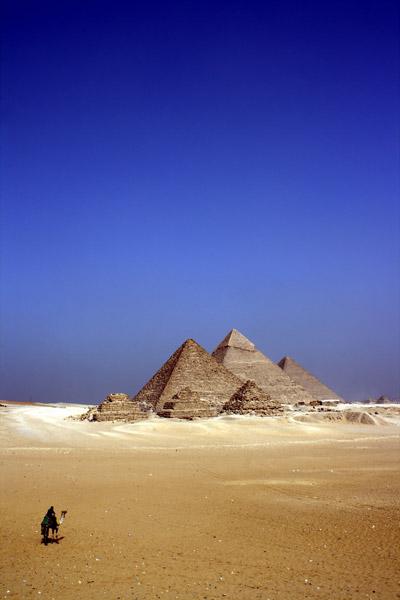
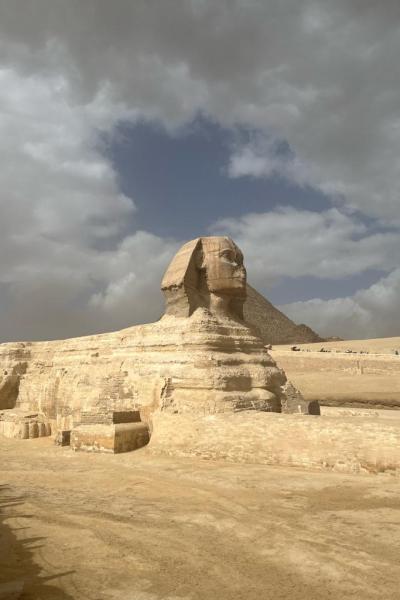

Egypt is a destination where ancient history, extraordinary landscapes, and everyday life come together in ways few other countries can match. One moment, you might be standing beneath the towering columns of an ancient temple; the next, you could be sailing along the Nile, wandering through the lively...

On the western bank of the Nile in Luxor, surrounded by the remarkable archaeological landscape of ancient Thebes, stands one of Egypts most impressive and historically significant monuments: Medinet Habu. Built during the reign of Pharaoh Ramesses III, this extraordinary temple complex is renowned for...
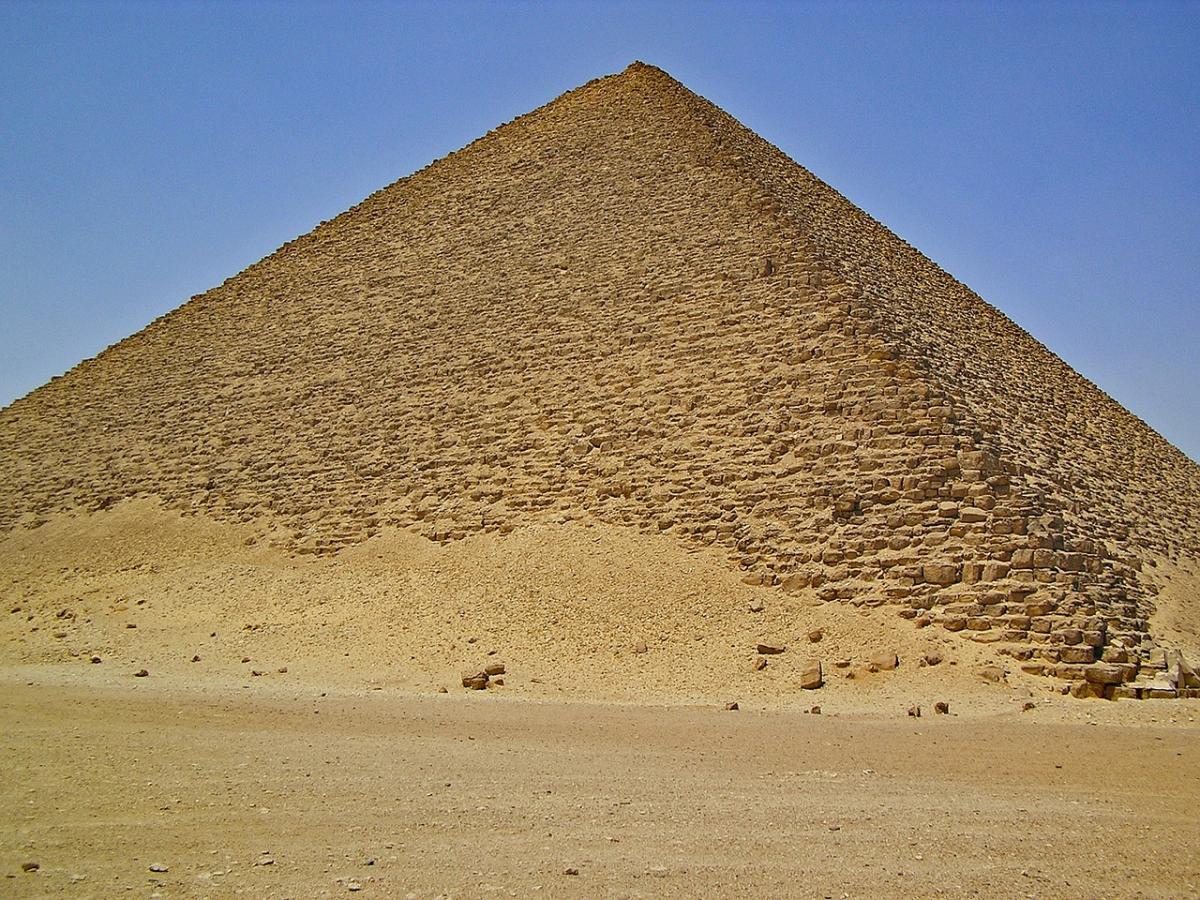
Nestled in the desert on the west bank of the Nile River, approximately 40 kilometers south of Cairo, lies the ancient royal necropolis of Dahshur. This significant archaeological site, part of the larger Memphis necropolis and a UNESCO World Heritage Site, is a testament to the architectural ingenuity...