Discovering Islamic Cairos Spiritual Heart: Sufism, Mosques & Mystical Sites
Cairo, often dubbed the "City of a Thousand Minarets," is a sprawling metropolis where the sacred and the everyday intertwine in a vibrant tapestry of history and faith . Beyond its world-renowned ancient monuments lies Islamic Cairo, a historic heart that beats with a deep and mystical rhythm . This district, a UNESCO World Heritage site, is not just an open-air museum of stunning mosques, madrassas, and mausoleums, but a living center of spiritual traditions that have shaped the city's soul for over a millennium . This report delves into the mystical dimensions of Islamic Cairo, exploring the enduring legacy of Sufism, its sacred spaces, and the vibrant rituals that continue to captivate seekers and visitors alike.
The Enduring Spirit of Sufism in Cairo
Sufism, the mystical dimension of Islam, has been an integral part of Egypt's spiritual and cultural identity since the early centuries of the faith . Focusing on inner purity, spiritual enlightenment, and a direct, personal relationship with God, Sufism offered a path to the esoteric heart of Islam, attracting millions of followers over the centuries .
Sufism began to flourish in Egypt around the 9th and 10th centuries . The country, already a center for religious scholarship, provided fertile ground for the growth of Sufi thought . Influential early figures like the Egyptian-born mystic Dhul-Nun al-Misri were pivotal in developing Sufi concepts . Over time, various Sufi orders, or tariqas, established themselves across the country, particularly in Cairo . Today, Egypt is home to nearly eighty officially recognized Sufi brotherhoods, including prominent ones like the Rifa'iyya, Ahmadiyya, and the highly influential Shadhiliyya . Each order is led by a spiritual guide, or sheikh, who leads followers through specific rites and stages of spiritual development . An estimated 15 percent of Egyptians belong to a Sufi order or participate in Sufi rituals, highlighting its deep cultural resonance .
The Modern Sufi Revival
Despite facing challenges from more orthodox and reformist Islamic movements, Sufism is experiencing a modern revival, particularly among younger, educated, and urban Egyptians . This resurgence is driven by several factors:
- A Search for Spiritual Fulfillment: Many young people, feeling alienated by the rigidity of conservative interpretations and the political turmoil following the 2011 revolution, have turned to Sufism as an alternative spiritual path . It offers a more personal, introspective, and mystical approach to faith, focusing on the inner dimensions of Islam .
- A Counter-Narrative to Extremism: Sufism's emphasis on tolerance, love, and peace is seen by many as a crucial antidote to the rise of intolerant and extremist ideologies .
- State Support: The Egyptian state has generally played a supportive role, viewing Sufism as a moderate and apolitical form of Islam that can serve as a counterbalance to Islamist groups . A "High Council of Sufi Orders," established in 1903 and linked to Al-Azhar, regulates the official orders, ensuring their practices remain within established bounds .
- Modern Adaptations: Contemporary Sufi orders are adapting to appeal to a modern audience . Some teachers offer teachings uncoupled from rigid traditional structures, making them more accessible . There is also a trend of blending Islamic doctrine with New Age elements and practices from Eastern traditions like yoga and meditation . Furthermore, Sufis are leveraging social media and online platforms to disseminate teachings and build virtual communities .
The Shadhiliyya Order: A Path of Integrated Spirituality
The Shadhiliyya order is one of the most widespread and influential Sufi brotherhoods in the Islamic world, with a particularly strong historical presence in Cairo .
- Founder and Development: The order was founded by Abu'l-Hasan al-Shadhili (c. 1196-1258 AD), who was born in Morocco and traveled extensively in search of knowledge . His spiritual journey led him to his master, the revered Sufi Abd as-Salam ibn Mashish . Following a vision, al-Shadhili established his first spiritual center (zawiya) in Tunis in 1227 before another vision guided him to relocate to Alexandria, Egypt, in 1244 . In Egypt, his teachings attracted a large following, including court officials and religious scholars . After his death, his successors, Abu'l Abbas al-Mursi and Ibn Ata Allah al-Iskandari, were crucial in codifying and disseminating the Shadhili teachings, transforming them into a well-documented spiritual school .
- Core Beliefs: The Shadhiliyya path is characterized by its emphasis on achieving direct experiential knowledge of God (ma'rifa) while remaining actively engaged in society . A defining feature is its discouragement of monasticism; al-Shadhili urged his followers to maintain their professions and family lives, believing the path to God could be walked while fully engaged in the world . The teachings stress five fundamental points: fear of God, adherence to the Prophet's practices (sunna), detachment from the judgment of mankind, reliance on God's will, and turning to God in both hardship and ease .
- Unique Rituals: Shadhili practice is known for its specific set of prayers and litanies (ahzab) . The most famous is the Hizb al-Bahr (The Litany of the Sea), composed by the founder for spiritual protection . Central rituals include the wird, a prescribed set of prayers chanted by followers, and dhikr (remembrance of God), the rhythmic chanting of God's names to induce a state of heightened spiritual awareness, which can be performed aloud (jali) or silently (khafi) .
- Influence in Cairo: The order's influence in Cairo has been profound, particularly through its connection with Al-Azhar University, where many head lecturers have been followers of the Shadhili path . This solidified the order's reputation for combining orthodox Islamic scholarship with deep spiritual practice . A key branch in Cairo is the Wafa'iyya, founded by Muhammad Wafa, known for a path of "highly intellectual mysticism" that attracted scholars .
Sacred Sanctuaries: A Tour of Mystical Sites
Islamic Cairo is dotted with places that pulse with spiritual energy, from monumental mosques to secluded retreats .
Mosques and Citadels: Power, Faith, and Contemplation
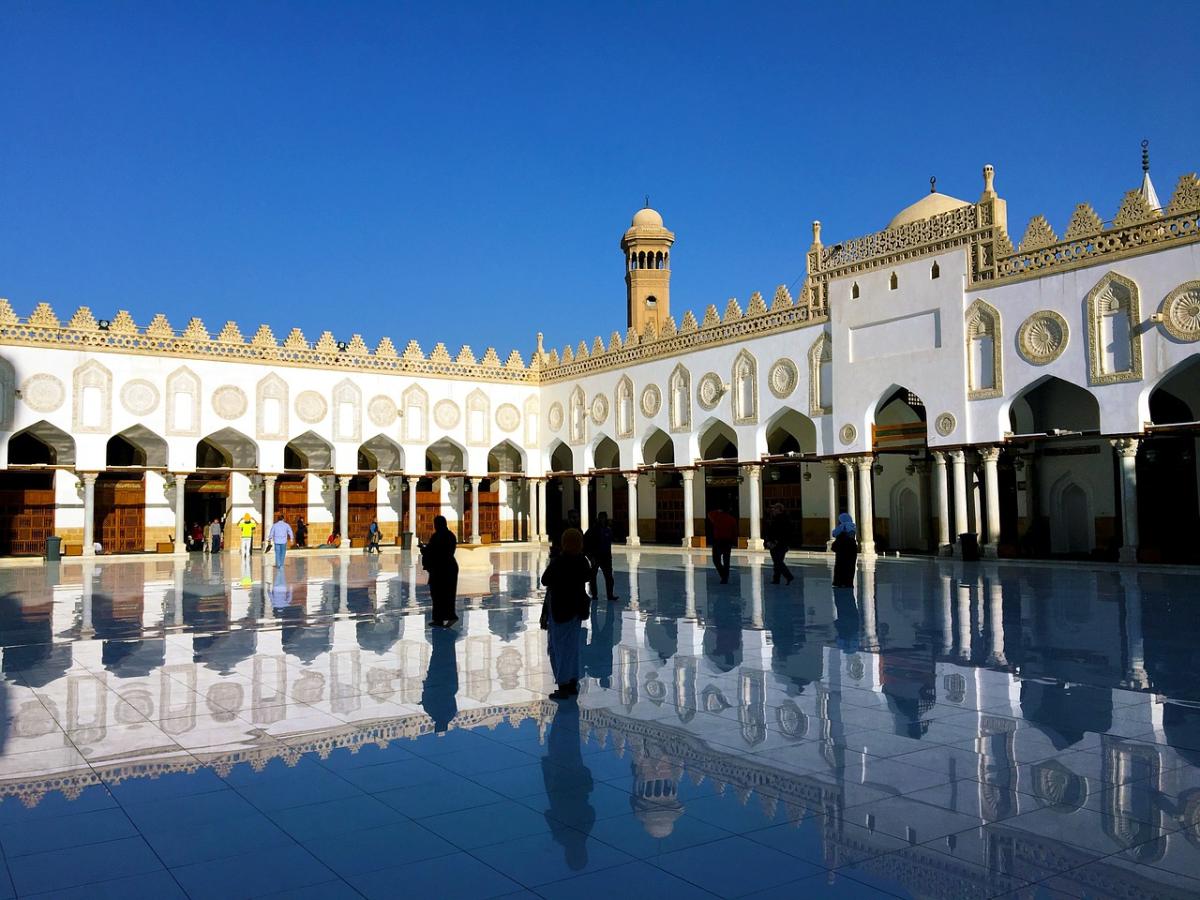
- Al-Azhar Mosque: The spiritual heart of Islamic Cairo, Al-Azhar has been a beacon of Islamic learning for over a thousand years . While a center of orthodoxy, many of its lecturers have also been members of Sufi orders like the Shadhiliyya, highlighting the intertwined relationship between formal theology and mysticism .
- Mosque of Ibn Tulun: One of Cairo's oldest and largest mosques, built between 876 and 879 AD, its architecture is a masterclass in creating a contemplative atmosphere . Inspired by the mosques of Samarra, Iraq, its austere aesthetic, using red brick and plaster, is deliberately minimalist to focus the worshipper's mind on devotion .
- The Vast Courtyard: The enormous open courtyard (sahn) is an oasis of calm insulated from the city's noise . Its sheer emptiness can induce a meditative state, while the rhythmic succession of pointed arches in the surrounding arcades reflects the Islamic principle of God's oneness (tawhid) . The transition from the complex's narrow outer passages into the bright, open space is designed to evoke a passage from worldly distraction to spiritual awareness .
- The Spiral Minaret: Its most iconic feature is the unique spiral minaret with an external staircase, also inspired by Samarra . The physical act of ascending the winding path is symbolic of a spiritual journey, culminating in a panoramic view that offers a moment of elevated perspective and detachment . Legend adds another layer of spiritual significance, holding that Noah's Ark came to rest on the hill where the mosque was built .
- Mosque-Madrassa of Sultan Hassan: A colossal Mamluk-era complex (1356-1363), its immense scale and majestic proportions create a powerful spiritual atmosphere of reverence and awe . Built during the ravages of the Black Plague, its construction was a statement of piety and power .
- Center of Learning and Mysticism: While it was a major center for all four Sunni schools of law, its spiritual dimension went far beyond scholarship . The design, with its towering entrance and vast central courtyard flanked by four soaring iwans, fosters a sense of humility and draws the eyes upward .
- An Aura of Sacred Sound: A key mystical element was the placement of the Sultan's mausoleum directly behind the qibla wall . The endowment deed (waqf) stipulated that 160 hafiz (men who have memorized the Qur'an) would continuously recite the holy book aloud from the mausoleum's windows, enveloping the entire complex in a constant aura of sacred sound and devotion .
- The Citadel of Saladin and Mosque of Muhammad Ali: Constructed in the 12th century by Salah al-Din (Saladin) as a fortress, the Citadel was the seat of Egypt's government for 700 years . While primarily a symbol of military and political power, it also functions as a container for sacred spaces, including a Dervish Theater, a direct link to its Sufi heritage . Housed within the Citadel, the 19th-century Mosque of Muhammad Ali dominates the skyline . Built by Muhammad Ali Pasha, its grand Ottoman-style architecture, alabaster-clad walls, and the presence of the ruler's tomb make it a monumental place of worship that inspires awe and serves as a powerful symbol of Egypt's national and religious identity .
Shrines and Mausoleums: Portals to the Saints
The veneration of saints (awliya') is a cornerstone of popular Sufi practice in Egypt, with many visiting shrines for ziyara (visitation) to seek blessings (baraka) and intercession .
- Al-Hussein Mosque: Located near the Khan el-Khalili bazaar, this is one of the most sacred sites in Egypt . It is believed by many to house the head of Hussein ibn Ali, the grandson of the Prophet Muhammad, making it a focal point of intense devotion and the epicenter of a major annual moulid .
- Sayyida Nafisa and Sayyida Zeinab Mosques: These shrines are dedicated to revered female descendants of the Prophet Muhammad. Sayyida Nafisa was known for her piety and miracles, such as curing a paralyzed girl with her ablution water, making her shrine a major pilgrimage site for healing . Sayyida Zeinab, a patron saint of the city, has a mosque where the oil from a lamp in her shrine was traditionally believed to have curative powers .
- Mausoleum of Imam al-Shafi'i: The tomb of one of Sunni Islam's greatest jurists is a major pilgrimage site . Legend holds that he would seek the prayers of Sayyida Nafisa when ill and would be cured .
- Mausoleum of the Wafa'iya: This sanctuary in the City of the Dead is dedicated to the Wafa'iya Sufi order, a branch of the Shadhiliyya . Legend says its founder earned the name "Wafa" (fulfillment) after his prayers caused the Nile to rise during a drought .
Mystical Retreats: Seclusion for the Soul
- Wadi Al-Mustada'feen ("Valley of the Overpowered by the Love of God"): This is the evocative name for the Shaheen Al-Khalouti Mosque, a unique complex built in 1538 and carved directly into the Muqattam hills . The site includes a mosque, Sufi dwellings, rock-carved tombs, and caves, designed as a secluded place for spiritual retreat (khilwa) . Its name points to its mystical purpose: a sanctuary where devotees could liberate themselves from the material world to focus entirely on the presence of God .
- Al-Tikiyyah Al-Mawlawiya (Mevlevi Cultural Center): Also known as the "Sufi Museum," this is the sole surviving Sufi lodge (takiyyah) of its kind in Egypt and a testament to the legacy of the Mawlawiyah (Mevlevi) order, founded by the followers of the poet Rumi . Established in Cairo after the Ottoman conquest, the order repurposed a 14th-century Mamluk complex built by Prince Sunqur Sa'di . The spiritual centerpiece is the Sama'khana ("hall of listening"), a circular theater built in 1810 for the famed whirling ritual (sama) . The space is a microcosm of the universe, where the lead dancer represents the sun and others the planets . The cupola above the stage features drawings of flying birds, symbolizing the dervishes' souls uniting with God, while eight windows in the ceiling represent the gates of Paradise . The entire complex, which also housed living quarters, was designed to facilitate the dervishes' spiritual journey until performances ceased in the mid-20th century .
The Mystical Art of Healing: Faith, Folklore, and Medicine
The quest for healing in Cairo has long been intertwined with faith and mysticism, creating a rich tradition where the physical and spiritual are seen as interconnected . This tradition is a syncretic blend of Pharaonic, Hellenic (Yunani), and Prophetic Medicine (Tibb an-Nabawi), which incorporates natural remedies like honey and black seed alongside spiritual practices . This is most evident in the Qalawun Complex, whose pioneering hospital (bimaristan) provided free care to all for over 500 years, with advanced wards for different illnesses, including mental diseases, where patients were treated with music and fresh air .
Living Rituals: The Practices of the Path
The mystical side of Cairo is a living tradition expressed through vibrant rituals that engage the senses and elevate the spirit.
Moulids: The Carnivals of Faith
A moulid is a festival celebrating the birthday of a holy person, blending sacred devotion with carnival-like celebration . The Moulid of Al-Hussein is one of Cairo's largest and most significant religious festivals . The week-long event transforms the streets around the mosque and culminates in a "big night" (leila kebira) .
- Processions: Sufi orders, including various Shadhili branches, parade through the streets with distinct banners and musical instruments .
- Dhikr Circles: A core element of the moulid, participants gather for intense sessions of dhikr . Standing in circles, they engage in rhythmic, swaying movements while chanting God's names, often accompanied by drums, to achieve a state of spiritual ecstasy .
- Inshad Chanting: Tents are erected where religious singers (munshideen) perform powerful a cappella chants praising God and the Prophet, creating the spiritual atmosphere of the event .
Spiritually, the moulid is an act of devotion to the Prophet's family (Ahl al-Bayt) and an opportunity to seek blessings . Socially, it is a massive, joyous celebration that brings together Egyptians from all walks of life, reinforcing community bonds with street performers, food stalls, and carnival rides .
Tanoura Dance: The Whirling Path to the Divine
The Tanoura dance is Egypt's unique, theatrical version of the Sufi whirling practice, a profound spiritual ritual symbolizing the soul's journey towards the divine . Performed at venues like Wekalet El Ghouri, it is a physically active form of meditation (dhikr) designed to induce a state of spiritual ecstasy and union with God .
- Symbolism of the Costume: The name "Tanoura" means skirt, referring to the heavy, vibrantly colored, multi-layered skirts worn by the dancers . Unlike the austere white robes of Turkish dervishes, the colorful Egyptian costumes are rich with symbolism . The multiple skirts can represent the four seasons, and the dancer's act of removing them one by one symbolizes the shedding of worldly attachments and sins to achieve spiritual purity and rebirth .
- The Stages of the Performance: A traditional performance unfolds in three parts . It begins with an Introduction of traditional music from instruments like the oud, ney, and tabla, creating a mystical atmosphere with ancient poems . This is followed by a Primary Dance that serves as a warm-up . Finally, the lead dervish begins the Tanoura Dance, spinning anti-clockwise in a motion that symbolizes the pilgrims' circumambulation of the Kaaba and the movement of the planets around the sun .
- Spiritual Purpose: The dancer's arms are outstretched, one hand pointing to the heavens to receive divine blessings and the other pointing to the earth to distribute them . The continuous spinning, often accompanied by the rhythmic chanting of "Allah," is a method of abandoning the ego, allowing the dancer to enter a trance-like state and feel a closer connection to the divine .
Executive Summary
The mystical heart of Islamic Cairo offers a profound journey into the spiritual soul of Egypt, rooted in the deep and living traditions of Sufism . This world is exemplified by influential Sufi brotherhoods like the Shadhiliyya order, which teaches a path of integrated spirituality, encouraging followers to seek direct knowledge of God while remaining engaged in daily life . The city's spiritual landscape is marked by sacred sanctuaries where architecture itself fosters contemplation. The ancient Mosque of Ibn Tulun uses its vast, austere courtyard and unique spiral minaret to create an oasis of meditative calm and symbolize a spiritual ascent . The colossal Mosque-Madrassa of Sultan Hassan, a center for orthodox learning, possessed a deep mystical dimension, with its endowment stipulating the continuous recitation of the Qur'an by 160 chanters, enveloping the complex in an "aura of sacred sound" .
Deeper mystical devotion is found in secluded retreats like Wadi Al-Mustada'feen, a complex carved into a mountain for spiritual isolation, and the Al-Tikiyyah Al-Mawlawiya, a historic Sufi lodge with a unique circular theater designed as a microcosm of the universe for the whirling dervish ritual . Devotees also flock to the shrines of revered saints like Sayyida Nafisa, seeking their healing blessings (baraka) . This spiritual heritage is not just preserved in stone but is enacted through vibrant, living rituals. The Moulid of Al-Hussein transforms the city into a "carnival of faith," where Sufi processions and hypnotic dhikr circles create an atmosphere of collective spiritual ecstasy . Similarly, the mesmerizing Tanoura dance offers a visual meditation on the soul's journey, where dancers spin relentlessly, shedding colorful, symbolic skirts to represent the casting off of worldly attachments on the path to divine union . Today, these traditions are being reinvigorated by a modern Sufi revival, as a new generation of Egyptians seeks a more personal and tolerant spiritual path, adapting ancient practices for the 21st century . From the intellectual mysticism of Al-Azhar scholars to the joyous communal celebrations of a moulid, the mystical traditions of Islamic Cairo continue to evolve, proving that the quest for inner meaning remains as relevant as ever in the bustling heart of the modern city.
A comprehensive overview of one of Cairos most magnificent Mamluk-era landmarks, detailing its history, architectural genius, its role as a preeminent center for Islamic scholarship, and its enduring influence on Cairene architecture.
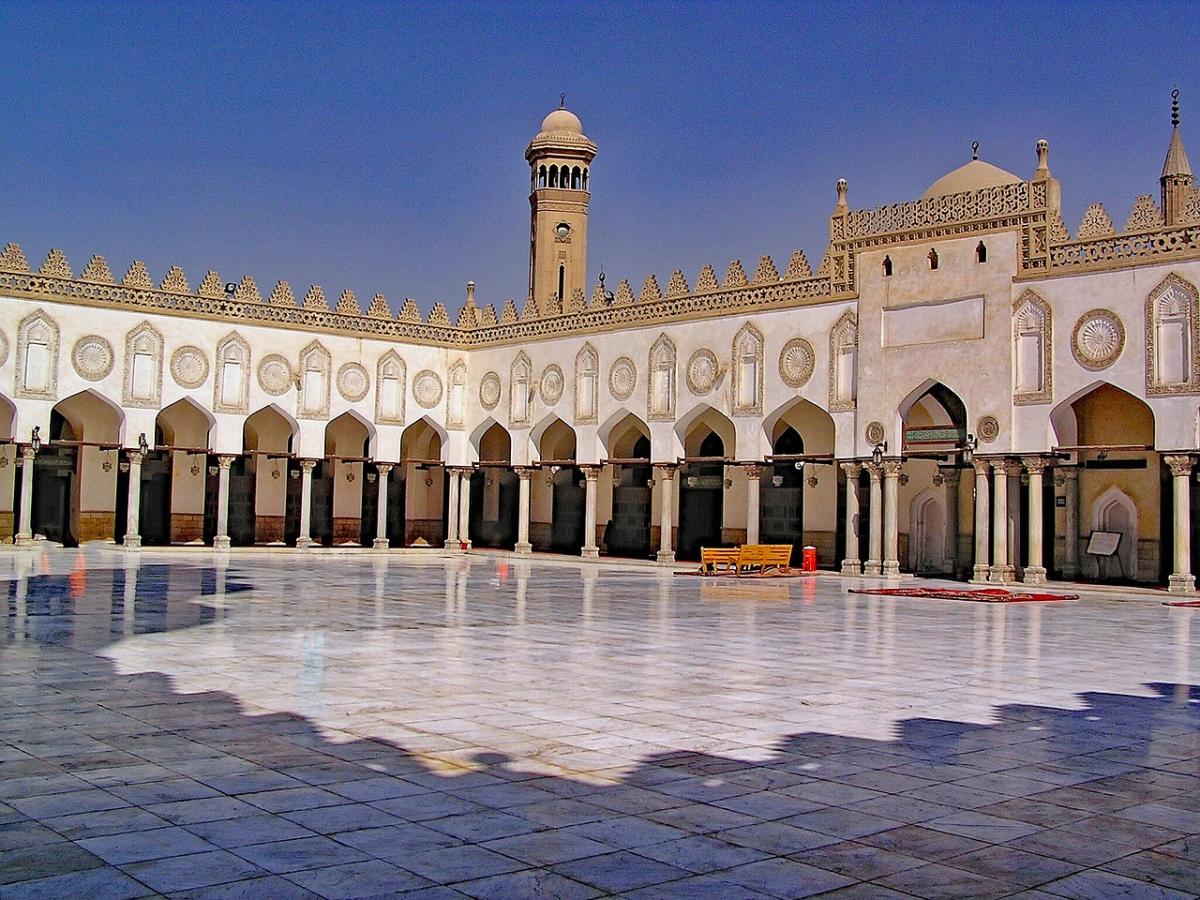
Islamic Cairo is a historic district of the capital city of Egypt, located on the east bank of the Nile River. It was founded in 969 CE by the Fatimid Caliph Al-Muizz li-Din Allah as his new imperial capital and has since become a major pilgrimage destination for Muslims from around the world. Islamic...
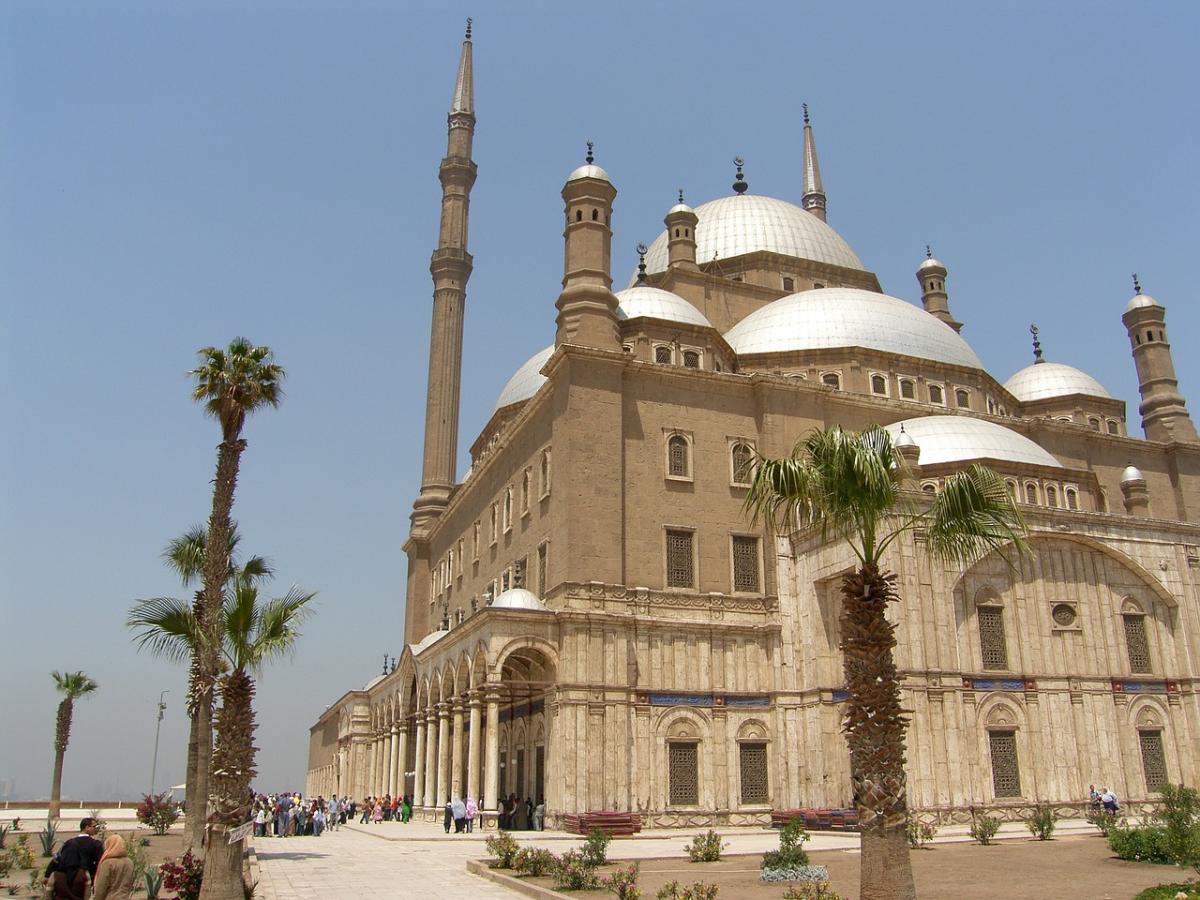
Cairo, Egypt - Perched majestically atop the Citadel of Saladin, the historic seat of Egyptian power for nearly 700 years, the Mosque of Muhammad Ali is an iconic landmark and an enduring symbol of Cairos skyline. Popularly known as the Alabaster Mosque for the extensive use of this gleaming stone on...