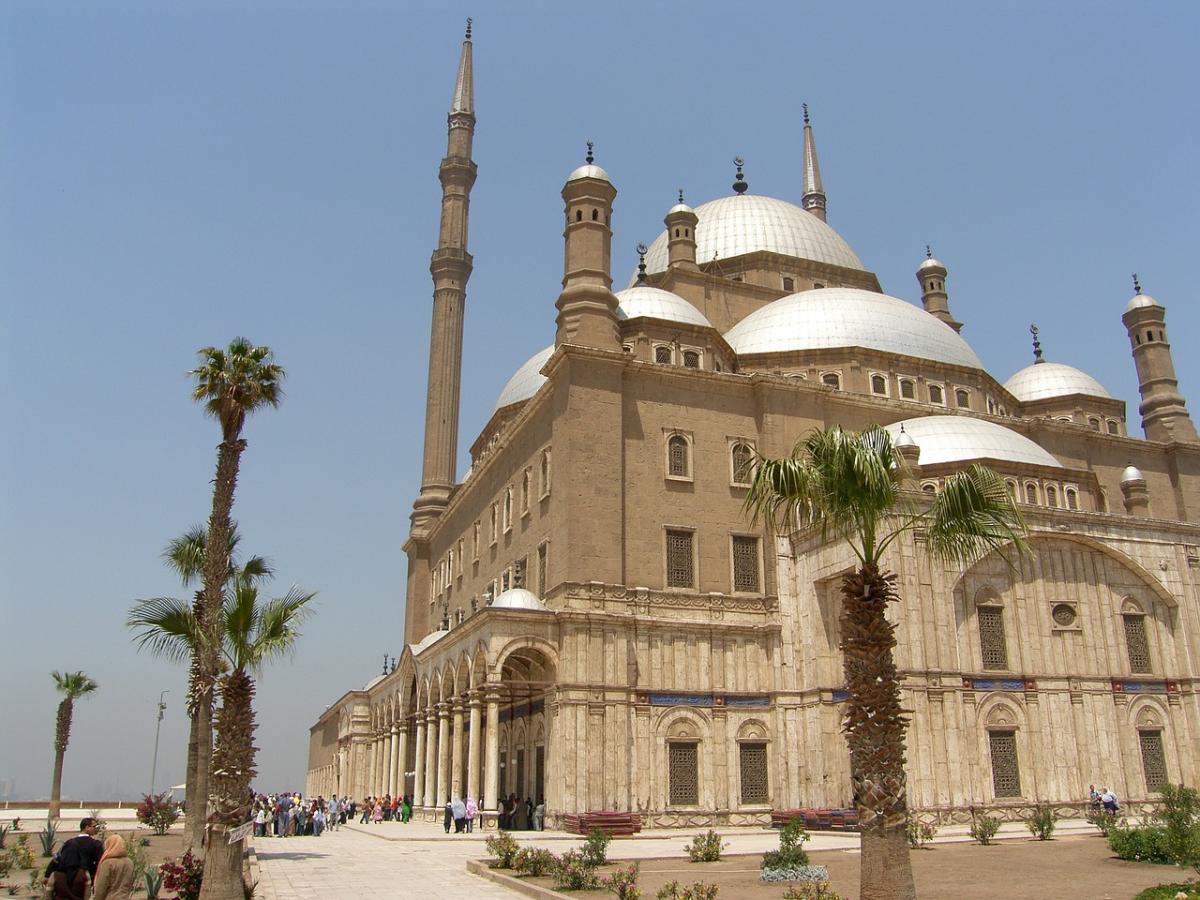
The Alabaster Mosque: A Monument to Modern Egypt
Cairo, Egypt - Perched majestically atop the Citadel of Saladin, the historic seat of Egyptian power for nearly 700 years, the Mosque of Muhammad Ali is an iconic landmark and an enduring symbol of Cairo's skyline. Popularly known as the Alabaster Mosque for the extensive use of this gleaming stone on its walls, this grand structure is a breathtaking example of Ottoman-inspired architecture with European flourishes. It reflects the ambitious vision of its founder, Muhammad Ali Pasha, the man credited with forging modern Egypt.
A Vision in Alabaster: History and Construction
The mosque was commissioned by Muhammad Ali Pasha, the Ottoman governor of Albanian origin who ruled Egypt from 1805 to 1848 and established a dynasty that lasted until 1952. Rising from a junior military commander to the undisputed master of Egypt, Muhammad Ali embarked on an ambitious project to modernize the nation and assert its autonomy. The mosque was a cornerstone of this vision.
- A Symbolic Location: Construction began in 1830 on the site of former Mamluk palaces within the historic Citadel. In a deeply symbolic act, Muhammad Ali had the ruins of these palaces demolished to make way for his mosque. This represented the erasure of the old Mamluk order he had violently displaced and the establishment of his own modernizing dynasty.
- A Memorial and a Monument: The mosque was initially conceived in memory of Muhammad Ali's son, Tusun Pasha, who died in 1816. However, its grand scale and prominent location ensured it would also serve as a powerful monument to Muhammad Ali himself.
- Construction and Design: The design was entrusted to the architect Yusuf Bushnaq, who was brought from Istanbul to realize Muhammad Ali's vision. Construction continued until Muhammad Ali's death in 1849. He was later interred in a marble tomb within the mosque, with his body being transferred there in 1857. While the main structure was completed by his death, the final decorative elements were finished under the rule of his successor, 'Abbas Pasha I.
A Monument Saved: The Great Restoration of 1931-1939
By the early 20th century, the "oversized" ambition of the mosque's design had led to inherent structural weaknesses, and the building was showing alarming signs of decay. Although preliminary repairs were made in 1899, the problems were far more profound.
Signs of Distress and Structural Flaws: A detailed examination in the early 1930s, led by Mahmoud Pasha Ahmed, Director of the Department for the Preservation of Arab Antiquities, revealed a dire situation.
- The immense weight of the main stone dome was causing the supporting arches to push outward, making the external walls tilt noticeably. This sagging was measured at 10 cm for every 11 meters of height.
- The stones supporting the arches had begun to disintegrate under the pressure.
- The structure was riddled with cracks, some running the entire height of the building and others at the base of the pillars reaching nearly 10 centimeters in width.
- The iron ties and dowels used to bind the stonework had rusted and oxidized, causing further cracking and instability.
- It was also believed that a past earthquake and the explosion of a nearby munitions store had contributed to the damage.
A Royal Intervention and Engineering Solutions: Deeming the mosque unsafe, King Fu'ad I ordered a full-scale restoration. On December 29, 1931, a technical commission of senior Egyptian and foreign engineers was formed to devise a plan.
- The commission, led by architect Sayyid Metoualli Bey, recommended the complete dismantling and rebuilding of the central dome, the surrounding semi-domes, and their supporting pillars.
- A colossal steel scaffolding framework weighing 650 tons was designed by professors H. Schwyzer and I. El-Demerdash to support the structure during the work. It was a major engineering feat constructed by a local company, Goganian.
- In a significant move, the commission chose to rebuild the domes with a reinforced concrete framework instead of stone, a modern technique accepted by contemporary conservation principles to ensure long-term stability. The new domes were designed with hollow interiors to reduce weight while replicating the original's 0.8-meter thickness.
- Meticulous care was taken to preserve the mosque's aesthetic. Samples of the old decorations were kept, and detailed drawings and photographs were made before the old domes were demolished on February 11, 1935.
Reopening and Later Preservation: After eight years of intensive work, the mosque was officially reopened for prayers on February 24, 1939. King Farouk I performed Friday prayers to mark the occasion. The project successfully restored the mosque to its former glory, with the decorations renewed between 1937 and 1939. Subsequent preservation efforts include:
- A major renovation of the entire Citadel complex in the mid-1980s.
- The dome's covering was redone and the minarets were refaced in 1999.
- In 2017, the marble cladding in the courtyard was cleaned and the fountain's decorations were restored using modern scientific methods.
Architectural Grandeur: An Ottoman Jewel in Cairo
The Mosque of Muhammad Ali represents a striking and deliberate departure from the traditional Mamluk architecture that characterized Cairo for centuries. Its design is a harmonious blend of Ottoman and European Baroque and Rococo styles, a conscious choice by Muhammad Ali to symbolize the new, modern Egypt he was forging.
Echoes of Istanbul: A Deliberate Stylistic Break
By emulating the style of the Ottoman sultans, Muhammad Ali was asserting his power and his vision for an Egypt that could rival the heart of the empire in Istanbul. The architect, Yusuf Bushnaq, modeled his design on the great imperial mosques of Istanbul.
- The most frequently cited model is the Sultan Ahmed Mosque (the Blue Mosque) in Istanbul, whose layout of a central dome surrounded by semi-domes is clearly echoed in Cairo.
- Other stylistic predecessors include the Şehzade Mosque (1548) and the Yeni Mosque (New Mosque).
- The influence of the monumental Hagia Sophia, which served as a blueprint for Ottoman mosque design, can also be seen in the creation of a vast, open interior space.
Defining Features: Exterior and Courtyard
The mosque is a showcase of defining Ottoman architectural characteristics.
- Dome Cascade: The exterior is dominated by a massive central dome flanked by four semi-domes and four smaller corner domes. This cascading dome system is a hallmark of classical Ottoman architecture. The primary construction material is limestone, but the lower walls and the courtyard are faced with exquisite alabaster, giving the mosque its luminous quality and popular name.
- Minarets: Two exceptionally slender, "pencil" minarets with conical caps soar to a height of 82 meters (270 feet). Quintessentially Ottoman in style, they were the tallest in Cairo at the time of their construction, a bold declaration of Muhammad Ali's prominence.
- Courtyard (Sahn): The western section features a spacious courtyard measuring approximately 53 by 54 meters. It is surrounded by colonnades with arches supported by marble columns and topped with small domes, a typical feature of imperial Ottoman mosques.
- Ablutions Fountain: In the center of the courtyard stands an ornate, octagonal ablutions fountain (howz) made of carved marble. It features a carved marble inner dome sheltered by a larger wooden canopy whose underside is decorated with landscape paintings in the Baroque style.
- Clock Tower: A notable feature in the northwestern arcade is an ornate copper clock tower, a gift from King Louis Philippe of France in 1845. This was a reciprocal gift for the Luxor obelisk that Muhammad Ali had given to France, which now stands in the Place de la Concorde in Paris. The clock famously arrived damaged and remained non-functional for 175 years. After several repair attempts, it was finally restored to working condition in 2021.
Defining Features: The Prayer Hall Interior
The prayer hall is an immense, nearly square space measuring 41 by 41 meters, designed to inspire awe. It is crowned by the magnificent central dome, which has a diameter of 21 meters and reaches an interior height of 52 meters. Supported by four massive pillars, the dome structure creates a vast, unobstructed, and light-filled prayer hall.
- Alabaster and Decoration: The lower walls and the four interior piers are paneled with Egyptian alabaster to a height of 11 meters. The upper walls, originally intended to be clad in alabaster, were instead finished with wood painted to resemble marble. The upper walls and the interiors of the domes are lavishly decorated with paintings, gilding, and motifs in a neo-Baroque and Rococo style. On the pendentives supporting the dome, large gilded medallions bear the names of Allah, the Prophet Muhammad, and the first four Caliphs.
- Lighting: The space is illuminated by 136 windows, many fitted with colorful stained glass. Suspended from the ceilings are numerous large, circular chandeliers, which originally held 365 oil lamps but are now electric. A particularly magnificent chandelier hanging from the central dome was a gift from the French government.
- Mihrab and Minbars: The qibla wall features a beautiful marble mihrab (prayer niche). Unusually, the mosque contains two minbars (pulpits).
- The original minbar is a large, ornate structure of wood with rich gilt decoration in the Ottoman style.
- The second minbar, smaller and made of alabaster, was ordered by King Farouk in 1939 upon the mosque's reopening. It was commissioned to be more in harmony with the mosque's grandeur and placed closer to the mihrab.
- Tomb of Muhammad Ali: In the southwestern corner of the prayer hall lies the tomb of Muhammad Ali Pasha. The cenotaph is carved from white Carrara marble, a gift from his grandson, Abbas I. It is enclosed within an elaborate gilded bronze or copper screen (maqsura) that combines Arab, Turkish, and Egyptian motifs with Baroque and Rococo elements.
Contrast with Cairene Mamluk Tradition
The mosque's design was a radical break from the Mamluk architectural traditions that had flourished in Cairo from 1250 to 1517.
- Layout: Mamluk mosques often used a four-iwan plan or hypostyle halls, creating more compartmentalized spaces compared to the unified, dome-covered prayer hall of the Ottoman style.
- Domes: Mamluk domes were typically smaller and are renowned for their intricately carved stone exteriors, a stark contrast to the smooth, lead-covered profile of the Muhammad Ali Mosque's domes.
- Minarets: Mamluk minarets are celebrated for their elaborate, multi-tiered designs, which differ significantly from the uniform, slender "pencil" minarets of the Ottoman style.
An Enduring Symbol: The Mosque in Modern Egypt
The Muhammad Ali Mosque is more than an architectural masterpiece; it is a powerful symbol of Egypt's transition into the modern era. By commissioning such a grand and stylistically distinct mosque at the heart of Egypt's traditional seat of power, Muhammad Ali made a calculated political statement about his rule and the new era he was inaugurating.
- Dominating the Skyline: Its placement on the highest point of the Citadel made it the most visible landmark in Cairo, a powerful and enduring symbol of Muhammad Ali's authority.
- Legitimizing a Dynasty: Erecting a magnificent religious structure served to legitimize his rule and cement his image as a powerful and pious leader.
- A New State Mosque: The mosque's construction effectively replaced the nearby Mamluk-era Al-Nasir Muhammad Mosque as the official state mosque, formally shifting the center of religious and state power to his new monument.
Today, the mosque continues to hold a multi-faceted role. It is an active and vital place of worship, hosting daily prayers, large Friday congregations, and special prayers for Islamic holidays. It is also one of Egypt's most renowned historical and touristic landmarks, drawing visitors from around the world who come to admire its architecture and panoramic views of the city. Its commanding presence on the Cairo skyline serves as a constant reminder of the enduring legacy of Muhammad Ali Pasha and his vision for a modern Egypt.
Summary
The Mosque of Muhammad Ali, popularly known as the Alabaster Mosque, is a landmark monument in Cairo, Egypt, situated within the historic Citadel of Saladin. Commissioned by Muhammad Ali Pasha, the founder of modern Egypt, and constructed between 1830 and 1848, the mosque is a remarkable example of Ottoman architecture with European Baroque and Rococo influences. Its construction was a key part of Muhammad Ali's modernization efforts and a powerful symbol of his rule, representing a deliberate break from the city's Mamluk past.
The mosque was built on the site of demolished Mamluk palaces, an act that symbolized the end of the old regime and the rise of Muhammad Ali's dynasty. By the 1930s, the mosque faced imminent collapse due to severe structural flaws, including widespread cracking and the immense pressure of its main dome. A comprehensive restoration was undertaken from 1931 to 1939 under King Fu'ad I, which involved rebuilding the domes using a modern reinforced concrete framework to ensure their stability. The mosque was officially reopened in 1939 by King Farouk I.
Designed by the architect Yusuf Bushnaq, the mosque was modeled after imperial mosques in Istanbul. Its most striking features include its extensive use of alabaster, a large central dome (21m in diameter) supported by cascading semi-domes, and two towering "pencil" minarets that dominated the city's skyline. The opulent interior features a vast, open prayer hall illuminated by stained-glass windows and grand chandeliers. It uniquely contains two pulpits: the original gilded wood minbar and a smaller alabaster one added by King Farouk in 1939. The courtyard contains an ornate ablutions fountain and a clock tower gifted by France, which was famously broken for 175 years before being repaired in 2021.
Within the mosque lies the tomb of Muhammad Ali, a magnificent cenotaph of Carrara marble enclosed by a gilded bronze screen. Beyond its architectural splendor, the Mosque of Muhammad Ali holds immense historical and cultural importance. It represents a conscious departure from traditional Cairene Mamluk architecture, symbolizing the dawn of a new era for Egypt. Today, it remains an active place of worship and a major tourist destination, offering panoramic views of Cairo and a glimpse into a transformative period of Egyptian history.
Egypt is home to some of the most stunning examples of Islamic architecture in the world. From majestic mosques and grand palaces, to intricate carvings and elaborate decorations, Egyptian Islamic architecture has a unique beauty that has captivated people for centuries. The development of this style...
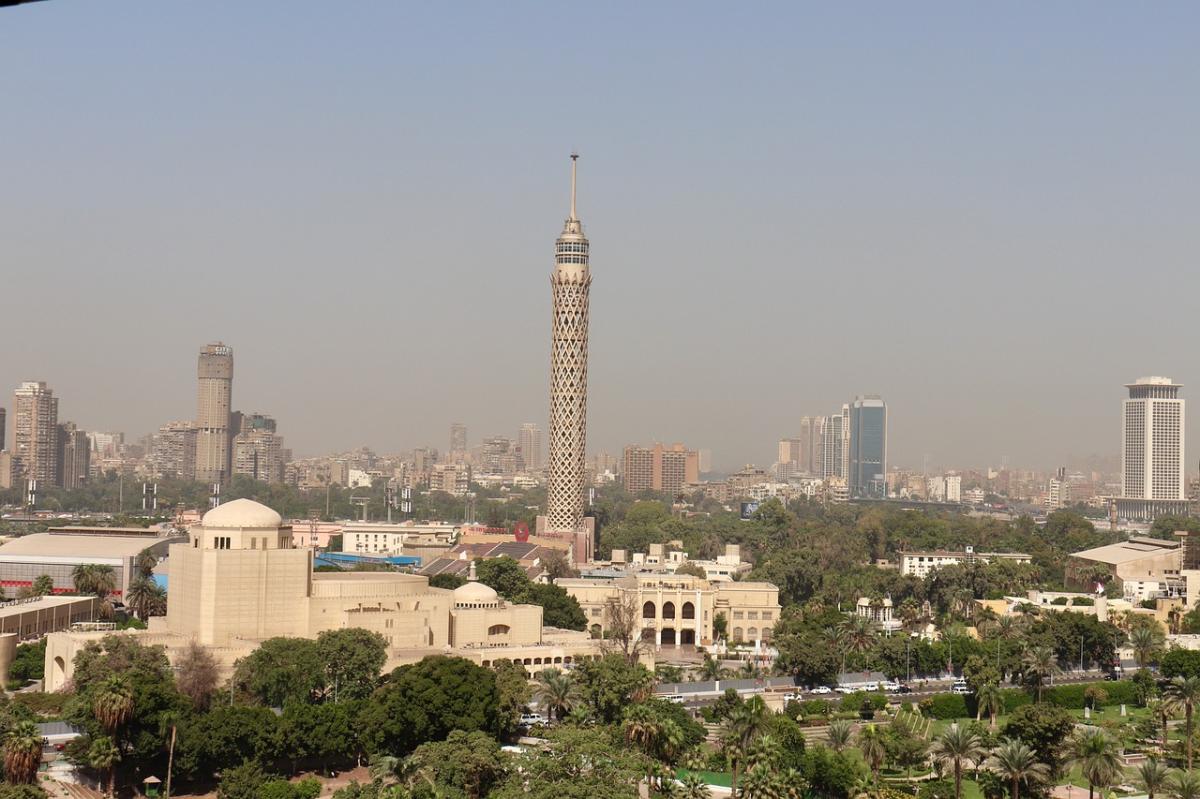
Proudly standing on Gezira Island in the heart of Cairo, the Cairo Tower, or Burj Al-Qahira, is a prominent feature of the citys skyline and a testament to modern Egyptian architecture. Reaching a height of 187 meters (614 feet), it is one of the tallest structures in Egypt and North Africa. For decades...
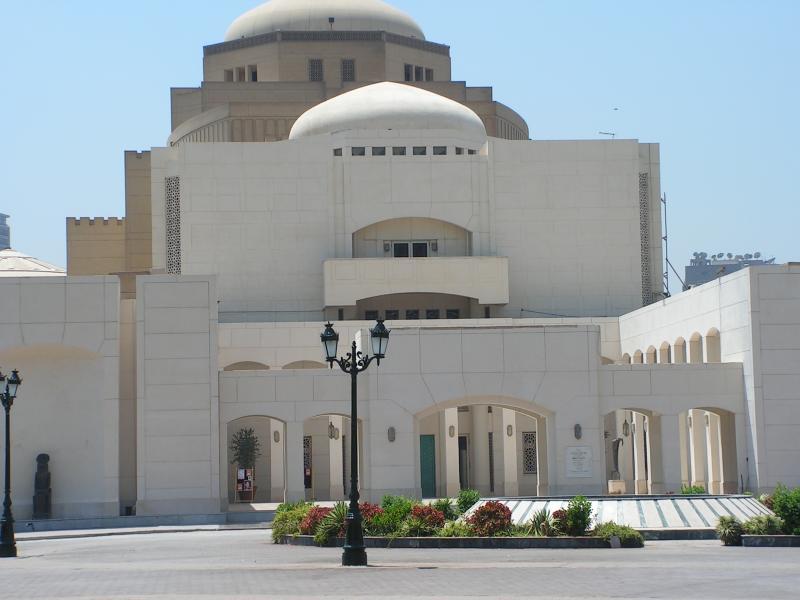
The Cairo Opera House, a magnificent architectural gem nestled on Gezira Island in the Nile, stands as the epicenter of performing arts in Egypt. Officially known as the National Cultural Centre, it is a vibrant hub that showcases a rich tapestry of local and international artistic expressions, from...