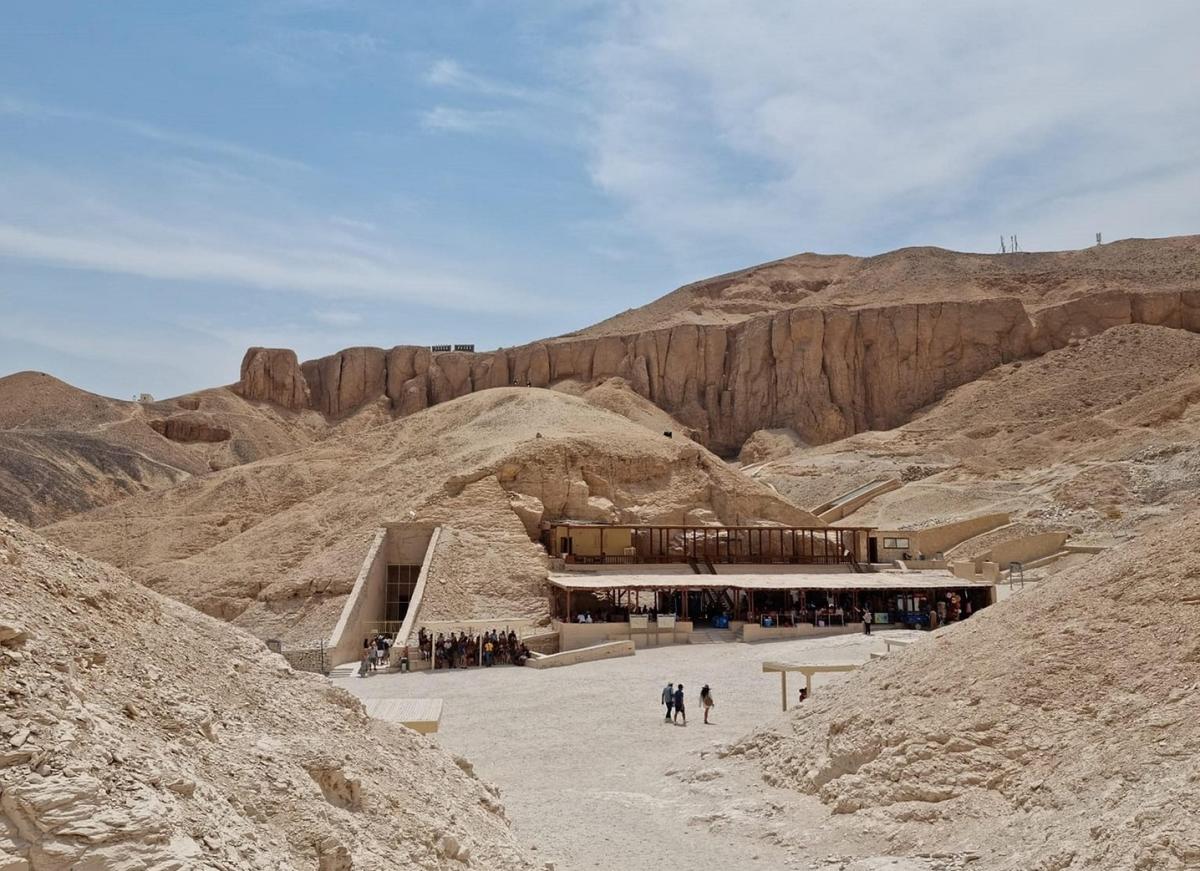
Why Did Ancient Egyptian Pharaohs Stop Building Pyramids and Move to the Valley of the Kings?
For much of ancient Egyptian history, the burial place of a pharaoh was intended to dominate the surrounding landscape. Enormous pyramids rising above the desert announced the power of the monarchy, expressed deeply rooted religious beliefs, and promised the deceased ruler an eternity among the gods. Yet by the beginning of the New Kingdom, Egyptian pharaohs were pursuing a remarkably different approach. Instead of constructing towering monuments to house their remains, they commissioned elaborate underground tombs concealed within the rugged mountains of southern Egypt.
The transition from the pyramids of Giza to the secluded chambers of the Valley of the Kings represents one of the most fascinating developments in ancient Egyptian civilization. It involved far more than a change in architectural preference. Concerns about grave robbery, shifting political centers, evolving religious traditions, and new interpretations of the sacred landscape all contributed to the transformation.
What makes this chapter of Egyptian history particularly intriguing is that the pharaohs never entirely abandoned their enthusiasm for monumental architecture. They simply reconsidered where magnificence belonged and where discretion was necessary. Their temples remained imposing symbols of royal authority, while their bodies disappeared beneath the desert.
The Age When Royal Tombs Dominated the Horizon
During the Old Kingdom, approximately 2649-2130 BCE, pyramid construction became one of the defining achievements of Egyptian civilization. Its architectural origins can be traced to earlier rectangular tomb structures known as mastabas, which served as burial monuments for royalty and members of the elite.
A decisive breakthrough occurred during the Third Dynasty under Pharaoh Djoser. His funerary complex at Saqqara introduced the Step Pyramid, a monumental stone structure that transformed the possibilities of royal burial architecture. Beyond its physical grandeur, the complex provided a setting in which the deceased king could perpetually exercise his royal and ceremonial functions.
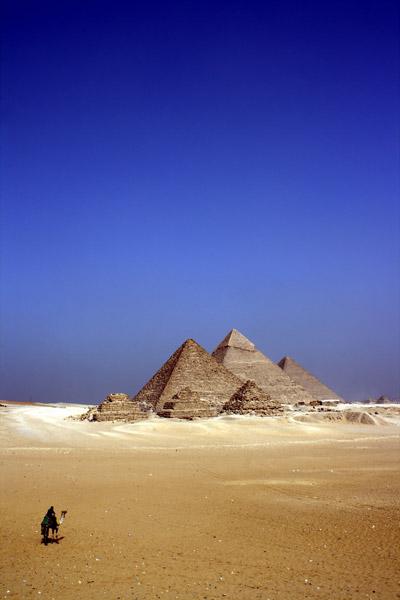
Subsequent generations refined the pyramid's architectural form. During the Fourth Dynasty, the construction projects of Sneferu established the foundations for the magnificent pyramids commissioned by Khufu, Khafre, and Menkaure at Giza.
These monuments were considerably more than enormous stone containers for royal remains. Each formed the centerpiece of a funerary complex that typically incorporated temples, ceremonial causeways, offering areas, and subsidiary burial structures. Together, these elements created an enduring religious institution devoted to the deceased ruler.
Building on such a scale required sophisticated administration, considerable agricultural resources, skilled craftsmen, and the ability to organize labor across a substantial territory. The completed pyramid was therefore both a religious monument and a physical demonstration of the state's organizational capabilities.
Why Pyramids Were So Important to Egyptian Kingship
To understand why the eventual abandonment of royal pyramids was so significant, it is necessary to appreciate what these structures represented to the ancient Egyptians.
Death was not regarded simply as the termination of existence. Egyptian funerary traditions were concerned with the transformation of the deceased and the preservation of identity in another realm. For the pharaoh, this transformation carried particular importance because royal authority was inseparable from divine order.
The pyramid's upward-reaching geometry lent itself to religious interpretations involving celestial ascent, solar regeneration, and the relationship between heaven and earth. Its precise symbolic meaning was not necessarily identical throughout Egyptian history, but its association with royal rebirth remained deeply significant.
By the end of the Fifth Dynasty, the burial chamber of Pharaoh Unas at Saqqara contained an extensive collection of religious inscriptions now known as the Pyramid Texts. These compositions provided ritual assistance for the deceased king, invoking divine protection and facilitating his passage into the afterlife.
The presence of these inscriptions reveals an important distinction: the external monument was only one component of the funerary system. The chambers concealed within it were equally significant, serving purposes that extended well beyond the physical preservation of the body.
This distinction would become increasingly important in later centuries, when Egyptian architects began transferring the religious functions of royal tombs into underground environments.
The Fundamental Weakness of Monumental Tombs
For all their ingenuity, the pyramids possessed an unavoidable disadvantage. Their enormous size made the approximate location of royal burials impossible to conceal.
Anyone approaching a royal pyramid could reasonably assume that somewhere within or beneath it lay the remains of a wealthy ruler, potentially accompanied by precious metals, jewelry, ceremonial furnishings, and other valuable objects.
Egyptian architects were aware of this vulnerability. Over the centuries, they employed massive blocking stones, concealed passageways, complicated internal arrangements, and heavily protected burial chambers. Nevertheless, such measures could not guarantee the security of a monument standing openly in the desert for generations.
Archaeological investigations have demonstrated that numerous royal burial complexes were plundered during antiquity. The Middle Kingdom pyramid complex of Senwosret III at Dahshur, for example, suffered extensive robbery, affecting the king's monument, the burials of royal women, and surrounding private tombs.
Periods of political instability made the preservation of royal cemeteries particularly difficult. The institutions responsible for maintaining temples and protecting burial grounds depended upon functioning governments, reliable resources, and administrative continuity. A pyramid might survive the collapse of a dynasty; the organization protecting it might not.
It would be tempting to conclude that grave robbery alone ended the age of pyramid building. The archaeological record, however, reveals a considerably more gradual and complicated process.
The Middle Kingdom and the First Signs of Change
The collapse of the Old Kingdom did not immediately bring pyramid construction to an end. When Egypt was reunified during the Middle Kingdom, approximately 2030-1650 BCE, its rulers revived many older architectural and artistic traditions.
The kings of the Twelfth Dynasty constructed pyramid complexes at sites including Lisht, Dahshur, and other locations in northern Egypt. Nevertheless, many of these later pyramids employed mud-brick cores covered with limestone casing rather than replicating the massive stone construction characteristic of the greatest Fourth Dynasty monuments.
After their protective exterior stones were removed, many deteriorated into the comparatively modest ruins visible today. Their present condition should not be mistaken for evidence that they were insignificant structures when originally completed.
More revealing than the change in construction materials was the appearance of alternative arrangements for royal burial.
Some pharaohs were experimenting with funerary monuments in which the actual burial chamber was less directly associated with a conspicuous architectural marker. The clearest evidence of this development comes from Abydos, one of Egypt's most important religious and funerary centers.
Senwosret III and the Emergence of Hidden Royal Tombs
Senwosret III, also known as Senusret III, offers an exceptionally valuable example of the transition between traditional pyramid burial and underground royal tombs.
This powerful Twelfth Dynasty ruler constructed a pyramid complex at Dahshur, following the established traditions of Egyptian kingship. He also commissioned an extraordinary funerary complex at South Abydos, where an extensive subterranean tomb was excavated beneath the desert near a prominent mountain formation.
The ancient Egyptians associated this landscape with Anubis, the deity responsible for important aspects of funerary protection and embalming. The surrounding area became the nucleus of a royal cemetery subsequently used by rulers of the later Middle Kingdom and Second Intermediate Period.
The absence of convincing burial remains within Senwosret III's pyramid at Dahshur has led researchers to suggest that he may actually have been interred at Abydos. Although his precise burial history cannot be established with absolute certainty, the existence of both monuments demonstrates that pyramid construction and concealed burial were not mutually exclusive strategies.
This arrangement anticipated one of the central characteristics of New Kingdom funerary architecture: the distinction between the monument commemorating a ruler and the underground chamber intended to safeguard his remains.
Recent archaeological discoveries have strengthened the importance of Abydos in understanding this development. In March 2025, archaeologists announced the discovery of another substantial royal tomb belonging to an unidentified pharaoh associated with the little-understood Abydos Dynasty. The discovery provides further evidence that underground royal burial traditions were already developing well before the establishment of the Valley of the Kings.
Ahmose I and the Last Royal Pyramid of Ancient Egypt
The reign of Ahmose I, founder of the Eighteenth Dynasty, occupies a pivotal position in the history of Egyptian funerary architecture. Having expelled the Hyksos and reunified Egypt around the middle of the sixteenth century BCE, Ahmose established the political foundations of the New Kingdom.
Despite ushering in a new era, he remained closely connected to the architectural traditions of his predecessors. At Abydos, he commissioned what is generally regarded as the last known royal pyramid built for a native Egyptian pharaoh within Egypt. Today, relatively little survives of the structure that once occupied this historically significant landscape.
Whether Ahmose was actually buried at Abydos remains a matter of scholarly debate. His funerary complex included an underground tomb, while his family's established connections with Thebes suggest another possible burial location. His mummy was eventually recovered from a collective royal burial cache near Deir el-Bahari, further complicating attempts to establish its original resting place.
The uncertainty surrounding Ahmose's burial is historically revealing. His monuments belong to an age when ancient architectural conventions were being reconsidered rather than abruptly discarded.
The pyramid remained a legitimate expression of royal identity, but it was no longer necessarily the structure beneath which a pharaoh would spend eternity. Within a few generations, the construction of monumental royal pyramids in Egypt had effectively ceased.
Why Thebes Became the New Center of Royal Burial
The relocation of royal burial grounds cannot be separated from the changing political geography of ancient Egypt.
During the Old Kingdom, royal power was concentrated around Memphis and the northern regions of the country. The great pyramid fields of Giza, Saqqara, Abusir, and Dahshur reflected the importance of this territory.
The rise of the Theban ruling families changed that geographical balance. Thebes, known today as Luxor, became a major center of political authority, religious life, and royal patronage. Its principal deity, Amun, acquired exceptional prominence, eventually becoming associated with the solar god Re in the worship of Amun-Re.
As Egypt expanded its influence during the New Kingdom, substantial resources flowed into Theban religious institutions. Successive pharaohs enlarged the temple complex at Karnak and commissioned ambitious monuments throughout the region. Their burial traditions developed within this increasingly important sacred landscape.
The mountains west of Thebes offered opportunities that differed considerably from the open desert plateaus of northern Egypt. Their limestone cliffs provided suitable locations for rock-cut architecture, while narrow valleys and rugged terrain offered a greater degree of isolation.
The relocation was therefore not merely an attempt to escape grave robbers. It was also an expression of the growing political and religious importance of southern Egypt.
The Valley of the Kings and the Advantages of a Secluded Landscape
Situated on the western side of the Nile opposite ancient Thebes, the Valley of the Kings became the principal royal burial ground of the Eighteenth, Nineteenth, and Twentieth Dynasties.
Unlike the pyramid fields surrounding Memphis, the valley consisted of an enclosed desert environment surrounded by steep cliffs and mountain ridges. Rather than constructing enormous monuments above ground, royal architects excavated descending corridors, burial chambers, and interconnected rooms directly into the rock.
The valley's isolation offered obvious practical advantages. Movement through the surrounding terrain could be monitored more readily than movement across an extensive, open plateau. Once a burial had taken place, its entrance could be sealed and concealed beneath natural debris.
These arrangements reduced the visibility of individual royal tombs, although they did not make them impossible to discover.
The valley also provided a setting in which royal burials could be concentrated within a specialized funerary district. Its use extended beyond pharaohs to certain members of the royal family and exceptionally privileged individuals.
The Natural Pyramid Above the Valley
Perhaps the most compelling feature of the Valley of the Kings is the mountain that rises above its surrounding cliffs.
Known today as El-Qurn, meaning the horn, the peak possesses a strikingly pyramidal appearance when viewed from certain positions. Its resemblance to earlier royal monuments has long attracted attention because the pyramid remained closely associated with regeneration and eternal existence.
The surrounding mountains also held religious significance through their association with Hathor, particularly in her role as a protective goddess of the western necropolis.
Furthermore, the western bank of the Nile carried powerful funerary associations. The disappearance of the sun below the western horizon and its reappearance in the east provided a natural expression of death followed by renewal.
The landscape itself could therefore accommodate several religious ideas previously expressed through constructed monuments.
Although it would be excessive to claim that El-Qurn alone determined the valley's selection, the mountain illustrates how natural topography could assume architectural and symbolic functions.
The pharaohs no longer needed to create an artificial mountain above every royal grave. The desert already provided a monumental setting for their journey into eternity.
Thutmose I and the Establishment of a New Burial Tradition
Thutmose I, who ruled during the early Eighteenth Dynasty, is generally identified as the earliest securely attested pharaoh to have been buried in the Valley of the Kings itself.
One particularly important piece of evidence survives in the autobiographical inscriptions of Ineni, a high-ranking official involved in royal construction projects. Ineni described supervising the excavation of the king's tomb under conditions of exceptional secrecy.
His account provides valuable insight into the priorities of early New Kingdom funerary administration. Privacy was no longer merely a convenient feature of royal burial. It had become an explicit concern worthy of commemoration.
Nevertheless, the exact development of the earliest Theban royal tombs remains an active subject of archaeological investigation. The burial locations of some early Eighteenth Dynasty rulers have proved difficult to establish, and discoveries continue to refine the chronology.
A particularly important example emerged in February 2025, when Egyptian and British archaeologists announced the identification of the tomb of Thutmose II in Wadi C, approximately 2.4 kilometers west of the Valley of the Kings.
Inscriptions on fragments of funerary vessels helped establish the identity of the tomb's owner. Archaeological evidence also suggested that ancient flooding had severely damaged the burial and that its contents may subsequently have been transferred elsewhere.
The discovery demonstrates that the establishment of New Kingdom royal burial practices involved experimentation across a wider mountainous region than the principal valley alone.
Separating the Royal Tomb from the Mortuary Temple
Among the most consequential innovations of New Kingdom funerary architecture was the physical separation of the pharaoh's burial place from the temple dedicated to his continuing religious cult.
During the Old Kingdom, the pyramid and its associated mortuary temple formed an integrated architectural complex. The burial monument occupied the central position, while adjacent buildings facilitated ritual activities.
New Kingdom rulers adopted a different arrangement. Their bodies were placed in relatively inaccessible mountain tombs, while magnificent temples were constructed in more accessible locations.
This distinction addressed two fundamentally different requirements. The burial chamber demanded protection and limited access. The mortuary temple, by contrast, needed to accommodate recurring ceremonies, religious personnel, offerings, and the public expression of royal authority.
The mortuary temple of Hatshepsut at Deir el-Bahari demonstrates the architectural possibilities of this arrangement. Its terraces, colonnades, and sanctuaries were integrated into the dramatic cliffs of western Thebes, while her royal burial was located separately within the mountain landscape.
Ramesses II pursued a comparable strategy through the construction of the Ramesseum, an immense funerary temple celebrating his reign, religious status, and military achievements. His actual tomb was excavated in the Valley of the Kings.
Royal architecture had not become less ambitious. Rather, its functions were distributed across different locations.
The pharaoh's reputation remained highly visible, even as his burial place became increasingly private.
From Pyramid Texts to Elaborate Maps of the Underworld
The transformation of royal burial architecture coincided with important developments in Egyptian funerary literature.
Old Kingdom Pyramid Texts had supplied deceased rulers with religious knowledge, protective formulas, and instructions connected with their existence after death. During subsequent centuries, Egyptian funerary traditions continued to expand, incorporating different compositions and increasingly elaborate representations of the divine world.
By the New Kingdom, the interiors of royal tombs had become exceptionally sophisticated religious environments. Their walls presented sacred narratives describing the nocturnal journey of the sun god, the inhabitants of the underworld, and the processes through which divine life was renewed.
Among the most significant of these compositions was the Amduat, which described the sun god's passage through the twelve hours of the night. The deceased pharaoh participated symbolically in this journey, sharing in the cycle of regeneration that culminated in sunrise.
Other important compositions included the Book of Gates and the Litany of Re. Together, these works transformed the tomb into more than a protected repository for physical remains. Its architecture and decoration represented a sacred environment through which the king could achieve rebirth.
The tomb of Seti I provides one of the most remarkable examples of this development. Its extensive decorative program incorporates multiple funerary compositions, religious scenes, and astronomical imagery, including a magnificent representation of the heavens within the burial chamber.
The religious ambition once expressed through the immense exterior of a pyramid had found an equally compelling expression within the hidden spaces of the mountain.
How the Architecture of Royal Tombs Evolved
The tombs of the Valley of the Kings were not constructed according to a single unchanging design. Their layouts developed considerably throughout the New Kingdom, reflecting architectural experience, religious preferences, geological conditions, and the requirements of individual rulers.
Many early Eighteenth Dynasty tombs featured descending passages that changed direction before reaching the burial chamber. Later designs increasingly adopted straighter longitudinal arrangements, especially during the Ramesside period.
These changes produced substantially different spatial experiences. Earlier tombs could contain sharply angled corridors and relatively isolated burial chambers, whereas later monuments often incorporated extensive sequences of passages, pillared halls, subsidiary rooms, and decorated chambers arranged along a more direct axis.
The geological characteristics of the surrounding mountains influenced these decisions. Although limestone was suitable for excavation, natural fractures, variations in rock quality, unstable shale layers, and other geological complications could create serious difficulties.
Flash flooding presented another danger. The valley's arid appearance concealed the possibility that intense rainfall could channel considerable quantities of water through its narrow passages and into underground monuments.
Consequently, rock-cut tomb construction demanded considerable expertise. Concealment offered protection against certain human threats, but excavating beneath a mountain introduced environmental challenges largely different from those associated with freestanding pyramids.
Did Economic Considerations Influence the End of Pyramid Construction?
The enormous expenditure associated with pyramid building has encouraged speculation that financial pressures were responsible for its eventual decline.
Certainly, constructing a monument comparable to the Great Pyramid required extraordinary quantities of building material, labor, transportation, food supplies, and administrative coordination. Excavating chambers within existing rock eliminated the necessity of assembling an immense freestanding structure above the burial site.
Yet the economic argument becomes less persuasive when considered alongside the achievements of the New Kingdom.
This was an era of considerable prosperity and international influence. Pharaohs continued to commission enormous religious complexes, colossal statues, monumental gateways, obelisks, and lavishly decorated temples. Their ability to undertake ambitious architectural projects had not disappeared.
Moreover, constructing and decorating a royal rock-cut tomb was itself an expensive undertaking. Excavation, debris removal, surface preparation, sculpture, painting, and the production of funerary equipment required skilled personnel working under organized supervision.
No sufficiently complete set of ancient financial records survives to establish a reliable universal cost comparison between pyramids and New Kingdom royal tombs.
It is more reasonable to interpret the transition as a redistribution of royal investment. Resources previously concentrated around the monumental burial structure could instead support separate mortuary temples, divine cults, and highly elaborate underground funerary environments.
Economic considerations may have contributed to the appeal of rock-cut tombs, but a simple shortage of wealth cannot adequately explain the transformation.
The Craftsmen Behind the Hidden Royal Tombs
The construction of royal tombs required an exceptionally specialized workforce.
Near the Valley of the Kings stood the settlement now known as Deir el-Medina. Established to accommodate the artisans responsible for royal funerary projects, it housed generations of craftsmen and their families.
Stonecutters excavated the tombs, while draftsmen, sculptors, painters, and other specialists prepared their elaborate decorative programs. The settlement supported a community whose professional activities were intimately connected with the religious and architectural ambitions of the monarchy.
Deir el-Medina is particularly valuable to historians because of the remarkable quantity of written material recovered from the site. These records illuminate matters such as employment, administration, family life, religious observance, and disputes within the community.
They also reveal the dependence of royal funerary construction upon functioning systems of state provisioning.
During the reign of Ramesses III, workers protested interruptions to their supplies. Their actions were recorded in the document commonly known as the Turin Strike Papyrus, one of the earliest surviving detailed accounts of organized labor protest.
The incident offers an unusually human perspective on the construction of Egypt's magnificent royal tombs. Behind the elaborate imagery of gods, celestial journeys, and eternal kingship stood ordinary people whose livelihood depended upon the delivery of essential provisions.
The Limitations of Secrecy
The move to concealed mountain tombs represented a practical response to the vulnerability of pyramids, but it could never provide absolute security.
The existence of the royal cemetery was widely known within ancient Egyptian society. Its construction required considerable numbers of people, and its maintenance involved officials, guards, priests, and other personnel.
Although individual burial locations could be obscured, the immense wealth associated with royal funerals created a persistent incentive for illicit activity.
Furthermore, the effectiveness of tomb security depended upon the stability of the government responsible for maintaining it. Political fragmentation, administrative corruption, and economic hardship could undermine protections that had once been effective.
Surviving records from the late New Kingdom reveal official investigations into alleged robberies within the Theban necropolis. Among the most important documents is the Abbott Papyrus, which dates to the reign of Ramesses IX and describes inquiries involving burial sites and competing administrative authorities.
Such evidence demonstrates that grave robbery was not simply the work of opportunistic outsiders. The problem existed within a complex social environment that included official responsibilities, political rivalries, and potential misconduct.
The pharaohs had succeeded in making their burial locations less conspicuous. They had not succeeded in eliminating the human desire to acquire the riches buried alongside them.
The Extraordinary Rescue of Egypt's Royal Mummies
As the New Kingdom drew to a close, the protection of royal remains became an increasingly urgent concern.
During the subsequent Third Intermediate Period, ancient Egyptian authorities transferred numerous royal mummies from their original burial places into collective repositories. These interventions involved recovering, repairing, rewrapping, and relocating the remains of rulers whose tombs had become vulnerable.
One of the most remarkable discoveries associated with these activities occurred in 1881, when a royal mummy cache near Deir el-Bahari was officially recovered. It contained the remains of numerous historically significant rulers, including Ahmose I, Thutmose III, Seti I, and Ramesses II.
Another major discovery followed in 1898, when the tomb of Amenhotep II was found to contain additional royal mummies that had been transferred there in antiquity.
These collective burials reveal a striking reversal of earlier royal ambitions. Kings who had once commanded enormous resources to construct individual monuments eventually shared comparatively modest hiding places.
Yet the relocation of their remains should not be interpreted solely as the failure of the original burial strategy. It also represents a remarkable effort to preserve the physical identities of Egypt's former rulers amid changing political and economic circumstances.
The survival of so many royal mummies owes much to the intervention of ancient Egyptians themselves.
Tutankhamun and the Burial That Survived
No discussion of the effectiveness of New Kingdom burial practices would be complete without considering the discovery of Tutankhamun's tomb in 1922.
Unlike the immense monuments commissioned by some of his predecessors, Tutankhamun's burial was relatively modest in architectural scale. Nevertheless, its contents included extraordinary quantities of funerary equipment, jewelry, ceremonial objects, furniture, and religious artifacts.
The tomb had experienced limited intrusion during antiquity, but much of its original assemblage remained in place when Howard Carter uncovered it.
Its survival demonstrated that a relatively small, inconspicuous royal tomb could preserve material treasures on a scale that the extensively plundered burial sites of more powerful kings could scarcely match.
There is a considerable historical irony in this discovery. Pharaohs such as Khufu, Thutmose III, Seti I, and Ramesses II possessed political influence and architectural ambitions that far exceeded those of the young Tutankhamun. Nevertheless, it was Tutankhamun's surviving burial equipment that captured the imagination of the modern world.
His fame owes less to the achievements of his reign than to the exceptional archaeological circumstances surrounding his death.
The discovery also provides a rare indication of the wealth that may originally have accompanied the greatest New Kingdom rulers into their mountain tombs.
Were All New Kingdom Pharaohs Buried in the Valley of the Kings?
Although the Valley of the Kings became the principal royal cemetery of the New Kingdom, Egyptian burial practices were never completely uniform.
One of the most significant exceptions was Akhenaten, the Eighteenth Dynasty ruler associated with the elevation of the Aten and the establishment of a new royal capital at Akhetaten, known today as Amarna.
Akhenaten commissioned a rock-cut royal tomb within the desert landscape surrounding his new city. Its general architecture retained similarities to Theban royal tombs, although its arrangement accommodated multiple intended royal burials and reflected the distinctive circumstances of his reign. Archaeological evidence indicates that Akhenaten was probably originally buried there.
His example is significant because it demonstrates that the adoption of underground royal tombs had become a tradition in its own right.
Even a ruler who challenged major elements of established Egyptian religious practice did not return to constructing a colossal pyramid. Instead, he adapted the rock-cut burial tradition to the sacred geography of his new capital.
Why Pyramids Never Completely Disappeared
The cessation of monumental pyramid construction by native Egyptian pharaohs did not mean that the pyramid ceased to hold religious or cultural significance.
Smaller pyramidal structures continued to appear in funerary architecture. At Deir el-Medina, for instance, some craftsmen's tombs incorporated modest brick pyramids above their funerary chapels.
These monuments expressed religious ideas related to regeneration and eternal life on a scale appropriate to private individuals rather than kings.
Several centuries later, the rulers of the Kingdom of Kush, some of whom governed Egypt during the Twenty-Fifth Dynasty, commissioned pyramidal royal tombs in their Nubian homeland.
The pyramid-building traditions of ancient Nubia developed their own distinctive architectural characteristics and continued long after monumental royal pyramids had ceased to dominate the Egyptian landscape.
The disappearance of Egyptian royal pyramids should therefore be understood as a change in the preferred burial strategy of a particular monarchy, rather than the extinction of the pyramid as a sacred architectural form.
Its symbolism proved considerably more enduring than its original political and funerary context.
Comparing Pyramid Burials and the Valley of the Kings
The differences between Old Kingdom pyramid complexes and New Kingdom royal tombs reveal the extent to which Egyptian architects reinterpreted the requirements of royal burial over time.
Architectural feature | Old and Middle Kingdom pyramids | New Kingdom rock-cut tombs |
|---|---|---|
Principal burial form | Monumental pyramid complex | Underground chambers excavated into rock |
External visibility | Highly conspicuous | Relatively concealed |
Geographical concentration | Predominantly northern Egypt | Predominantly western Thebes |
Construction methods | Stone or mud-brick construction and internal excavation | Rock excavation, carving, plastering, and painting |
Mortuary temple | Generally associated directly with the pyramid complex | Usually constructed separately from the burial site |
Religious symbolism | Celestial ascent, regeneration, and royal eternity | Underworld journeys, solar renewal, and divine regeneration |
Interior decoration | Pyramid Texts in later Old Kingdom royal pyramids | Extensive funerary compositions and religious imagery |
Security strategy | Physical barriers and protected internal chambers | Isolation, controlled access, concealed entrances, and barriers |
Major vulnerabilities | Conspicuous location, robbery, and stone removal | Robbery, flooding, geological instability, and administrative decline |
Expression of royal authority | Monumental burial structure and associated temples | Separate monumental temples and elaborate hidden tombs |
These differences represent general historical tendencies rather than universal rules. Transitional monuments, particularly those at Abydos, demonstrate that several architectural strategies could coexist.
What Modern Archaeology Reveals About the Transition
The history of royal burial in ancient Egypt is often presented as a straightforward sequence: pharaohs built enormous pyramids, robbers plundered them, and later kings chose hidden tombs instead.
Although this explanation contains an element of truth, it overlooks the complexity of the archaeological evidence.
The development of concealed royal tombs at Abydos centuries before the establishment of the Valley of the Kings demonstrates that the underlying architectural ideas were already taking shape during the Middle Kingdom.
The funerary monuments of Ahmose I reveal that older and newer traditions remained intertwined at the beginning of the New Kingdom. The discoveries of royal tombs announced at Abydos and western Thebes in 2025 further illustrate the extent to which previously unknown monuments can alter established historical interpretations.
The most convincing explanation for the transition encompasses several interconnected developments:
- Growing awareness of the security limitations of conspicuous royal tombs.
- The increasing political and religious importance of Thebes.
- Experimentation with subterranean royal burial architecture during earlier periods.
- The religious significance of western desert landscapes and natural mountain formations.
- The separation of accessible mortuary temples from protected burial chambers.
- The development of elaborate funerary compositions suited to underground architectural environments.
- The availability of specialized craftsmen and sophisticated administrative institutions.
None of these factors alone provides a complete explanation. Together, however, they reveal a civilization capable of reconsidering even its most deeply established architectural traditions without abandoning the religious convictions that had inspired them.
Final Thoughts: From Visible Immortality to Hidden Eternity
The transition from monumental pyramids to the hidden tombs of the Valley of the Kings stands among the most remarkable architectural and cultural transformations of ancient Egypt.
For the pharaohs of the Old Kingdom, immortality was expressed through structures that could dominate the horizon for millennia. Their pyramids proclaimed the permanence of kingship and established an unmistakable presence within the physical world.
The rulers of the New Kingdom approached the same ambition differently. They entrusted their remains to chambers excavated deep within sacred mountains while preserving their public identities through magnificent temples, statues, inscriptions, and religious institutions.
Their ultimate objective remained largely unchanged: to overcome death, preserve their identities, maintain their divine associations, and secure their place within eternity.
What changed was the relationship between visibility and preservation.
The pyramids of Giza and the tombs of the Valley of the Kings consequently represent two different architectural responses to the same enduring human concern. One sought permanence through monumental presence; the other pursued protection through concealment.
Neither strategy proved entirely immune to the passage of time, political upheaval, or human interference. Yet both produced extraordinary monuments that continue to offer profound insights into ancient Egyptian religion, engineering, political organization, and humanity's timeless fascination with life beyond death.

Long before Cairo became the political and cultural heart of Egypt, and centuries before Alexandria emerged as one of the Mediterranean worlds greatest cities, another metropolis stood at the center of Egyptian civilization. Memphis, one of the oldest and most influential cities of the ancient world,...

Egypt is a destination where ancient history, extraordinary landscapes, and everyday life come together in ways few other countries can match. One moment, you might be standing beneath the towering columns of an ancient temple; the next, you could be sailing along the Nile, wandering through the lively...

Egypt is a destination where history, spirituality, culture, and natural beauty come together in remarkable ways. From the centuries-old mosques of Cairo to the peaceful banks of the Nile, the ancient wonders of Luxor, and the turquoise waters of the Red Sea, the country offers an extraordinary variety...