What Makes the Pyramids of Giza So Extraordinary, and How Were They Really Built?
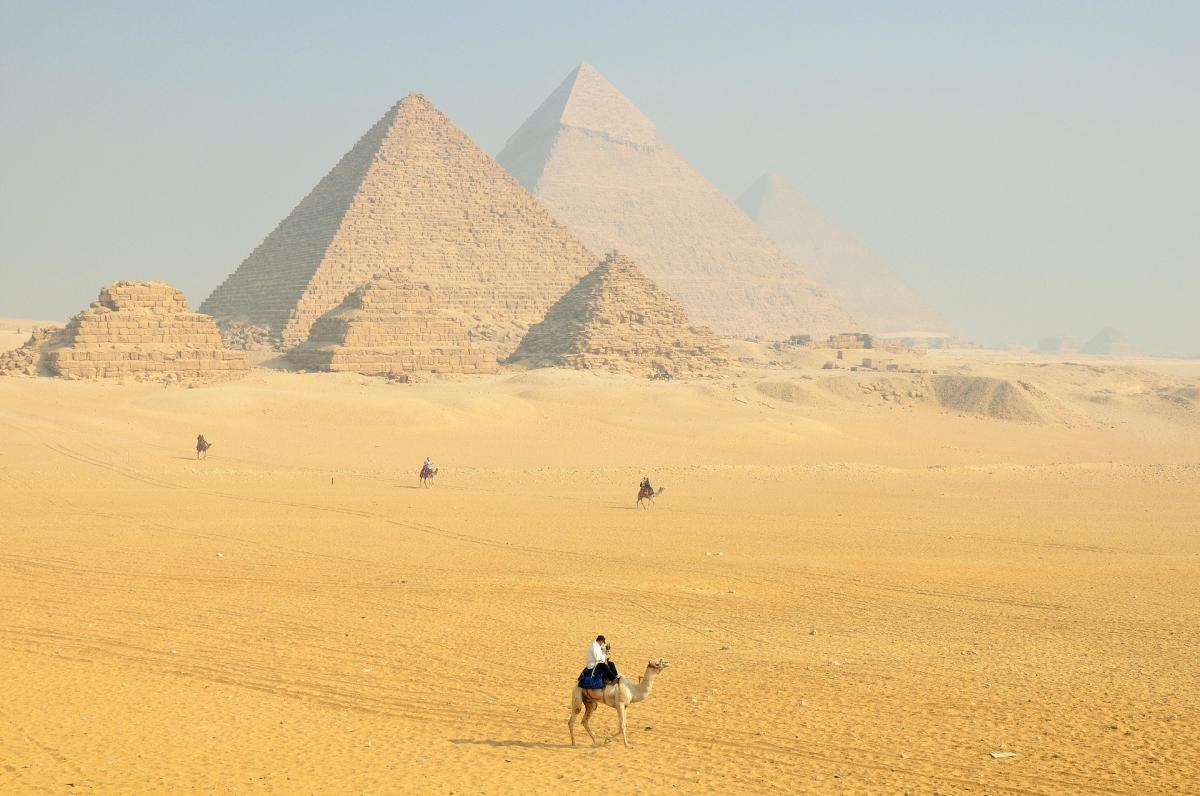
On the western bank of the Nile, where the sprawling neighborhoods of modern Cairo give way to the desert, stand three monuments that have fascinated humanity for more than four thousand years. The Pyramids of Giza have survived the rise and fall of empires, religious transformations, invasions, natural disasters, and centuries of exploration. Entire civilizations have disappeared since their construction, yet these enormous stone structures remain among the most recognizable landmarks on Earth. Their extraordinary size is only one aspect of their appeal. The precision of their construction, the complexity of their internal architecture, and the sheer organizational effort behind their creation reveal a civilization with remarkably sophisticated knowledge of engineering, mathematics, astronomy, and administration.
Although the pyramids have inspired countless legends and speculative theories, archaeological discoveries are gradually replacing speculation with tangible evidence. Ancient administrative documents, excavated settlements, geological investigations, and modern particle-detection technology are providing a clearer picture of how these monuments were conceived and constructed. At the same time, previously unknown spaces inside the Great Pyramid remind us that even one of the most extensively studied buildings in history has not surrendered all its secrets.
The Historical Origins of the Pyramids of Giza
The Giza pyramids were constructed during the Fourth Dynasty of ancient Egypt, approximately 4,500 years ago, in a period known as the Old Kingdom. Often described as the age of the pyramid builders, this era witnessed an extraordinary concentration of political authority and artistic ambition under Egypt's pharaohs.
The three principal pyramids belong to Khufu, Khafre, and Menkaure, successive members of the same royal family. Their construction reflected a political and religious system in which the king occupied a central position between the human and divine worlds. Providing him with an eternal resting place was therefore a matter of considerable national importance.
Yet the pyramids did not emerge from nowhere. Their architectural origins can be traced to earlier Egyptian burial structures known as mastabas, rectangular tombs with flat roofs and sloping walls.
A decisive development occurred during the Third Dynasty, when Pharaoh Djoser's Step Pyramid was constructed at Saqqara under the direction of the architect Imhotep. Its ascending tiers represented a dramatic departure from earlier funerary architecture and demonstrated the possibilities of large-scale stone construction.
Subsequent rulers continued experimenting with pyramid design. Pharaoh Sneferu, the father of Khufu, commissioned several ambitious projects, including the Bent Pyramid and the Red Pyramid at Dahshur. The unusual change in slope of the Bent Pyramid and the more consistent geometry of the Red Pyramid illustrate the architectural experimentation that preceded the achievements at Giza.
By the time Khufu ascended the throne, Egyptian builders had accumulated generations of practical experience. The Great Pyramid was the culmination of that evolving architectural tradition rather than an isolated technological achievement.
The Three Great Pyramids of Giza
Although the pyramids appear remarkably similar from a distance, each has its own architectural characteristics, construction history, and archaeological significance. Together, they illustrate the changing ambitions and priorities of Egypt's Fourth Dynasty rulers.
The Great Pyramid of Khufu: An Unprecedented Engineering Achievement
The largest and oldest of the three principal pyramids was built for Pharaoh Khufu, also known by his Greek name, Cheops. His reign is conventionally dated to approximately 2589-2566 BCE, although chronologies of the Old Kingdom vary among historians.
Originally standing 146.5 meters (481 feet) high, the Great Pyramid remained the world's tallest human-made structure for approximately 3,800 years. Today, following the loss of its outer casing and summit, its height is approximately 139 meters.
Each side of its square base measures roughly 230 meters, giving the structure an immense footprint of approximately 5.3 hectares. Several million stone blocks are believed to have gone into its construction, with their dimensions and weights varying considerably according to their structural purpose.
The pyramid's present appearance is considerably different from what ancient Egyptians would have witnessed. Its weathered, uneven exterior was originally concealed beneath finely dressed white limestone. Under the Egyptian sun, the completed monument would have presented an almost continuous, luminous surface rather than the exposed layers of masonry visible today.
Most of its structural limestone came from local quarries, while the higher-quality stone used for its exterior was transported from Tura, across the Nile. Granite was also employed in important internal sections of the monument.
Inside the Great Pyramid
The internal architecture of Khufu's pyramid is unusually elaborate, incorporating narrow passages, ascending corridors, and chambers positioned at different elevations.
The three principal known chambers are:
- The Subterranean Chamber: An unfinished chamber excavated into the natural bedrock beneath the pyramid. Its intended purpose remains uncertain.
- The Queen's Chamber: Despite its conventional name, there is no established evidence that it was intended for the burial of Khufu's queen.
- The King's Chamber: The principal burial chamber, containing a large granite sarcophagus. Khufu's mummy has never been recovered.
One of the most impressive internal features is the Grand Gallery, a steeply ascending passage distinguished by its exceptionally high, corbelled ceiling. Its construction required considerable precision, particularly given the enormous weight of masonry surrounding it.
Above the King's Chamber, a series of spaces separated by massive granite beams helps manage the structural pressures exerted by the upper portions of the pyramid. The arrangement demonstrates that the builders understood the practical importance of distributing loads within monumental stone structures, even though their theoretical understanding of structural mechanics cannot be reconstructed with certainty.
The Pyramid of Khafre: A Monument of Architectural Elegance
The second-largest pyramid was commissioned by Khafre, a son of Khufu who ruled during the middle of the Fourth Dynasty.
With an original height of approximately 143.5 meters (471 feet), Khafre's pyramid was slightly shorter than his father's. Nevertheless, its elevated position on the plateau and comparatively steep sides often create the impression that it is the tallest of the three.
Its most distinctive surviving feature is the substantial section of polished limestone casing near its summit. This remnant provides a valuable indication of how the Giza pyramids looked when they were first completed.
Khafre's architectural legacy extends well beyond the pyramid itself. His mortuary temple, valley temple, and connecting causeway form one of the best-preserved royal funerary complexes of the Old Kingdom. The valley temple, constructed with enormous limestone blocks and finished with granite, demonstrates an exceptional level of craftsmanship.
Statues recovered from the complex also reveal the sophisticated artistic traditions of the period. Among the most celebrated is a sculpture of Khafre seated upon his throne, with the falcon god Horus positioned protectively behind his head. The composition expresses the intimate relationship between kingship, divine authority, and religious symbolism.
The Pyramid of Menkaure: Smaller in Scale, Rich in Detail
The southernmost of the three principal pyramids was built for Menkaure, generally believed to have been Khafre's son and Khufu's grandson.
Originally approximately 65 meters (213 feet) high, it is considerably smaller than the other two. Its reduced dimensions, however, should not be mistaken for inferior craftsmanship or a decline in architectural sophistication.
Menkaure's builders incorporated granite into the lower portion of the pyramid's exterior casing. This was a particularly ambitious undertaking because granite is substantially harder to work than limestone, and the material had to be transported from Aswan, hundreds of kilometers to the south.
The upper portion was finished with limestone, while some of the lower granite blocks retain unfinished surfaces. Menkaure died before his entire funerary complex had been completed, leaving his successors to finish parts of the associated temples using less costly materials.
Three subsidiary pyramids stand beside his monument, generally associated with royal women. Evidence also indicates that religious ceremonies honoring Menkaure continued for centuries after his death.
The excavations of Menkaure's complex produced some of the finest surviving examples of Old Kingdom sculpture. Particularly remarkable are statues portraying the pharaoh alongside a queen or protective deities. Their carefully balanced proportions, restrained expressions, and meticulous workmanship reveal an artistic culture as accomplished as the engineering tradition responsible for the pyramids themselves.
Why Were the Pyramids of Giza Built?
To understand the pyramids, it is necessary to appreciate the ancient Egyptian conception of death. For the Egyptians, death was not necessarily the termination of existence but a transition into another form of life. The continuation of that existence depended upon religious rituals, bodily preservation, offerings, and the maintenance of an appropriate burial environment.
These concerns acquired particular importance in the case of the pharaoh, whose relationship with the gods was central to Egypt's understanding of cosmic and political order.
The pyramids served as royal funerary monuments intended to facilitate the deceased king's passage into the afterlife. They were accompanied by temples where priests performed ceremonies, presented offerings, and maintained the religious cult of the ruler.
The significance of the pyramid's geometric form is more difficult to establish definitively. One influential interpretation associates it with the primordial mound that emerged from the waters of creation in Egyptian mythology. Another connects its ascending sides with sunlight and the king's relationship with the solar realm.
These interpretations need not be mutually exclusive. Ancient Egyptian religious symbolism frequently incorporated overlapping meanings, allowing a single architectural form to express several spiritual ideas.
An Expression of Royal Authority
The construction of an enormous pyramid also communicated something about the living ruler.
A monument of such magnitude could only be realized through extensive control over labor, agricultural production, transportation, natural resources, and administrative institutions. Its construction demonstrated the crown's ability to coordinate communities spread across a substantial geographical area.
Seen in this light, the pyramids were both religious monuments and expressions of political power. They materialized the extraordinary authority of the Egyptian monarchy in a form intended to endure long after the death of the individual ruler.
How Were the Pyramids of Giza Constructed?
Perhaps no question concerning ancient Egyptian civilization has generated more discussion than the construction of the pyramids. How could people living thousands of years before industrial machinery quarry, transport, lift, and position such enormous quantities of stone?
The answer lies less in a single revolutionary invention than in the coordinated application of several practical technologies. Although the precise construction sequence remains debated, considerable evidence survives concerning quarrying, transportation, workforce organization, and ancient Egyptian engineering practices.
Quarrying and Preparing the Stone
The Giza Plateau provided a readily accessible supply of limestone, which formed the bulk of the pyramids' internal masonry. Procuring much of the stone locally significantly reduced the distances over which heavy construction materials needed to be moved.
Higher-quality limestone required for the exterior casing came from the Tura quarries, while granite used in burial chambers, temples, and decorative architectural elements was obtained from Aswan.
The selection of different materials was not arbitrary. Limestone was relatively manageable to extract and shape, whereas granite offered exceptional durability but demanded greater labor and specialized working techniques.
The builders' achievements were made possible by generations of accumulated craftsmanship rather than by technologies unknown to the archaeological record.
Transporting Massive Stone Blocks
Moving the quarried stone presented a challenge distinct from cutting it. On land, wooden sledges and ropes offered a practical means of transporting heavy materials.
Experimental research published in 2014 demonstrated that adding an appropriate quantity of water to sand could substantially reduce the force required to pull a sledge. Moisture binds the sand particles together, preventing them from accumulating excessively in front of the moving load.
Ancient Egyptian artistic representations also depict workers pouring liquid in front of sledges carrying large objects. These observations suggest that Egyptian laborers understood how to manipulate friction through relatively simple methods, although the exact application of these techniques at Giza cannot always be established.
Long-distance transportation was another matter entirely. Carrying granite from southern Egypt or high-quality limestone across the Nile would have been considerably more efficient by water than overland. Boats and navigable channels consequently played an essential role in the construction process.
The Mystery of Raising the Stones
Transporting stone to a construction site is one thing; lifting it to a height of nearly 150 meters is quite another.
Various ramp-based construction methods have been proposed. These include straight ramps extending outward from the monument, ramps running around its exterior, zigzag arrangements along its faces, and internal ramp systems.
Each proposed method presents practical advantages and engineering difficulties. A long, straight ramp reaching the uppermost levels, for example, would require an enormous quantity of material. An exterior spiral ramp might complicate the surveying and alignment of the pyramid's corners.
An important archaeological discovery at the ancient Hatnub quarry in 2018 revealed a steep hauling ramp flanked by stairways and regularly positioned postholes. Researchers suggested that workers could have used ropes and wooden posts to help move heavy stone loads up considerable inclines.
Dating evidence places this system in the period of Khufu. Although it does not demonstrate precisely how the Great Pyramid was constructed, it provides compelling evidence that sophisticated stone-hauling techniques existed during the relevant period.
The most reasonable interpretation is that Egyptian engineers may have employed a combination of methods, adapting their techniques as construction progressed. No single ramp configuration has yet been conclusively established for the entire Great Pyramid.
The Remarkable Discovery of Merer's Diary
Among the most significant archaeological discoveries relating to the Giza pyramids occurred not at Giza itself, but at Wadi al-Jarf, an ancient harbor on Egypt's Red Sea coast.
In 2013, archaeologists uncovered papyrus fragments dating to the latter part of Khufu's reign. Among these documents were administrative records kept by an official named Merer, who supervised a team engaged in transporting construction materials.
His surviving journal describes journeys between the Tura limestone quarries and a destination identified as Akhet-Khufu, the ancient name associated with Khufu's pyramid complex.
The documents record daily activities, transportation arrangements, and the movement of stone by boat. Their importance is difficult to overstate: they provide contemporary written testimony concerning the supply network supporting the construction of the Great Pyramid.
What makes Merer's diary particularly compelling is its ordinary character. Rather than presenting the achievements of the pharaoh in ceremonial language, it records the practical concerns of people responsible for delivering materials to a building project.
It offers an intimate glimpse into the administrative machinery behind the monument. Supplies had to arrive on schedule, workers required supervision, boats followed established routes, and different teams operated within a coordinated system.
The Great Pyramid emerges from these records not simply as a product of architectural genius, but as the outcome of an exceptionally well-organized logistical enterprise.
The Lost Waterways That Helped Build the Pyramids
Modern visitors encounter the pyramids in a landscape dominated by desert, urban development, and dry ground. During the Old Kingdom, however, the surroundings were significantly different.
Ancient waterways extended closer to the Giza Plateau, allowing boats to transport construction materials and provisions toward the pyramid complexes.
A major environmental study published in 2022 reconstructed the history of an extinct Nile channel known as the Khufu branch. Through the analysis of ancient sediments and preserved pollen, researchers determined that the channel maintained relatively favorable water levels during the reigns of Khufu, Khafre, and Menkaure.
The findings support the argument that the ancient Egyptians exploited existing river systems and seasonal flooding to facilitate the delivery of materials to Giza.
Further research published in 2024 identified sections of a much larger vanished Nile waterway, named the Ahramat Branch. Using satellite radar, geological investigations, and sediment analysis, researchers established that this former river channel passed near numerous pyramid sites extending along the western desert margin.
Its relationship with pyramid causeways and valley temples suggests that water transportation influenced the selection and development of royal funerary sites across a considerable portion of ancient Egypt.
These discoveries have changed the way researchers understand the relationship between the pyramids and their environment. Giza was not an isolated construction site surrounded by an inaccessible desert. It was connected to a wider transportation network that brought people, stone, food, tools, and other resources from across the kingdom.
Who Really Built the Pyramids?
For centuries, popular accounts portrayed the pyramid builders as enormous armies of enslaved people forced to perform exhausting labor under brutal conditions. Modern archaeology presents a more complicated and considerably better-supported picture.
Excavations near the Giza Plateau have revealed the remains of a substantial settlement associated with the construction of the pyramids. Known as Heit el-Ghurab, the site contained residential buildings, administrative facilities, workshops, storage areas, bakeries, and extensive food-production infrastructure.
The settlement appears to have supported the construction of the complexes of Khafre and Menkaure, and possibly activities associated with Khufu's project as well.
Its archaeological remains reveal a diverse community that included craftsmen, laborers, administrators, supervisors, and individuals responsible for preparing and distributing supplies.
Feeding an Enormous Workforce
The logistics of feeding thousands of people may have been almost as demanding as the construction itself.
Grain had to be collected and stored, bread baked in substantial quantities, animals raised and transported, and food distributed according to the needs of the workforce.
Excavations have identified large storage facilities and specialized food-production areas. These indicate that the Egyptian state devoted considerable resources to sustaining the communities responsible for its monumental building projects.
Archaeological estimates of the workforce vary, with some placing the number of people involved in pyramid construction in the tens of thousands. Such estimates should be understood as approximations rather than definitive historical records.
Skilled Craftsmen and Organized Labor
The evidence points toward a workforce consisting of permanent specialists alongside organized groups of laborers drawn from Egyptian communities.
Some individuals probably worked on royal construction projects for extended periods, while others may have served through rotating obligations imposed by the state.
This distinction matters. The archaeological evidence does not support the familiar image of an immense workforce composed entirely of enslaved captives. At the same time, it would be misleading to assume that all participants were freely employed in the modern sense.
Ancient Egyptian labor arrangements combined religious duty, political authority, economic provision, professional expertise, and various forms of compulsory service.
The pyramids were ultimately the collective achievement of a society whose ability to organize human labor was every bit as important as its knowledge of stone construction.
The Mathematical and Astronomical Precision of Giza
One of the most remarkable characteristics of the Great Pyramid is the accuracy of its geographical orientation.
Its four sides are aligned remarkably closely with the cardinal directions. The small deviations from true north, south, east, and west demonstrate an advanced understanding of practical surveying.
Achieving this level of accuracy across a foundation extending approximately 230 meters in each direction would have required careful observation, measurement, and repeated verification.
Researchers have proposed several possible methods by which the Egyptians established these alignments, including observations of circumpolar stars and techniques based on tracking the movement of the sun and its shadows.
Experimental investigations have demonstrated that relatively simple solar surveying techniques could reproduce highly accurate directional alignments without modern instruments. Nevertheless, the precise surveying procedure used by the builders remains uncertain.
Separating Mathematical Achievement from Modern Speculation
The proportions of the Great Pyramid have inspired numerous theories involving mathematical constants, planetary measurements, astronomical distances, and supposedly encoded predictions.
Some of these numerical relationships are genuinely intriguing. However, the existence of a mathematical correlation does not necessarily establish that ancient builders deliberately incorporated it.
A structure with a precisely defined geometric slope will naturally produce relationships between its height, perimeter, angles, and surface area. Determining whether those relationships were intentional requires additional historical evidence.
The strongest conclusions concern the Egyptians' demonstrated competence in measurement, geometry, orientation, and construction. These are substantial accomplishments in their own right and do not require speculative interpretations to enhance their significance.
The Great Sphinx and Its Connection to the Pyramids
No examination of the Giza Plateau would be complete without considering the Great Sphinx, the colossal limestone figure situated near Khafre's valley temple.
Approximately 73.5 meters (241 feet) long and 20 meters (66 feet) high, the Sphinx combines the body of a lion with a human head wearing a royal headdress.
Unlike the pyramids, which were assembled from individual stone blocks, the Sphinx was carved substantially from the natural bedrock of the plateau.
The prevailing archaeological interpretation associates its construction with Khafre's reign. This attribution is supported by its geographical relationship to his funerary complex, the sequence of construction around the surrounding temples, and similarities between its facial characteristics and surviving royal sculptures.
The Religious Significance of the Sphinx
The combination of human and animal characteristics was meaningful within ancient Egyptian religious traditions. The lion conveyed strength and royal power, while the human head connected those qualities with kingship.
Over the centuries, the Sphinx acquired additional religious associations. During the New Kingdom, it was worshipped as Horemakhet, a divine manifestation connected with Horus and the sun.
Between its enormous paws stands the Dream Stela, erected by Pharaoh Thutmose IV approximately a millennium after the monument's original construction.
The inscription recounts a dream in which the Sphinx promised royal authority to the young prince in exchange for clearing away the sand that had accumulated around its body. The account illustrates how later generations of Egyptians continued to reinterpret and incorporate the ancient monument into their own religious and political traditions.
Beyond the Pyramids: The Forgotten Complexity of the Giza Necropolis
The three towering pyramids dominate modern perceptions of Giza so completely that the surrounding archaeological landscape is often overlooked.
In reality, Giza was an extensive royal cemetery containing temples, subsidiary pyramids, causeways, burial shafts, boat pits, and numerous tombs belonging to members of the royal family and Egyptian elite.
Each principal pyramid formed part of a larger funerary complex. Its eastern side was associated with a mortuary temple, while a causeway connected the elevated monument to a valley temple situated closer to the ancient cultivated landscape and waterways.
These buildings facilitated funerary ceremonies and the continuing religious observances associated with the deceased king.
The Tombs of Royal Officials and Their Families
Surrounding the pyramids are extensive cemeteries containing mastabas and other burial structures. Their occupants included royal relatives, court officials, administrators, priests, and individuals who occupied important positions within Old Kingdom society.
The decorated interiors of these tombs provide an invaluable complement to the relatively austere architecture of the great pyramids.
Their inscriptions and relief carvings preserve information about agricultural activities, food preparation, craftsmanship, family relationships, professional occupations, and religious beliefs.
While the pyramids communicate the authority of Egypt's rulers, the surrounding cemeteries provide insight into the society that sustained them.
Khufu's Remarkable Funerary Boats
Another extraordinary feature of the Great Pyramid complex is the presence of large boat pits.
Two dismantled ancient vessels were discovered in pits on the southern side of Khufu's pyramid. Their preservation and construction demonstrate the sophistication of Egyptian woodworking and shipbuilding during the Old Kingdom.
The vessels are frequently described as solar boats, reflecting their possible association with the king's spiritual journey alongside the sun god. Another interpretation suggests that they may have been connected with the transportation of the royal body or funerary equipment.
Their precise ceremonial function remains a subject of scholarly interpretation.
The first reconstructed vessel was eventually transferred to the Grand Egyptian Museum, ensuring its continued preservation as one of the most important surviving examples of ancient Egyptian maritime technology.
Modern Scientific Discoveries Inside the Great Pyramid
Considering the enormous attention the Great Pyramid has received throughout history, it might seem reasonable to assume that its internal layout has been thoroughly documented.
Recent scientific investigations have demonstrated otherwise.
Researchers are increasingly employing non-invasive technologies capable of investigating the monument without removing stones or damaging its ancient masonry. Among the most promising is cosmic-ray muon imaging.
Muons are subatomic particles produced when cosmic rays interact with the Earth's atmosphere. Because these particles can penetrate substantial quantities of solid material, researchers can study their distribution to identify differences in density inside massive structures.
In practical terms, an unexpected concentration of particles passing through a particular region may indicate the presence of an internal cavity.
The Discovery of the Big Void
In 2017, researchers announced the detection of a previously unknown internal space above the Great Pyramid's Grand Gallery.
Named the ScanPyramids Big Void, the cavity was estimated to extend at least 30 meters in length, with a cross-sectional size broadly comparable to that of the Grand Gallery.
The discovery was independently confirmed through three different muon-detection techniques, providing strong scientific confidence in the existence of the space.
Its purpose, however, remains unresolved. It could represent a structural feature, an element associated with the construction process, or another architectural arrangement not yet understood.
There is presently no confirmed evidence from the discovery itself establishing that the void contains royal treasures, funerary objects, or an undiscovered burial chamber.
The Hidden Corridor Behind the Northern Face
In 2023, another significant investigation provided detailed measurements of a previously unknown corridor near the northern face of the Great Pyramid.
The corridor measures approximately nine meters in length, with a cross section of roughly two meters by two meters. It lies behind an arrangement of large, angled limestone blocks near the monument's northern entrance area.
Its location has prompted suggestions that it may have played a role in managing structural loads or protecting underlying architectural features. Nevertheless, its complete function has not been definitively established.
The significance of these discoveries extends beyond the possibility of finding previously unknown chambers. They demonstrate that the internal arrangement of the Great Pyramid may be considerably more complex than its visible passages suggest.
Understanding these hidden architectural features could eventually help researchers reconstruct aspects of the original construction process that have remained elusive for centuries.
Common Myths and Misconceptions About the Giza Pyramids
Few archaeological monuments have attracted as many unsupported claims as the pyramids of Giza. Their immense scale, age, and remarkable precision have encouraged explanations that sometimes overlook the considerable achievements of ancient Egyptian civilization.
Were the Pyramids Built by Extraterrestrials?
No credible archaeological evidence supports the claim that extraterrestrial beings participated in the construction of the Egyptian pyramids.
The monuments belong to a recognizable architectural tradition that developed over successive generations. Archaeological evidence documents their quarrying activities, labor settlements, transportation systems, administrative practices, and religious context.
The discovery of contemporary records concerning the delivery of stone to Khufu's pyramid provides particularly valuable evidence connecting its construction with identifiable Egyptian officials and workers.
Unanswered questions about particular engineering techniques do not invalidate the extensive evidence of human construction.
Were the Pyramids Really Royal Tombs?
The absence of surviving royal mummies from the three principal pyramids has occasionally encouraged alternative interpretations of their original purpose.
However, their burial chambers, sarcophagi, associated mortuary temples, surrounding cemeteries, religious traditions, and relationship with earlier and later funerary monuments provide substantial evidence for their interpretation as royal tombs.
The disappearance of original burial contents does not establish that they were never present. Ancient Egyptian tombs were vulnerable to robbery, reuse, and disturbance over the course of millennia.
The funerary interpretation remains the most strongly supported explanation of the pyramids' primary function.
Has Every Mystery of the Pyramids Been Solved?
Despite remarkable archaeological progress, numerous questions remain open.
Researchers have not conclusively established the complete system used to raise stone blocks during every phase of construction. The precise original purpose of some internal chambers and shafts remains uncertain, and newly identified cavities require further investigation.
There is also continuing debate about aspects of labor organization, construction schedules, surveying procedures, and religious symbolism.
These unresolved matters are not signs that archaeology has failed to explain the pyramids. They are reminders that reconstructing ancient events from incomplete physical evidence is an inherently demanding scientific undertaking.
Why Have the Pyramids Survived for So Long?
The extraordinary longevity of the Giza pyramids can be attributed to a combination of structural design, material durability, environmental conditions, and geographical location.
Their broad foundations and progressively narrowing profiles provide considerable stability. Rather than concentrating their enormous mass at elevated levels, the structures distribute much of their weight downward through successive layers of masonry.
The use of substantial quantities of stone also gave the monuments a degree of resilience unavailable to buildings constructed predominantly from timber, mud brick, or other vulnerable materials.
Egypt's relatively arid climate has helped preserve archaeological remains, although the pyramids have not escaped damage. Their outer surfaces have suffered from erosion, stone removal, environmental deterioration, and human activity.
The monuments we encounter today are therefore both remarkably well preserved and significantly altered. The rough, exposed masonry of the Great Pyramid, for example, conceals the refined architectural appearance that characterized its original exterior.
Their survival is no less extraordinary for these changes. Indeed, the fact that such vast structures have endured thousands of years without losing their fundamental architectural integrity is one of the most persuasive demonstrations of the abilities of their builders.
The Pyramids of Giza as a World Heritage Treasure
In 1979, the Giza Plateau became part of the internationally recognized World Heritage property encompassing Memphis and its ancient necropolis, including the pyramid fields extending from Giza to Dahshur.
The designation acknowledges the exceptional historical, architectural, artistic, and archaeological importance of the broader region.
The Great Pyramid also occupies a unique position in the cultural history of humanity as the sole surviving monument among the Seven Wonders of the Ancient World. Its continued existence provides a tangible connection with a world otherwise known largely through archaeological remains, historical accounts, and surviving fragments of ancient material culture.
Preserving Giza presents an ongoing challenge. Urban expansion, tourism pressure, atmospheric pollution, environmental deterioration, and the demands of archaeological investigation must be balanced against the need to protect its extraordinary historical character.
Conservation is especially important because the plateau contains much more than its celebrated monuments. Unexcavated archaeological deposits, ancient settlements, burial grounds, and environmental evidence may hold information capable of transforming our understanding of Old Kingdom Egypt.
Protecting the pyramids therefore means safeguarding not only the structures themselves but also the historical landscape in which they were created.
Final Thoughts
The Pyramids of Giza are extraordinary not merely because they are enormous or because they have survived for approximately 4,500 years. Their deeper significance lies in what they reveal about human ingenuity, collective organization, craftsmanship, religious conviction, and the ambition to create something that transcends an individual lifetime.
Behind their imposing stone walls lies the story of surveyors who measured the land, quarry workers who extracted enormous blocks, sailors who navigated ancient waterways, craftsmen who shaped difficult materials, and administrators who coordinated one of the most ambitious construction enterprises of antiquity.
Modern archaeological research has brought many of these individuals and their activities into clearer focus. Merer's administrative records, excavated workers' settlements, rediscovered Nile channels, and scientific investigations of concealed internal spaces have transformed our understanding of the monuments.
Yet Giza retains an unmistakable sense of mystery. Some questions may eventually be answered through technological advances and further excavation; others may remain unresolved because the necessary evidence has disappeared.
Perhaps the most remarkable aspect of the pyramids is that their genuine history is every bit as fascinating as the legends surrounding them. They stand as enduring evidence of what human societies can accomplish through accumulated knowledge, practical ingenuity, organization, and sustained collective effort.
Long after the pharaohs who commissioned them vanished from the living world, the pyramids continue to fulfill at least one aspect of their original ambition: they have made ancient Egypt almost impossible to forget.
High above the crowded streets, centuries-old mosques, traditional markets, and sprawling neighborhoods of Egypt’s capital stands the Citadel of Cairo, a magnificent fortress that once served as the political and military heart of the country. Known locally as Qalaat Salah al-Din, or the Citadel of...

On the western edge of the Nile Valley, where the fertile land gradually gives way to the vast Egyptian desert, lies one of the most extraordinary archaeological landscapes in the world. Saqqara, the ancient burial ground of Memphis, is a place where nearly every chapter of Egyptian civilization seems...
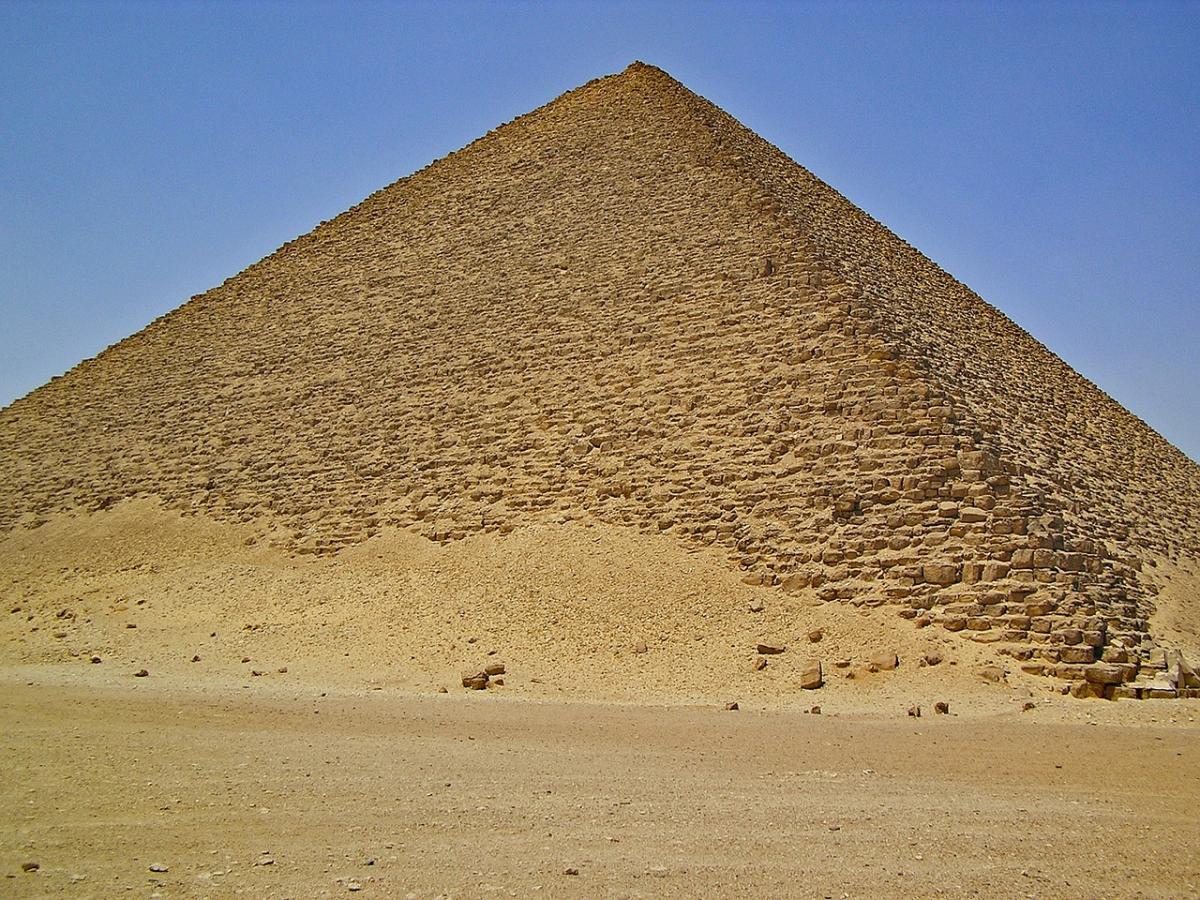
Nestled in the desert on the west bank of the Nile River, approximately 40 kilometers south of Cairo, lies the ancient royal necropolis of Dahshur. This significant archaeological site, part of the larger Memphis necropolis and a UNESCO World Heritage Site, is a testament to the architectural ingenuity...