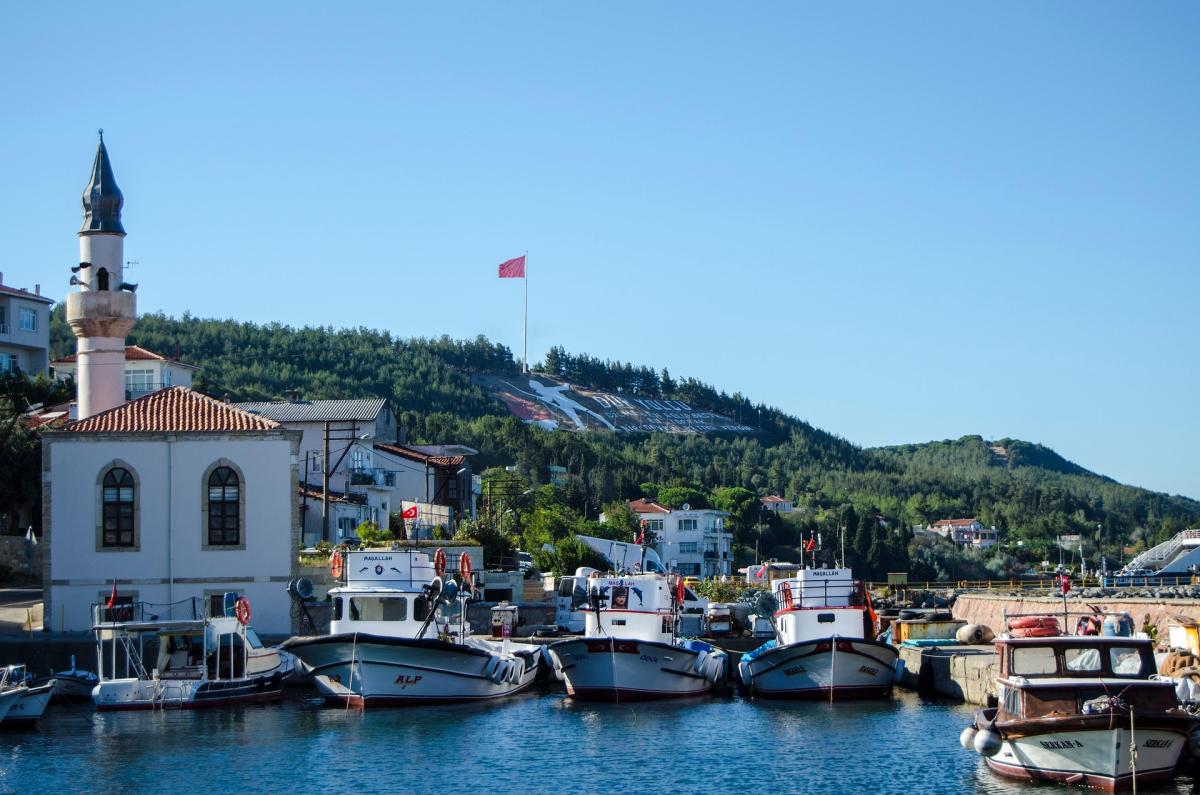
A Travelers Guide to Çanakkale, Turkey
Nestled on the southern coast of the Dardanelles Strait, the vital waterway connecting the Aegean Sea to the Sea of Marmara, Çanakkale is a city where history, myth, and modern life converge . This vibrant university city serves as the primary gateway to two of Turkey's most profound historical sites: the ancient, legendary city of Troy and the poignant World War I battlefields of the Gallipoli Peninsula . For millennia, this strategic location has been a crossroads of civilizations, witnessing the passage of armies and the clash of empires . Today, Çanakkale offers travelers a compelling blend of rich history, beautiful natural landscapes, and a lively cultural scene, making it a must-visit destination for history enthusiasts and curious travelers alike.
Getting to Çanakkale
Reaching Çanakkale is straightforward, with several transportation options available from major Turkish cities.
By Air: Çanakkale has a small airport (CKZ) located just 3 kilometers from the city center . AnadoluJet (a subsidiary of Turkish Airlines) operates flights from Ankara, and there are also flights from Istanbul . Upon arrival, taxis and shuttles are readily available to take you into town .
By Bus: Bus travel is a popular and economical option . Numerous companies, including Pamukkale, Metro Turizm, and Kamil Koç, operate frequent services from major hubs like Istanbul, Izmir, and Ankara . The journey from Istanbul takes approximately 5 to 6 hours . The main bus station (otogar) is located about 5 kilometers east of the city center, with frequent local buses connecting it to the downtown area .
By Car: Driving to Çanakkale offers flexibility for exploring the region . From Istanbul, the journey has been made significantly faster with the opening of the 1915 Çanakkale Bridge in March 2022, which spans the Dardanelles near Gelibolu . Alternatively, drivers can take a car ferry across the strait . Popular ferry routes include Eceabat to Çanakkale and Gelibolu to Lapseki .
By Ferry: Ferries are an integral part of life in Çanakkale . Gestaş operates regular car and passenger ferries across the Dardanelles . The most convenient route for travelers is the 24-hour service between Eceabat on the Gallipoli Peninsula and Çanakkale city center, which takes about 25 minutes .
Best Time to Visit
The most pleasant times to visit Çanakkale are during the spring (April to June) and autumn (September to November) . During these seasons, the weather is mild and ideal for sightseeing and outdoor activities . Spring sees the countryside burst into bloom with wildflowers, while autumn casts a beautiful golden hue over the historical landscapes .
Summers (July and August) are popular, especially for beachgoers, but can be very hot and crowded . Winters are generally mild but can be cool and rainy .
A significant time to visit is around Anzac Day on April 25th, when thousands gather for a dawn service to commemorate the Gallipoli campaign . While a deeply moving experience, be aware that accommodation and tours are booked far in advance and the area is extremely crowded .
Where to Stay
Çanakkale offers a wide range of accommodation to suit all budgets, from luxury hotels to charming guesthouses and affordable hostels .
Luxury and High-End Hotels: For those seeking comfort and amenities, the Kolin Hotel Spa & Convention Center is a 5-star option with pools and spa facilities . The DoubleTree by Hilton Canakkale and Parion Hotel also offer high-quality service and comfort .
City Center Hotels: Many visitors prefer to stay in the city center for easy access to the ferry port, restaurants, and waterfront . Options like the Grand Anzac Hotel, Hotel Akol, and Kule Hotel are centrally located and popular with travelers .
Boutique and Special Class Hotels: For a more unique experience, consider a stay at a special class hotel like the Hotel Kervansaray Canakkale, often housed in a historic building .
Budget-Friendly Options: The Barbaros Mahallesi neighborhood is known for its affordable guesthouses and small hotels near the sea . For backpackers, Anzac House Hostel is a well-known option in the heart of the city .
Things to Do and See
Çanakkale is a treasure trove for history buffs and nature lovers . A trip here is incomplete without exploring its two main draws: the Gallipoli Peninsula and the ancient city of Troy, as well as stunning nearby cities like Assos and Alexandria Troas .
Gallipoli Peninsula Historical National Park
A short ferry ride across the Dardanelles lies this vast and solemn open-air museum . Established in 1973, the 33,000-hectare park honors the soldiers who fought and died during the Gallipoli Campaign of WWI, which resulted in over 220,000 Allied casualties and a similar number on the Ottoman side . Known in Turkey as the Çanakkale Savaşı (Çanakkale War), it was a brutal, eight-month-long struggle that had a profound impact on the nations involved .
A Fateful Campaign: Strategic Aims and Naval Attack: By late 1914, the Western Front was a bloody stalemate . Winston Churchill, then Britain's First Lord of the Admiralty, championed a daring plan to force the Dardanelles Strait, capture the Ottoman capital of Constantinople (Istanbul), and knock the Ottoman Empire out of the war . This would also open a vital sea supply route to their ally, Russia . The campaign began in February 1915 with a naval-only assault . However, on March 18, a major naval push was met with fierce resistance from Ottoman minefields and mobile artillery, resulting in a disaster for the Allies: three battleships were sunk and three others severely damaged . This crippling loss proved a naval victory was impossible without ground troops .
The Landings and Trench Warfare: On April 25, 1915, Allied forces launched an amphibious invasion . British and French troops landed at Cape Helles at the southern tip, while the Australian and New Zealand Army Corps (ANZAC) landed further north at a bay that became known as Anzac Cove . Both landings were met with fierce, determined resistance from Ottoman troops, commanded by skilled officers like Mustafa Kemal (later Atatürk) . The invading forces were pinned down on narrow beaches by the rugged, steep terrain and relentless enemy fire, and the battle quickly devolved into a brutal stalemate of trench warfare, with soldiers enduring horrific conditions .
The August Offensive and Evacuation: In a final attempt to break the deadlock in August 1915, the Allies launched a new offensive with fresh landings at Suvla Bay and assaults on the high ground of the Sari Bair range, including Chunuk Bair and Lone Pine . Despite initial successes and incredible bravery, the attacks ultimately failed due to poor coordination and tenacious Ottoman counter-attacks . With the campaign a clear failure, the decision was made to evacuate . The meticulously planned and secretive withdrawal was completed by January 1916 and was ironically the most successful operation of the entire campaign .
Legacy and Visiting the Park Today: For the Allies, the campaign was a military catastrophe born from poor planning, underestimation of the enemy, and difficult terrain . For Turkey, it was a heroic final defense of the homeland that propelled Mustafa Kemal to national hero status, paving the way for him to lead the Turkish War of Independence and found the modern Republic of Turkey . For Australia and New Zealand, the bravery and "mateship" shown by their soldiers at Gallipoli became a defining moment in their national identities, and April 25th is solemnly commemorated as Anzac Day . Key sites to visit within the park include:
- Anzac Cove: The famous landing site of the Australian and New Zealand Army Corps .
- Çanakkale Martyrs' Memorial: An imposing monument dedicated to the Turkish soldiers who died in the campaign .
- Lone Pine Memorial: The main Australian memorial, situated on the site of a significant and savage battle .
- Chunuk Bair Memorial: The principal memorial for New Zealand forces, offering panoramic views of the peninsula .
- Cemeteries and Trenches: The park is dotted with dozens of beautifully maintained cemeteries for Turkish, Australian, New Zealand, British, and French soldiers, as well as preserved trenches that give a sense of the battlefield conditions .
Ancient City of Troy and the Troy Museum (UNESCO World Heritage Site)
Located about 30 kilometers south of Çanakkale, this is one of the world's most famous archaeological sites . Immortalized by Homer in his epic poem, the Iliad, the site contains the ruins of nine different cities built on top of one another over 4,000 years . Visitors can wander through the ancient walls, see the remnants of houses and temples, and take a photo with the large replica Trojan Horse at the entrance .
The Troy Museum: A Modern Home for Ancient Treasures
Situated near the entrance to the archaeological site, the state-of-the-art Troy Museum is an essential stop . It is important to note that the former Çanakkale Archaeological Museum (established in 1984) is now closed, and its entire collection was moved to the Troy Museum upon its opening in 2018 . The old museum building in Çanakkale now serves as a public library .
- Architectural Design: The museum's striking design is a massive, rust-colored cube meant to evoke an "excavated artifact" . Its height is deliberately equivalent to the pre-excavation height of the ancient city of Troy, connecting the structure to the landscape it represents . Visitors descend a ramp to enter, beginning a narrative journey through the region's rich history .
- The Collection: The museum houses around two thousand artifacts from decades of archaeological work in the Troad region, including Troy, Assos, Alexandria Troas, and Tenedos (Bozcaada) . The collection's history began in 1911 and grew significantly with finds from Carl Blegen's Troy excavations and the discovery of the Dardanos Tumulus in 1959 .
- Significant Artifacts: The exhibits are arranged thematically across seven sections, guiding visitors through the history of the Troad . Highlights include:
- Finds from Troy: A vast array of items from Troy's 5,000-year history, including Early Bronze Age pottery, distinctive depas amphikypellon drinking vessels, and a bronze seal with Luwian hieroglyphics-the only known example of writing from Late Bronze Age Troy .
- The Polyxena Sarcophagus: One of the museum's most famous pieces, this 6th-century BCE sarcophagus is the earliest known from Anatolia with figural reliefs, depicting the sacrifice of King Priam's daughter, Polyxena .
- Gold Jewelry: A beautiful collection of gold jewelry from around 2400 BCE, including 24 pieces repatriated from the University of Pennsylvania in 2012 .
- Roman Sculptures: A larger-than-life statue of Emperor Hadrian, discovered at Troy, commemorates his visit in 124 CE .
- Dardanos Tumulus Treasures: Stunning golden wreaths and diadems from the 4th and 3rd centuries BCE, rivaling those found in the royal tombs of Macedonia .
- Artifacts from other Troad sites: The museum also features a striking statue of Triton from Parion, terracotta figurines from Assos, and finds from Alexandria Troas on its lowest level .
Assos (Behramkale)
A captivating day trip approximately 90 kilometers south of Çanakkale, the ancient city of Assos is perched on a volcanic hill with dramatic views of the Aegean Sea . Founded by Greek colonists in the 7th century BC, its strategic harbor made it a crucial port .
- Historical Significance: The city's most celebrated period was in the 4th century BC when the philosopher Aristotle founded a school of philosophy here . It was also visited by St. Paul during his third missionary journey . The Ottomans conquered the area in the 14th century, establishing the village of Behramkale, which coexists with the ruins today . A modern statue of Aristotle greets visitors at the entrance .
- Archaeological Ruins: The most iconic ruin is the Temple of Athena, built around 530 BC at the highest point of the acropolis . It is the only known archaic Doric temple in Anatolia, offering breathtaking panoramic views of the sea and the Greek island of Lesbos . Other ruins include a well-preserved ancient theatre on the southern slope, impressive city walls, the agora (marketplace), a gymnasium, and a necropolis (cemetery) .
- Behramkale Village and Harbor: The modern village is a protected site with charming cobbled streets, stone houses, and the 14th-century Murad Hüdavendigar Mosque . A steep road leads down to the picturesque old harbor (İskele), which is lined with stone buildings now serving as boutique hotels and seafood restaurants .
- Practical Information: The drive from Çanakkale takes about 1.5 hours . Alternatively, take a bus to the town of Ayvacık and then a short taxi or minibus (dolmuş) ride . Sturdy walking shoes are essential for the uneven terrain .
Alexandria Troas
For travelers looking to venture beyond the main tourist sites, the sprawling ruins of Alexandria Troas offer a profound glimpse into the Hellenistic, Roman, and early Christian eras . Nestled near the village of Dalyan in the Ezine district, this ancient port city was once a major metropolis .
- Historical Significance: Founded around 310 BCE by Antigonus, one of Alexander the Great's generals, it was renamed Alexandria Troas by his successor, Lysimachus . Its strategic location and artificial harbor allowed it to eclipse even Troy in importance, growing to a population of around 100,000 under the Romans . Both Julius Caesar and Constantine the Great reportedly considered making it the capital of the Roman Empire . The city also holds a special place in Christian history as the site where the Apostle Paul had a vision to go to Macedonia and first sailed for Europe (Acts 16:8-11) . He later returned and performed the miracle of raising Eutychus from the dead (Acts 20:5-12), making the site a Christian pilgrimage destination .
- Key Ruins: The vast 400-hectare site is scattered with evocative ruins among olive groves .
- Herodes Atticus Bath: Known locally as "Bal Saray" (Honey Palace), this massive bath complex from 135 CE is one of the largest in Anatolia and among the best-preserved structures on site .
- City Walls: The circuit of the ancient city walls, once approximately 10 kilometers long, can still be traced in several places .
- Ancient Harbor: The two basins of the harbor are now silted up, with the inner basin forming a heart-shaped lagoon . Massive granite columns, once a major export, can still be seen .
- Other Structures: Visitors can also find the remains of a theater, an odeon, a stadium, and an aqueduct .
- Practical Information: Alexandria Troas is about 59 km south of Çanakkale, a 55-minute drive . Alternatively, take a bus to Geyikli and then a taxi . The site is free to enter, and sturdy shoes are highly recommended for the large, overgrown area .
In the City Center
- The Trojan Horse: A major landmark on the waterfront is the actual wooden horse used in the 2004 movie Troy, starring Brad Pitt . It was gifted to the city and is a popular spot for photos .
- Waterfront (Kordon): The lively waterfront promenade is perfect for a leisurely stroll . It's lined with cafes, seafood restaurants, and offers beautiful views of the Dardanelles and Kilitbahir Castle .
- Çanakkale Clock Tower: An iconic landmark near the ferry port, built in 1897 . The surrounding area is bustling with shops and eateries .
- Aynalı Çarşı (Mirrored Bazaar): A historic bazaar mentioned in a famous Turkish folk song . It's a great place to shop for local goods and souvenirs .
- Çimenlik Castle and Naval Museum: Located in the heart of Çanakkale, this formidable fortress was built by Sultan Mehmed the Conqueror in 1452 . It now houses a military and naval museum detailing the epic naval battles of the Dardanelles .
- Kilitbahir Castle: Directly opposite Çimenlik Castle on the European shore, Kilitbahir was built at the same time to control the strait . A short ferry ride allows visitors to explore this clover-shaped fortress and enjoy stunning views .
Natural Attractions & Islands
Çanakkale is the gateway to two beautiful Turkish islands in the Aegean Sea, as well as the legendary Mount Ida .
Bozcaada Island (Ancient Tenedos): A gem in the Aegean Sea, Bozcaada is Turkey's third-largest island and offers a harmonious blend of history, culture, and natural beauty . Known as Tenedos in antiquity, it provides a serene escape with its charming old town, historic castle, renowned wines, and pristine beaches . The entire island is a protected historical and natural site, which helps preserve its unique character .
- A Rich and Layered History: Bozcaada's history dates back to the Early Bronze Age, around 3000 BC . Its strategic location made it a coveted prize for numerous civilizations . The island is famously mentioned in Homer's Iliad as the place where the Greek fleet hid before the Trojan War . The Ottoman Empire conquered the island in 1455 . For centuries, a rich common culture was forged by the Turkish and Greek populations living together . Following the Treaty of Lausanne in 1923, the island was officially returned to Turkey, though its Greek population declined significantly in the mid-20th century .
- The Enchanting Old Town: The main town is a captivating maze of cobblestone streets, reflecting its dual heritage through distinct Greek and Turkish quarters . The Greek Quarter features colorful, well-preserved houses in the classic Aegean style . The Turkish Quarter has more winding streets and Ottoman-era architecture, with historic mosques .
- Bozcaada Castle: Dominating the harbor, the magnificent Bozcaada Castle is one of Turkey's best-preserved fortifications . Rebuilt by Sultan Mehmed II, visitors can explore its walls and enjoy panoramic views .
- A Haven for Wine Lovers: Winemaking has been central to Bozcaada's identity for 3,000 years . The island is known for native grape varieties like Kuntra, Karalahna, Vasilaki, and Çavuş . Renowned wineries such as Corvus, Çamlıbağ, and Talay offer tours and tastings .
- Pristine Beaches and Coves: Bozcaada is fringed with beautiful beaches with crystal-clear, cool Aegean waters . Ayazma Beach is the most popular , while quieter alternatives include Habbele and Sulubahçe . Aquarium Bay (Akvaryum Koyu) is a paradise for snorkelers .
- Practical Information: Access is via a 35-minute ferry from the Geyikli pier; booking vehicle reservations in summer is essential . The town center is best explored on foot, with vehicle traffic restricted in summer . Minibuses run to the main beaches, and scooter or car rentals offer more flexibility . Booking accommodation in advance is highly recommended .
Gökçeada (Ancient Imbros): Turkey's Largest Island: Known in antiquity as Imbros, this "heavenly island" offers a unique blend of rugged natural beauty and a tranquil atmosphere .
- A Unique Bicultural History: Historically, Imbros was predominantly inhabited by ethnic Greeks . The 1923 Treaty of Lausanne granted the island special status to protect its Greek population, but discriminatory policies later led to a mass exodus . Today, the legacy of this past is palpable in its historic villages, a mix of restored stone houses and evocative ruins . A Greek school reopened in 2013, signaling a small revival .
- Exploring the Historic Villages: The island's charm lies in its inland villages. Zeytinli (Aghios Theodoros) is famous for its lively cafes and hand-ground dibek kahvesi (mortar coffee) and is the birthplace of Ecumenical Patriarch Bartholomew I . Tepeköy (Agridia), high in the hills, feels like a village in Greece and is known for its tavernas . Bademli (Gliki) features beautiful stone architecture, while Dereköy (Schoinoudi), once Turkey's largest village, is a hauntingly beautiful, semi-abandoned settlement that speaks to the island's demographic shifts .
- Natural Wonders and Water Sports: Gökçeada is a paradise for nature lovers . Aydıncık (Kefalos) Beach is a world-class destination for windsurfing and kitesurfing due to consistent summer winds, with several surf clubs offering lessons . Behind the beach lies the Salt Lake (Tuz Gölü), whose sulfur-rich mud is claimed to have therapeutic properties . Other beautiful beaches include the serene Gizli Liman (Hidden Harbor) and Yıldız Koyu, part of Turkey's first underwater national park .
- Practical Information: The main access is a 75-90 minute car ferry from Kabatepe on the Gallipoli Peninsula; booking ahead in summer is wise . Renting a car or scooter is essential for properly exploring the spread-out villages and beaches . Accommodation ranges from boutique hotels in the villages to pensions near the beaches . Be sure to try local products like organic olive oil, honey, wine, and almond cookies .
Mount Ida (Kazdağı): Inland from Troy, this legendary mountain offers a serene escape with lush forests, hiking trails, and crystal-clear streams .
What to Eat
Çanakkale's location on the strait makes it an excellent place for fresh fish and seafood . The waterfront is lined with restaurants serving the daily catch . Beyond seafood, you can find a wide variety of traditional Turkish cuisine . Be sure to try the local specialties:
- Peynir Helvası: A unique and delicious dessert made from unsalted cheese, semolina, and sugar, often served warm .
- Çanakkale Bombası: A decadent halva cake that combines tahini and chocolate sauce .
Getting Around
- On Foot: The center of Çanakkale is compact and easily explored on foot . The waterfront, ferry port, Çimenlik Castle, and many hotels and restaurants are within walking distance of each other .
- Public Transport: For destinations further afield, a network of municipal buses and minibuses (dolmuş) is available . You can use the "Kent Kart" for convenient travel on city buses . Minibuses also run to nearby sites like Troy and the town of Ayvacık for connections to Assos .
- Tours: Organized tours are a highly recommended and efficient way to visit the vast Gallipoli Peninsula and the archaeological site of Troy, especially for first-time visitors . Tour guides provide invaluable historical context that brings these sites to life .
- Ferries: Ferries are essential for crossing the Dardanelles to the Gallipoli Peninsula and for visiting the islands of Bozcaada and Gökçeada .
Practical Tips
- Currency: The official currency is the Turkish Lira (TRY) .
- Language: The official language is Turkish . English is commonly spoken in hotels, restaurants, and tourist areas .
- Safety: Çanakkale is generally a safe city for travelers .
- Local Customs: Turkish hospitality is renowned . It is customary to show respect when visiting the war memorials and cemeteries on the Gallipoli Peninsula .
- What to Wear: For exploring archaeological sites like Troy, Assos, and Alexandria Troas with their uneven terrain and steep paths, comfortable and sturdy walking shoes are essential .
Executive Summary
Çanakkale is a captivating destination that serves as a crucial hub for exploring some of the most significant historical sites in the world . Strategically located on the Dardanelles Strait, the city provides easy access to the legendary ruins of ancient Troy and the poignant WWI battlefields of the Gallipoli Peninsula . Travelers can reach Çanakkale via bus, car, or plane, with the spring and autumn months offering the most pleasant weather for a visit .
The city offers a diverse range of accommodations, from luxury hotels to budget-friendly hostels . The primary attraction is the Gallipoli Peninsula Historical National Park, a vast site commemorating the brutal 1915 campaign that shaped the identities of modern Turkey, Australia, and New Zealand . Another key destination is the UNESCO World Heritage site of Troy, whose artifacts are brilliantly displayed in the world-class Troy Museum . For those seeking to explore further, popular day trips include the ancient city of Assos, famous for its Temple of Athena and connection to Aristotle, and the sprawling ruins of Alexandria Troas, a major Roman port with significant ties to early Christianity .
Beyond its historical weight, Çanakkale serves as a gateway to two stunning Aegean islands . Bozcaada is renowned for its charming old town, well-preserved castle, and thriving wine culture . Gökçeada, Turkey's largest island, offers a unique experience with its rugged landscapes, historic Greek villages, and world-class windsurfing conditions . Whether you are a history enthusiast, a nature lover, or simply a curious traveler, Çanakkale offers a rich and memorable journey through layers of myth, history, and modern Turkish culture.
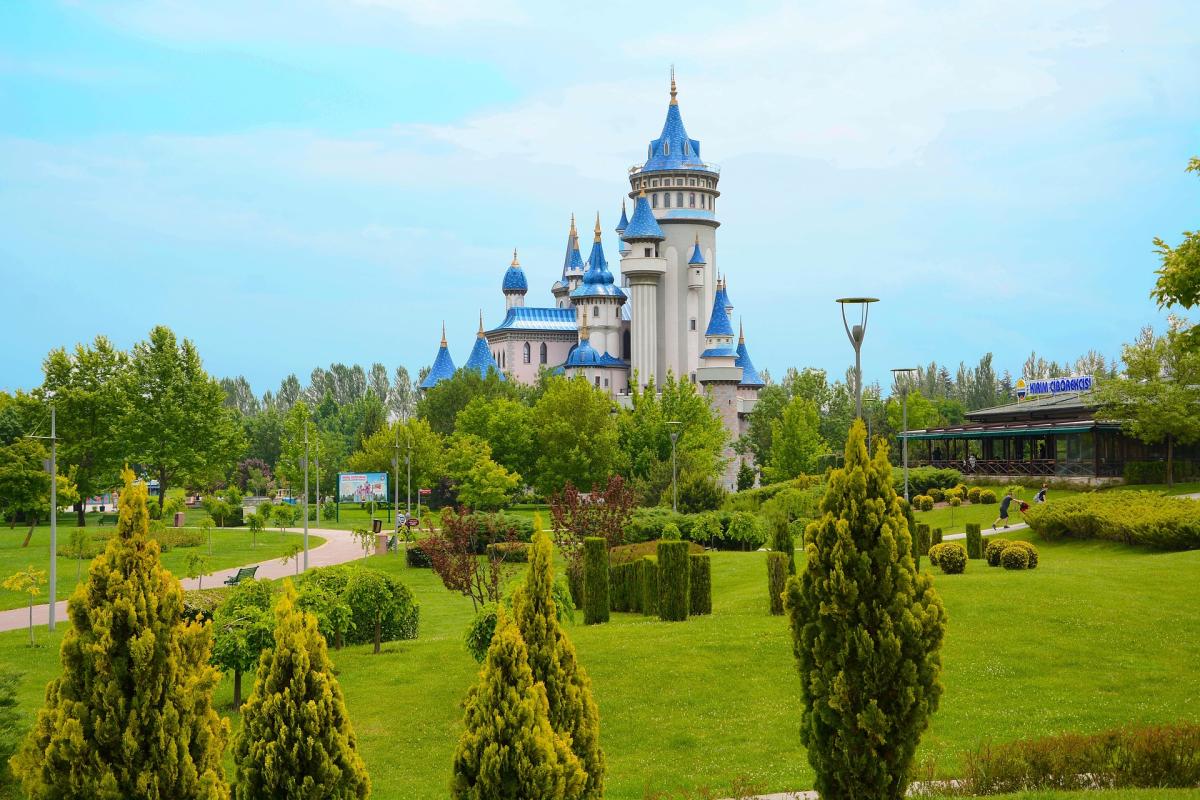
Welcome to Eskişehir! Often called the Student City or the Venice of Anatolia, this vibrant and modern city in northwestern Turkey is a delightful surprise for many travelers . With the picturesque Porsuk River flowing through its heart, a youthful energy fueled by its large university population, and...
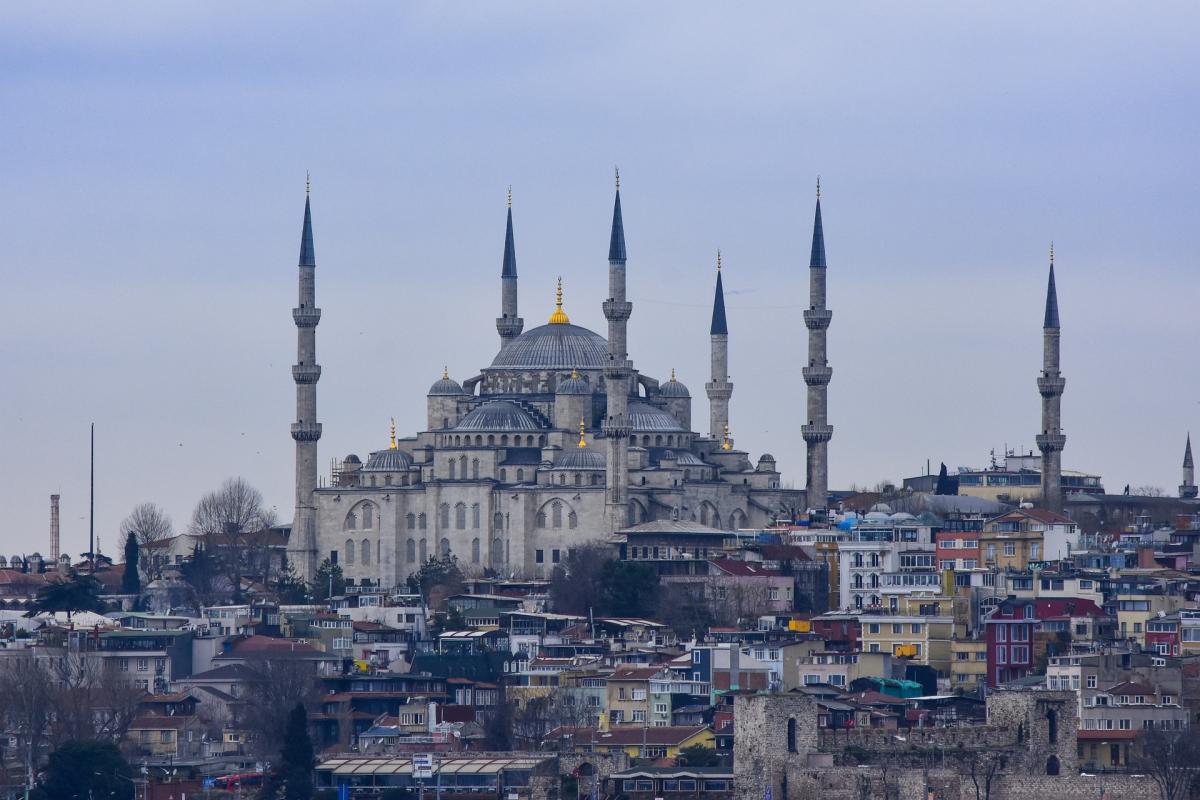
For the Toronto resident with a heart set on the historic and vibrant landscapes of Turkey, a journey of discovery awaits. This guide provides a comprehensive overview for planning your Turkish adventure, from pre-departure preparations in Toronto to immersing yourself in the rich culture, iconic destinations,...

Konya, a city that resonates with deep historical and spiritual significance, invites travelers to explore its rich Seljuk heritage and the profound legacy of the poet and mystic, Rumi . Located in Turkeys Central Anatolia region, Konya is a captivating blend of ancient mosques, traditional bazaars,...