Coptic Cairo: Must-See Churches, History, and Guide to Old Cairos Christian Quarter
Coptic Cairo, a historic district nestled within Old Cairo, stands as a testament to Egypt's rich and enduring Christian heritage. This ancient enclave, a place where Pharaonic, Greco-Roman, and Islamic cultures have intertwined, offers a profound glimpse into the spiritual and cultural legacy of one of the world's oldest Christian communities. A journey through its narrow, pedestrian-only streets reveals a tapestry of ancient churches, a historic fortress, a renowned museum, and a synagogue, each narrating a story of faith, resilience, and coexistence.
The Historical Significance of Coptic Cairo
Coptic Cairo, also known as the Interfaith Complex, predates the founding of the modern city of Cairo by the Fatimids in 969 AD . Its history stretches back to the 6th century BC when the Persians built a fort in the area . The Romans later constructed the strategic Babylon Fortress, a structure that would become the foundation upon which much of Coptic Cairo was built .
The area gained immense religious significance with the arrival of Christianity in Egypt . It is traditionally believed that the Holy Family-Joseph, Mary, and the infant Jesus-sought refuge in this area during their flight from King Herod . This event has made Coptic Cairo a major pilgrimage site for Christians worldwide . The term "Copt" itself is derived from the Greek word for Egyptian and came to refer to the Christians of Egypt after the Arab conquest in the 7th century. For centuries, Coptic Cairo served as a stronghold for Christianity, even after the establishment of Islamic rule, and was the seat of the Coptic Orthodox Pope for a significant period.
Key Landmarks of Coptic Cairo
A visit to Coptic Cairo is an immersion into a world of ancient architecture and sacred art. The district is home to a concentration of significant historical and religious sites.
The Babylon Fortress: A Roman Bastion on the Nile
The first structure that greets visitors to Coptic Cairo is the imposing ruins of the Babylon Fortress . This was not merely a fort but a military stronghold of immense strategic importance to the Roman Empire .
Strategic Importance: Construction began as early as the 1st century AD under Emperor Trajan and was significantly fortified around 300 AD under Emperor Diocletian . Its position on the eastern bank of the Nile at the apex of the delta allowed the Romans to control all movement and trade along this vital waterway . A key function was to protect the entrance to the Amnis Traianus, an ancient canal rebuilt by Trajan that connected the Nile to the Red Sea, securing a critical trade route . This placement also enabled the Romans to guard the ancient city of Memphis, project power down the Nile, and collect tolls from passing river craft .
Architectural Design: The fortress is a formidable example of Roman military engineering . Its walls were built in a typical Roman fashion, with alternating layers of stone and red brick bound by mortar . Some of the limestone blocks were even repurposed from nearby pharaonic temples . The layout was an irregular pentagon with numerous semi-circular bastions for defense . Its most commanding features were two massive round towers, each about 10 meters high and 31 meters in diameter, that flanked the canal entrance . The entire fortress was a massive structure, with some estimates suggesting it covered as much as sixty acres .
Military Function: The fortress served as a secure base for Roman legions, ensuring regional stability and acting as the first line of defense on Egypt's eastern frontier . Its defensive strength was proven during the Arab conquest in the 7th century when it withstood a siege for approximately seven months before its capture in 641 AD . Today, its ancient stone towers and walls serve as a dramatic backdrop and foundation for some of the area's most famous landmarks .
The Hanging Church (Saint Virgin Mary's Coptic Orthodox Church)
Perhaps the most iconic site in Coptic Cairo is the Saint Virgin Mary's Coptic Orthodox Church, famously known as the Hanging Church or "al-Kanīsa al-Muʿallaqa" . It stands as a profound symbol of Egypt's deep-rooted Christian history, celebrated for its unique architecture, pivotal role as a former papal seat, and its treasury of sacred art .
An Architectural Marvel on a Roman Foundation: The church earns its name from its most distinctive feature: its nave is suspended over a passage, resting on the bastions of a southern gatehouse of the 4th-century Roman Babylon Fortress . This innovative construction involved laying palm tree logs and layers of stones over the Roman ruins to create a foundation, giving the impression that the church is hanging in mid-air .
- Over the centuries, the ground level has risen by approximately six meters, somewhat diminishing the visual effect . Visitors now ascend a flight of 29 steps to enter, which led early travelers to call it "the Staircase Church" .
- While some believe a church may have existed on the site as early as the 3rd or 4th century, the first definitive mention appears in the 9th century . The current structure largely dates to a 7th-century rebuild, with significant restorations by Pope Abraham in the 10th century and a major project completed in 2011 to repair damage from a 1992 earthquake .
- As one of the earliest basilica-style churches in Egypt, its design features a central nave and side aisles . A striking interior feature is its timber roof, shaped to resemble the inverted hull of Noah's Ark, a powerful symbol of salvation .
A Papal Seat and Center of Coptic Faith: In 1047, during the tenure of Pope Christodolos, the Hanging Church became the official residence and seat of the Coptic Orthodox Pope of Alexandria . This move from Alexandria was prompted by Cairo's growing political importance after the Arab conquest . For several centuries, from the 11th to the 14th, the church was the epicenter of the Coptic Orthodox Church, where patriarchs were elected, enthroned, and buried . It was also the site for important ceremonies like the consecration of holy oil . The church is famously associated with a Marian apparition to Pope Abraham (975-978), which guided him in the "Miracle of the Moving Mountain" .
A Treasury of Sacred Art and Icons: The church's interior is a living museum of Coptic art, housing approximately 110 icons .
- Icons: The oldest and most revered is an 8th-century icon of the Virgin Mary with the infant Jesus and John the Baptist, sometimes called the "Coptic Mona Lisa" . While many icons date to the 18th century, the collection provides a stunning visual narrative of the faith .
- The Iconostasis: A central artistic feature is the 12th or 13th-century main sanctuary screen (iconostasis), exquisitely crafted from ebony inlaid with ivory . It is crowned by seven large icons, with Christ Enthroned at the center, flanked by the Virgin Mary, Archangel Gabriel, St. Peter, John the Baptist, Archangel Michael, and St. Paul .
- The Marble Pulpit: The magnificent 11th-century marble pulpit rests on 13 graceful columns, symbolizing Jesus and his 12 disciples . A black column represents the betrayal of Judas, while a grey one signifies the doubt of Thomas .
- Sanctuaries: The church has three sanctuaries at its eastern end, dedicated to the Virgin Mary, St. George, and St. John the Baptist . The sanctuary screens are intricately decorated with ebony and ivory, showing geometric patterns influenced by Islamic art .
The Church of Saints Sergius and Bacchus (Abu Serga)
Considered one of the oldest churches in Egypt, the Church of Saints Sergius and Bacchus, known as Abu Serga, is a monument of profound historical and religious importance . It is revered as a resting place for the Holy Family and once served as a center of Coptic ecclesiastical power .
Ancient Origins and History: The church's exact origins are debated by scholars; some date its construction to the late 4th or early 5th century, while others suggest a later 8th-century origin . It is named for its patron saints, Sergius and Bacchus, who were Roman soldiers martyred for their faith in Syria around the 4th century . Built within the Roman Babylon Fortress, the church was damaged by the Fustat fire in 750 AD and subsequently rebuilt . It has undergone numerous restorations, including in the 11th and 17th centuries, and most recently in 2000 .
Architectural Features: Abu Serga follows the traditional basilica style, with a narthex, a central nave, and two side aisles .
- Columns and Roof: Twelve columns-eleven of white marble and one of red granite-separate the nave from the aisles . These columns feature Corinthian capitals repurposed from older structures, and some bear faint traces of painted saints . The roof is uniquely shaped like the hull of Noah's Ark, symbolizing salvation .
- Sanctuaries and Art: The church has three sanctuaries on its eastern side, each with a dome decorated with religious scenes . The central sanctuary features a magnificent 13th-century wooden screen (iconostasis) intricately decorated with ebony and ivory panels . The church also contains a marble pulpit that is a copy of the one from the nearby Church of St. Barbara .
The Sacred Crypt of the Holy Family: The church's paramount religious significance comes from the tradition that the Holy Family rested in a cave on this site . This makes it a major pilgrimage destination .
- The Cave: The crypt is a subterranean chamber located about 10 meters below the main sanctuary . It contains a nave, two aisles, a domed ceiling, and an altar marking the spot where the family is believed to have stayed . Ancient accounts suggest they stayed for three months .
- Venerated Features: Inside the crypt is a well from which the Holy Family is said to have drunk and a stone where the infant Jesus is believed to have slept . The crypt is prone to flooding when the Nile's water level rises .
- Commemoration: The Coptic Church commemorates the arrival of the Holy Family with a special mass and prayers in the church each year on June 1st .
A Center of Coptic Power: For centuries, Abu Serga was the episcopal church of Cairo and the site where numerous patriarchs were elected . The first patriarch elected here was Isaac (681-692 AD) . This practice continued until the 11th century, cementing the church's role as a hub of ecclesiastical authority . The church's role began to wane during the tenure of Patriarch Christodoulos (1047-1077), who chose to be consecrated in the Hanging Church, which subsequently became the new center of patriarchal power .
The Church of St. Barbara
The Church of Saint Barbara is one of the oldest and most beautiful churches in Coptic Cairo, offering a profound glimpse into centuries of faith and artistic heritage . Its history is deeply connected to the 4th-century martyr for whom it is named .
The Hagiography of Saint Barbara: The church is dedicated to a young woman of great beauty and intelligence who lived in the 3rd or 4th century . To protect her from the outside world, her wealthy pagan father, Dioscorus, confined her to a tower . In her seclusion, she secretly converted to Christianity and instructed workers building a bathhouse to add a third window to symbolize the Holy Trinity . Enraged by her conversion, her father handed her over to Roman authorities for torture . Despite the brutality, her wounds miraculously healed overnight . Ultimately, her own father beheaded her, and as divine retribution, he was struck by lightning and killed . For this reason, she is venerated as a protector against lightning, fire, and sudden death .
History and Architecture: The church was founded in the 5th or 6th century by a wealthy scribe named Athanasius . It was originally dedicated to the saints Abu Qir and Yohanna (Saints Cyrus and John) . In the 11th century, the relics of Saint Barbara were brought to the church, which was restored between 1072 and 1073 to house them and rededicated in her name . The church suffered damage in major fires but was always rebuilt, gaining such fame that the historian Al-Maqrizi called it one of the most famous of his time .
- Architecturally, it is a classic basilica, similar to Abu Serga, with an unassuming exterior common for churches of that era . The interior measures 26 meters long, 14.5 meters wide, and 15 meters high . The nave is separated from the aisles by marble columns . A significant renovation between 1910 and 1922 removed the khurus (a transverse room before the sanctuary) to create more space .
Sacred Treasures and Relics: The church's primary religious significance comes from housing the relics of St. Barbara, which are kept in a special chapel and make it a major pilgrimage site . While it remains an active place of worship, many of its most precious artifacts have been moved to the Coptic Museum for preservation . These treasures include:
- A magnificent sycamore wood door from the 4th or 5th century, discovered hidden within a wall .
- A sanctuary screen from the Fatimid period, made of sycamore and cedar, with 45 panels depicting riders, monks, and animals .
- An ornate silver gospel casket from the early 15th century .
- The church still contains beautiful icons, including a 13th-century icon of the Virgin Mary and Jesus, and its wooden screens are decorated with inlaid ebony and ivory .
The Coptic Museum
For those seeking a deeper understanding of Coptic history and art, the Coptic Museum is an essential visit. Established in 1910, it houses the world's largest collection of Coptic artifacts, with over 1,600 pieces. The museum's collection includes stunning frescoes, textiles, intricately carved woodwork, and ancient manuscripts, such as the Nag Hammadi scrolls, which offer invaluable insights into early Christian thought. The exhibits trace the development of Coptic culture, showcasing its interactions with Pharaonic, Greco-Roman, and Islamic traditions. Many original artifacts from the area's churches, including a 5th or 6th-century lintel from the Hanging Church and the original pulpit and a magnificent 4th/5th-century door from the Church of St. Barbara, are now preserved here .
The Ben Ezra Synagogue and the Cairo Geniza
A testament to the historical religious diversity of the area, the Ben Ezra Synagogue stands as a significant landmark within Coptic Cairo. Originally a Coptic church, it was sold to the Jewish community in the 9th century. Tradition holds that this is the spot where the baby Moses was found in a basket. While the synagogue itself is a beautiful historic site, its greatest contribution to history was the discovery of the Cairo Geniza.
The Cairo Geniza: A Window into Medieval Life: A "geniza" is a repository for sacred Hebrew texts that are no longer usable but cannot be destroyed because they contain the name of God . The Cairo Geniza, however, also became an unintentional archive for a vast array of secular documents . Its importance was revealed in 1896 when scholar Solomon Schechter began studying its contents, uncovering a collection of approximately 400,000 manuscript fragments that had accumulated for over a millennium (6th to 19th centuries) . Preserved by Egypt's dry climate, these documents have revolutionized our understanding of medieval life in the Middle East .
Insights from the Geniza:
- Social Life: The documents reveal a Jewish community that was not isolated but deeply integrated into the broader society, with warm relations and business partnerships between Jews, Muslims, and Christians . Personal letters offer intimate glimpses into daily joys and sorrows and provide unprecedented insight into women's history through their own correspondence and legal documents .
- Economic Life: The Geniza brings the medieval economy to life, detailing sophisticated trade networks stretching from Spain to India . Jewish merchants dealt in goods like spices, textiles, and precious metals, and their business records show a complex ecosystem where they worked alongside Muslims and Christians . The documents also show how merchants applied Jewish law to their commercial practices .
- Religious Life: The collection is an invaluable source for Jewish religious history, containing fragments of the Bible and Talmud, rabbinic legal rulings, and lost liturgical practices . Significant finds include original works by the philosopher Maimonides and the long-lost Hebrew text of the Book of Ben Sira . The texts show a vibrant intellectual life characterized by engagement with surrounding cultures, including Islamic philosophy .
The Church of St. George (Mar Girgis)
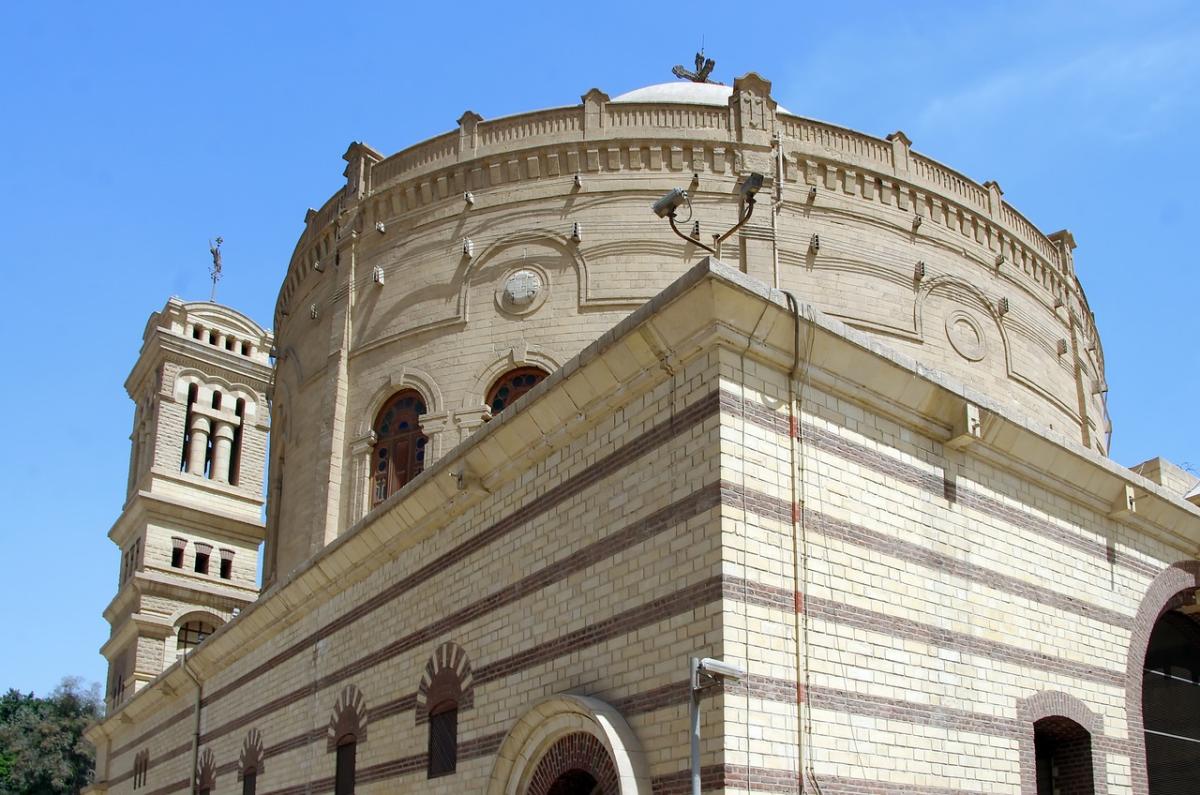
One of the few round churches in Egypt, the Greek Orthodox Church of St. George is built on top of an ancient Roman tower of the Babylon Fortress. Its interior is known for its beautiful stained glass and rich woodwork. It is one of the few still-active churches in the Coptic Cairo area and is considered the principal Greek Orthodox church in Egypt.
Executive Summary
Coptic Cairo is a historically and religiously significant district within Old Cairo, offering a unique window into the ancient Christian heritage of Egypt. Its origins are anchored by the Roman-era Babylon Fortress, a massive military installation of immense strategic importance that controlled Nile trade routes and served as a cornerstone of Roman power in Egypt . The area is also revered in Christian tradition as a place of refuge for the Holy Family .
This compact, pedestrian-friendly complex houses a remarkable collection of historical sites. Key among these are:
- The Hanging Church, renowned for its unique architecture suspended over a fortress gatehouse . From the 11th to the 14th century, it served as the seat of the Coptic Orthodox Pope and houses a priceless collection of art, including an 8th-century icon and a symbolic 11th-century marble pulpit .
- The Church of Saints Sergius and Bacchus (Abu Serga), one of Egypt's oldest churches, built over a crypt believed to be the resting place of the Holy Family . For centuries, it was a center of ecclesiastical power where patriarchs were elected, beginning with Patriarch Isaac in the 7th century .
- The Church of St. Barbara, one of the oldest churches in the complex, founded in the 5th or 6th century and rededicated in the 11th century to house the relics of the 4th-century martyr . It is known for its beautiful basilica architecture and the priceless artifacts it once held, many of which are now in the Coptic Museum .
- The Coptic Museum, which holds the world's largest collection of Coptic art and artifacts, including treasures from the area's churches .
- The historic Ben Ezra Synagogue, a symbol of the area's past religious diversity and the site where the Cairo Geniza was discovered. This trove of nearly 400,000 medieval manuscript fragments provides an unparalleled, detailed account of the social, economic, and religious life of the era .
- The striking round Church of St. George, built atop a Roman tower.
A visit to Coptic Cairo is more than just a tour of ancient buildings; it is an immersive experience into a living history, where the stories of faith, art, and perseverance of one of the oldest Christian communities in the world continue to resonate. It stands as a powerful symbol of Egypt's layered and diverse cultural and religious landscape.
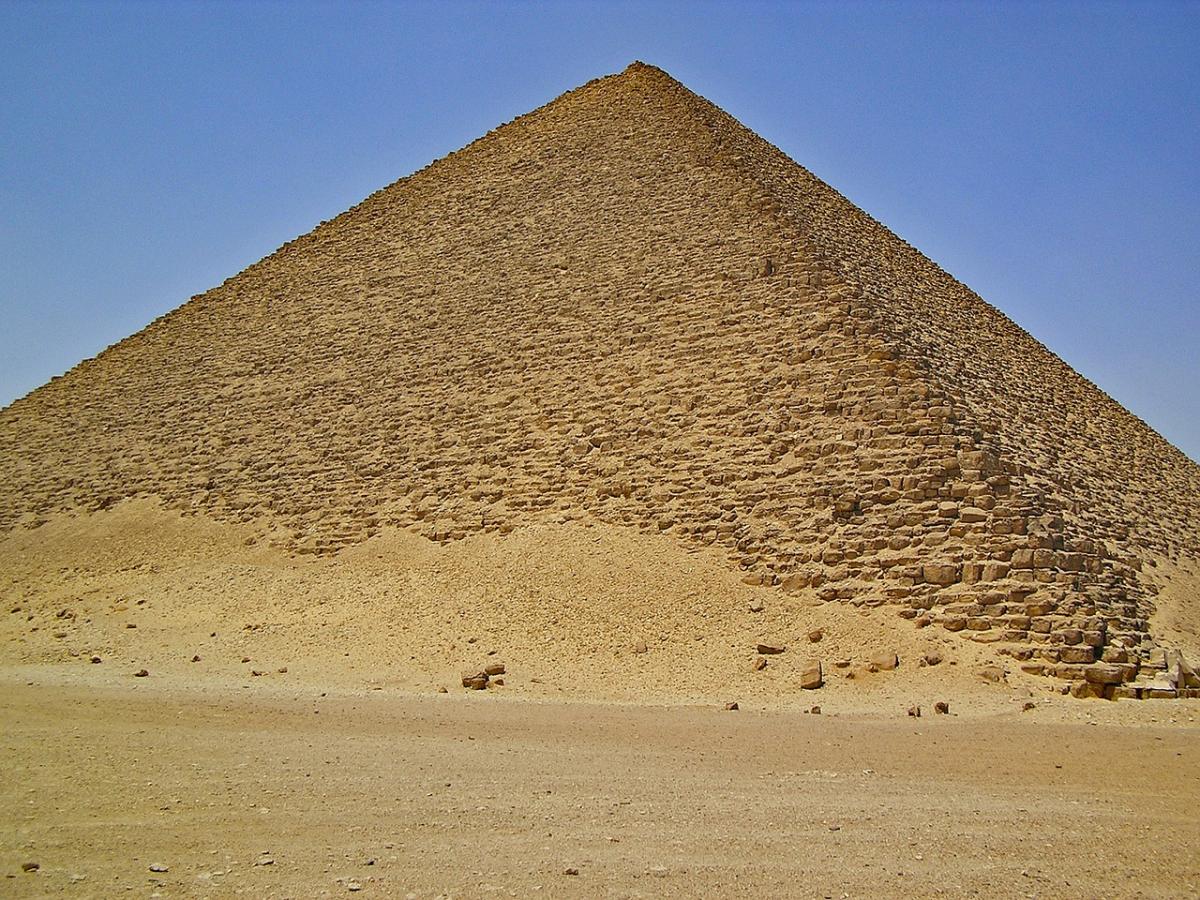
Nestled in the desert on the west bank of the Nile River, approximately 40 kilometers south of Cairo, lies the ancient royal necropolis of Dahshur. This significant archaeological site, part of the larger Memphis necropolis and a UNESCO World Heritage Site, is a testament to the architectural ingenuity...
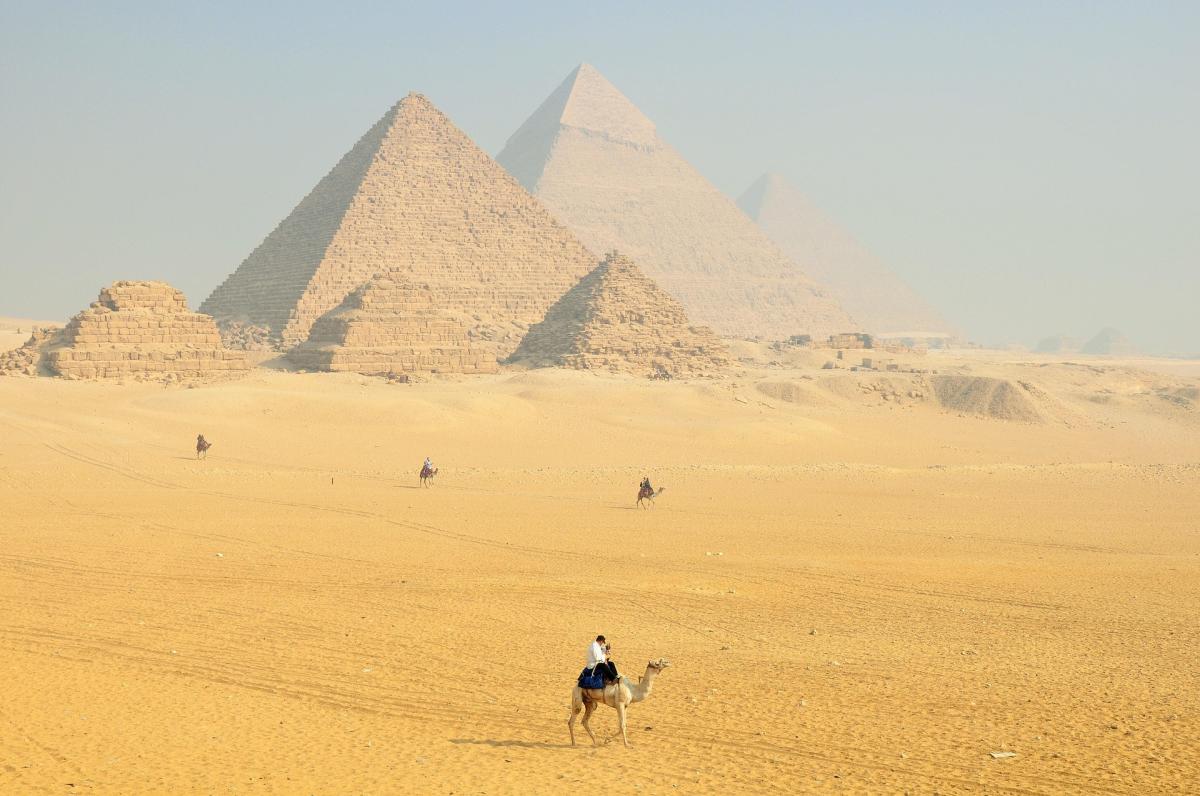
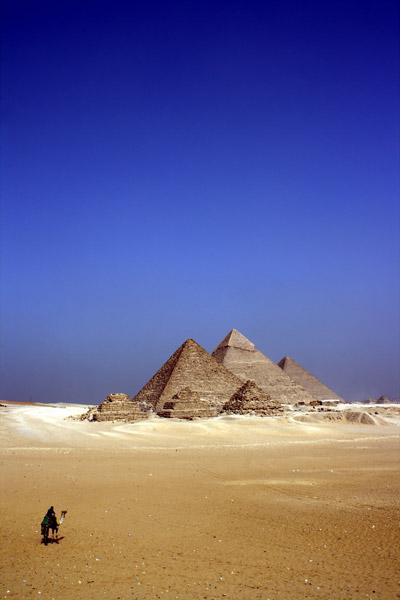
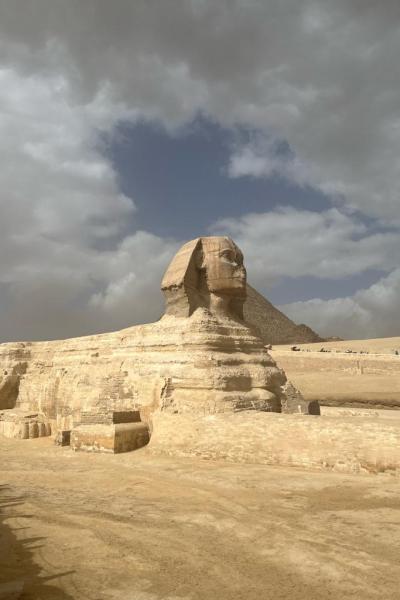
The Giza pyramid complex, a testament to human ingenuity and ambition, stands on the Giza Plateau at the edge of the Western Desert, approximately 13 km (8.1 mi) southwest of Cairos city center. These monumental structures, the last remaining of the Seven Wonders of the Ancient World, have captivated...
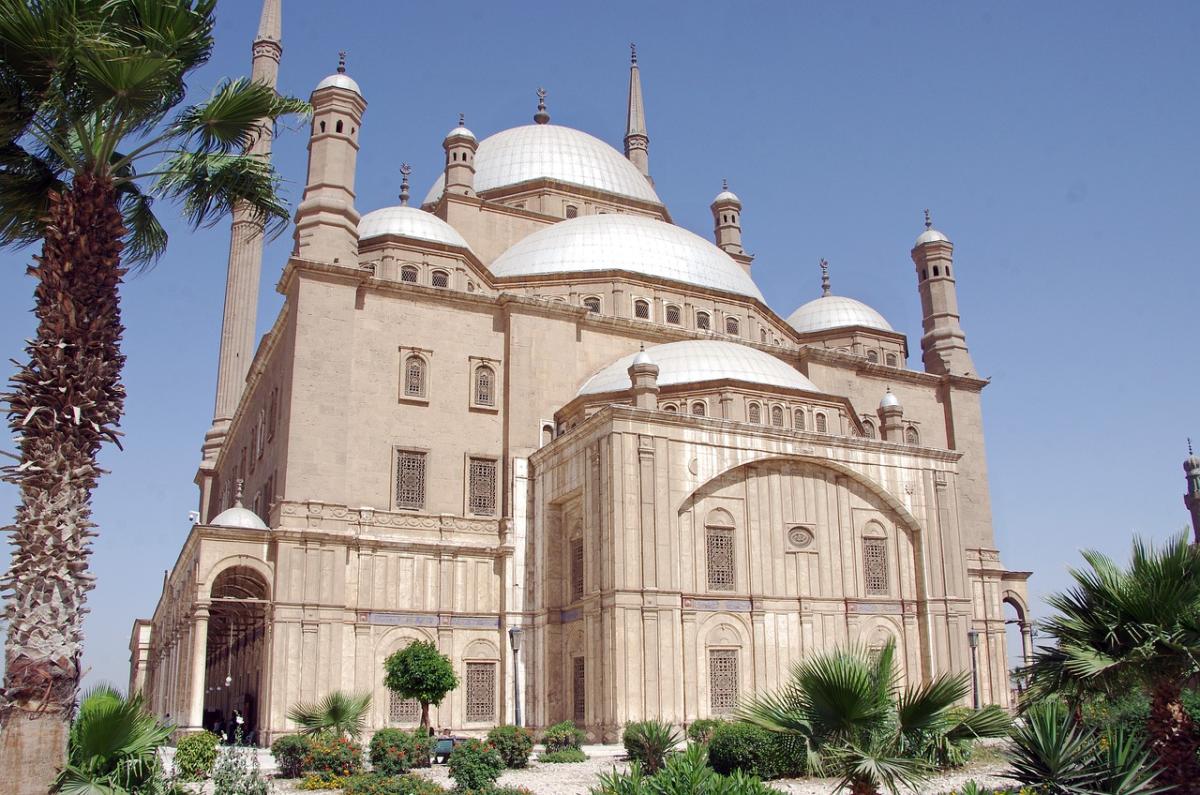
The Citadel of Cairo, also known as the Citadel of Saladin, is a medieval Islamic-era fortification that stands as a testament to Egypts rich and layered history. Perched atop the Mokattam hills near the center of Cairo, it offers a strategic and commanding view of the city. For nearly 700 years, from...