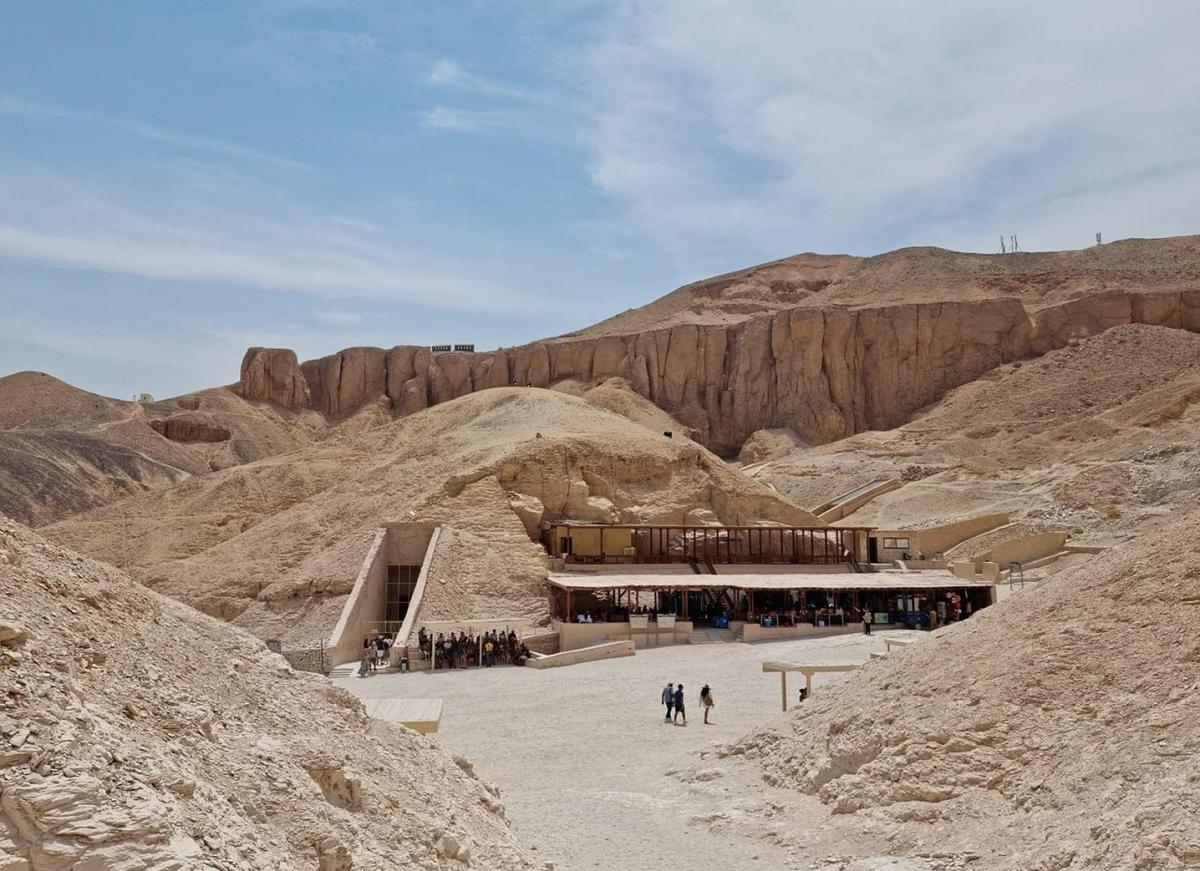
From Monumental Beacons to Hidden Valleys: The Pharaohs Shift in Burial Strategy
For over a millennium, the skyline of ancient Egypt was dominated by the colossal silhouettes of pyramids, monumental testaments to the power and divinity of the pharaohs. Yet, around 1550 BCE, with the dawn of the New Kingdom, this tradition of pyramid construction abruptly ceased. The rulers of Egypt turned their focus from these grand, visible structures to secretive, subterranean tombs carved into the desolate cliffs of a remote valley opposite the new capital city of Thebes. This report details the multifaceted reasons behind this pivotal shift, exploring the convergence of catastrophic security failures, economic pressures, and evolving religious and political beliefs that led the pharaohs to abandon the pyramids for the Valley of the Kings.
The Pyramid's Illusion of Security: A Futile Fortress for the Afterlife
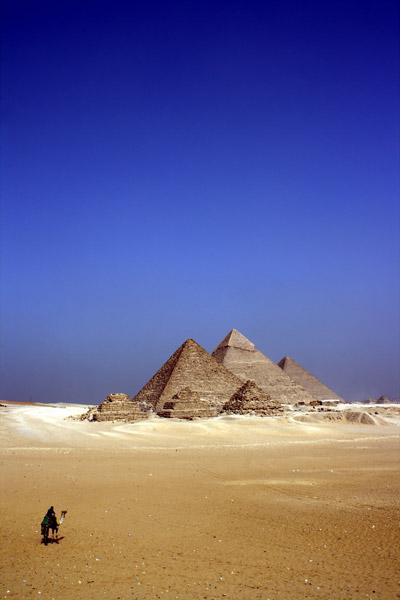
The era of pyramid building, stretching from King Djoser (c. 2630 BCE) to King Ahmose I (c. 1550 BCE), represented a monumental investment of the state's resources. These structures were powerful statements of the pharaoh's status and connection to the divine, designed to ensure their successful journey in the afterlife. To protect the royal burial, architects employed a variety of sophisticated security features, which were formidable engineering obstacles rather than the booby traps of popular fiction. These included:
- Massive Blocking Stones: Huge granite plugs and portcullises were used to seal passages. The King's Chamber in the Great Pyramid, for instance, was protected by a system of three granite portcullises.
- Complex and Deceptive Layouts: Builders created intricate internal layouts with false passages, decoy chambers, and dead-end corridors to misdirect and confuse thieves. The internal structure was often varied between pyramids to prevent robbers from reusing a successful technique.
- Concealed Entrances: The true entrance to the tomb was often hidden behind a smooth casing of stone to make it indistinguishable from the rest of the structure.
- Filled Shafts and Passages: Access tunnels were often backfilled with stones, rubble, or even liquid mud that would set like concrete, creating a solid, difficult-to-penetrate barrier.
- Subterranean Chambers: Locating the burial chamber deep underground was a primary security measure from the earliest dynasties.
However, the very characteristics that made pyramids such potent symbols also rendered them profoundly vulnerable. Their immense size acted as giant beacons, broadcasting the location of immense treasures to potential looters. Despite the intricate security, nearly every pyramid was plundered in antiquity. Robbers proved to be patient and resourceful, often bypassing the granite blocks and sealed corridors by laboriously tunneling through the softer limestone of the pyramid's core to reach the burial chamber directly.
Crucially, evidence strongly suggests that many robberies were "inside jobs". The very craftsmen who built the tombs possessed intimate knowledge of the layouts and the skills to penetrate them. The later confession of a mason named Amenpanufer, who stated, "We went to rob the tombs as is our usual habit," confirms this trend of knowledgeable workers turning to plunder.
The Driving Forces of Change
The transition away from pyramid construction was a pragmatic response to a combination of critical issues that came to a head at the beginning of the New Kingdom.
1. The Imperative of Security: The Final Pyramid and the Turn to Secrecy
The most pressing reason for abandoning pyramids was the complete and persistent failure of their security. The final royal pyramid, built for the founder of the New Kingdom, Ahmose I, at Abydos, highlighted the design's inherent vulnerabilities and cemented the strategic shift. This monument was constructed with a core of sand and rubble, making it less durable than the solid stone pyramids of Giza. More importantly, it served as a cenotaph (a symbolic monument), while Ahmose's actual burial was located over half a kilometer away, indicating a clear move toward separating the visible marker from the true resting place. The eventual plundering of this highly visible structure demonstrated to the New Kingdom pharaohs that monumentality was a liability.
Recognizing that visibility equaled vulnerability, the pharaohs adopted a new strategy: security through obscurity. They sought a location that was remote, naturally rugged, and could be effectively guarded. The choice of a desolate, cliff-bound valley-the Valley of the Kings-was a direct response to the consistent desecration of the pyramids. The plan was to hew tombs deep into the rock, conceal the entrances behind slopes of scree or in natural clefts, and post dedicated guards (the Medjay) to patrol the single, narrow entrance to the valley. The secrecy of this new approach was paramount, as recorded by the architect Ineni, who oversaw the tomb of Thutmose I: "I supervised the excavation of the cliff-tomb of his majesty, alone, no one seeing, no one hearing".
2. Economic and Logistical Efficiency
The construction of a pyramid was an enormous economic undertaking, requiring a massive mobilization of labor and resources. While these projects stimulated the economy, they also represented a significant drain on the royal treasury. The rock-cut tombs of the Valley of the Kings were a more economically efficient alternative. This new strategy led to the establishment of a permanent, purpose-built village at Deir el-Medina (Set Maat or "The Place of Truth"). This settlement housed a dedicated community of salaried state artisans-stonemasons, draftsmen, and painters-who were paid in regular rations. This created a highly specialized workforce that could work year-round, concentrating resources and skills in a single, manageable location directly administered by the vizier.
3. A New Religious, Political, and Geological Landscape
The New Kingdom saw significant shifts in theology and politics that directly influenced the choice of the new royal burial ground, which was also perfectly suited from a geological and mythological standpoint.
The Rise of Thebes and Amun-Ra: Thebes rose to become the political and religious capital of a reunified Egypt. Its local god, Amun, was elevated to a national deity after Theban princes, attributing their victory over the Hyksos to him, reunified the country. Amun was merged with the sun god Ra to create the supreme deity Amun-Ra, the "King of the Gods". This legitimized the New Kingdom pharaohs, who were now considered the divine sons of Amun-Ra. Centering the royal necropolis near the cult center of Amun-Ra at Thebes was a powerful statement of this new divine authority.
The Sacred Geography of Thebes: The location on the west bank of the Nile, opposite Thebes, was of paramount symbolic importance.
- The West Bank: In Egyptian cosmology, the west was the domain of the dead, where the sun god "died" each evening before being reborn in the east. By placing their tombs here, the pharaohs aligned their own afterlife journey with this eternal solar cycle of death and resurrection.
- Al-Qurn, The Natural Pyramid: The valley is overlooked by a natural, pyramid-shaped mountain peak known as Al-Qurn ("the Horn"). This was seen as a powerful divine sign and a primary reason for the valley's selection. It allowed the pharaohs to be buried "under a pyramid" without having to build one, echoing the monumental forms of the Old Kingdom and linking the new burial practice to ancestral traditions. The peak itself was considered a potent symbol of ascension and a gateway to the Duat, the Egyptian underworld.
- Divine Guardians: The area was believed to be protected by powerful goddesses. The peak of Al-Qurn was personified by the cobra goddess Meretseger, whose name means "She Who Loves Silence". As the "Peak of the West," she was the divine guardian of the necropolis, believed to strike down tomb robbers with blindness or venom, providing a powerful psychological deterrent. She was also a merciful deity revered by the tomb builders of Deir el-Medina. The goddess Hathor, the "Lady of the West," was also a key patroness of the necropolis, seen as a welcoming guide who received the deceased into the afterlife. She was often depicted as a sacred cow emerging from the mountain, symbolizing rebirth.
Geological and Practical Advantages: The Theban Hills offered significant practical benefits. The cliffs are composed of sedimentary limestone that, while geologically inconsistent in places, was soft enough to be excavated into long, complex tombs. This fine-grained limestone also provided an excellent, smooth surface for the intricate paintings and reliefs essential for guiding the deceased through the underworld. While builders had to adapt to unstable layers of shale and the risk of flash floods, the geology was generally stable enough to ensure the tombs' long-term integrity.
The Valley of the Kings: A New Necropolis for a New Era
For nearly 500 years, the Valley of the Kings became the principal burial place for rulers like Hatshepsut, Thutmose III, and Ramesses the Great. The move was not merely a change of location but a complete reimagining of the royal tomb's function and design, transforming it into a symbolic "engine of resurrection".
- 18th Dynasty Tombs: The earliest tombs featured a "bent-axis" plan, with corridors changing direction at sharp angles, physically mapping the unpredictable paths of the underworld (the Duat). Decoration was centered on the Amduat ("That Which Is in the Underworld"), a text detailing the sun god's journey through the twelve hours of the night.
- 19th and 20th Dynasty Tombs: The Ramesside period saw a shift to a "straight-axis" plan. The tomb's extensive decorative program, now featuring an array of funerary texts like the Book of Gates and the Book of the Dead, explicitly labeled the entire structure as the Duat, making a literal bent path unnecessary.
The Ultimate Failure: The Looting of the Valley
Despite these elaborate precautions, the strategy of concealment ultimately failed. By the late New Kingdom, the strategy was undermined not by architectural flaws, but by the collapse of the society meant to uphold it. A perfect storm of factors led to the systematic looting of the Valley of the Kings:
- Economic Crisis: Egypt's waning power led to a depleted treasury, severe grain inflation, and the state's frequent failure to pay the wages of the tomb workers at Deir el-Medina. This desperation drove the very men who built the tombs to rob them, leading to the first recorded labor strikes in history.
- Political Weakness and Corruption: A succession of weak pharaohs led to a breakdown of order and fostered rampant corruption among local officials, priests, and the necropolis police.
The Tomb Robbery Papyri from the reign of Ramesses IX vividly document this societal decay. These court records contain confessions, often extracted under torture like the "bastinado" (beating the soles of the feet), detailing how gangs of robbers-including masons and priests-used copper tools to break into the tombs. They would strip mummies of their valuables and burn the gilded coffins to collect the melted precious metals. The papyri expose a well-organized network for fencing stolen goods that involved bribing officials to turn a blind eye. The Abbott Papyrus even records a major political dispute between the mayors of East and West Thebes over complicity in the robberies. This systematic desecration forced priests of the 21st Dynasty to gather the royal mummies from their violated tombs and hide them in secret caches, which ironically ensured their survival.
Summary
The decision by New Kingdom pharaohs to abandon pyramid building for hidden tombs in the Valley of the Kings was a strategic shift driven by a confluence of practical, economic, and religious factors.
- Security: The primary catalyst was the absolute failure of pyramids to protect royal burials. Their conspicuous nature made them irresistible targets that were consistently plundered despite complex internal defenses. The plundering of the final royal pyramid of Ahmose I cemented the move to a new strategy of "security by obscurity" in a remote, guardable valley.
- Economics: The immense economic burden of pyramid construction was replaced by the more efficient model of rock-cut tombs built by a permanent, skilled workforce housed at Deir el-Medina.
- Religion and Geology: The move was deeply intertwined with the rise of Thebes as the capital and the ascendancy of the state god Amun-Ra. Pharaohs established their necropolis in a theologically perfect landscape. It was on the west bank, associated with rebirth , and situated under a natural pyramid-shaped peak, Al-Qurn, which linked the new burials to ancient traditions and was seen as a gateway to the afterlife. The site was believed to be divinely protected by the goddesses Meretseger and Hathor and was geologically suitable for carving elaborate, decorated tombs.
- Theological Advancement: The new tombs were theologically sophisticated "engines of resurrection," with architecture and decoration that served as a symbolic map of the underworld to ensure the pharaoh's rebirth.
Ultimately, while the strategy of concealment was initially more successful than the pyramids, it too was defeated. Widespread economic crisis, social unrest, and endemic official corruption during the late New Kingdom led to the systematic looting of the Valley of the Kings, proving that no tomb, however well-hidden or divinely protected, was safe when the society charged with protecting it collapsed from within.
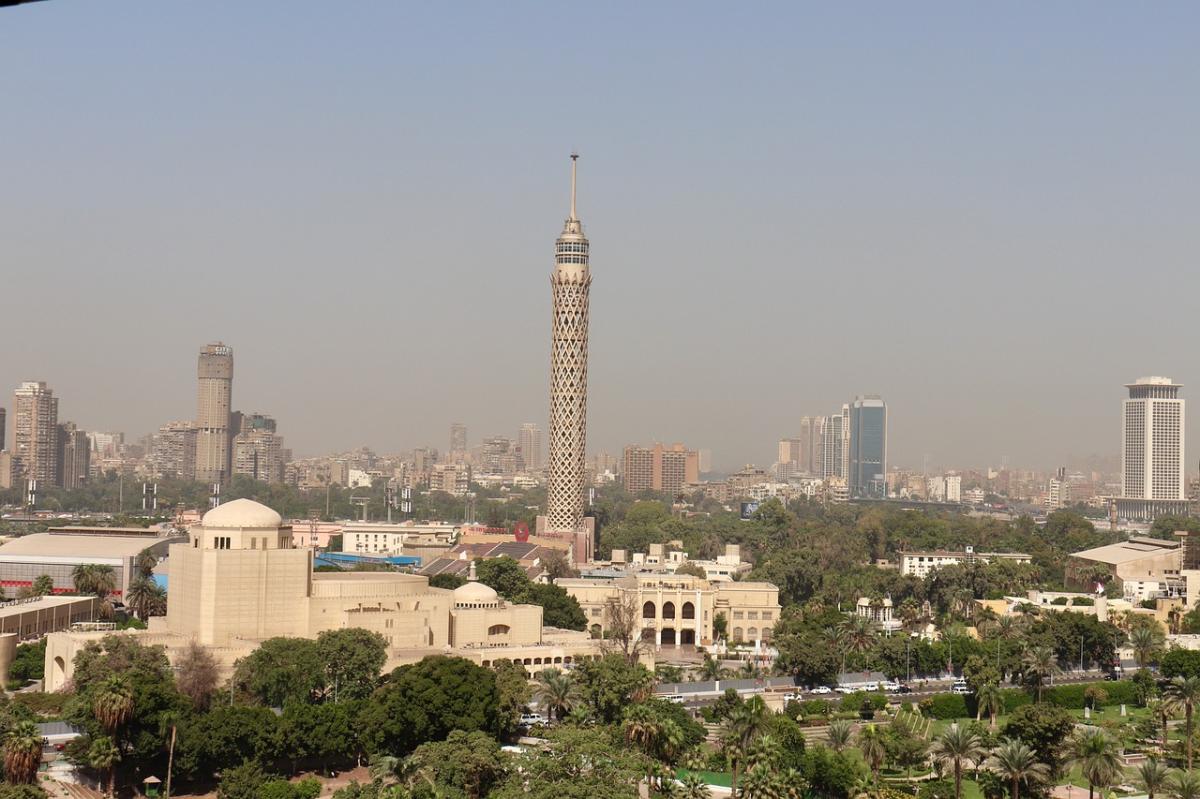
Proudly standing on Gezira Island in the heart of Cairo, the Cairo Tower, or Burj Al-Qahira, is a prominent feature of the citys skyline and a testament to modern Egyptian architecture. Reaching a height of 187 meters (614 feet), it is one of the tallest structures in Egypt and North Africa. For decades...
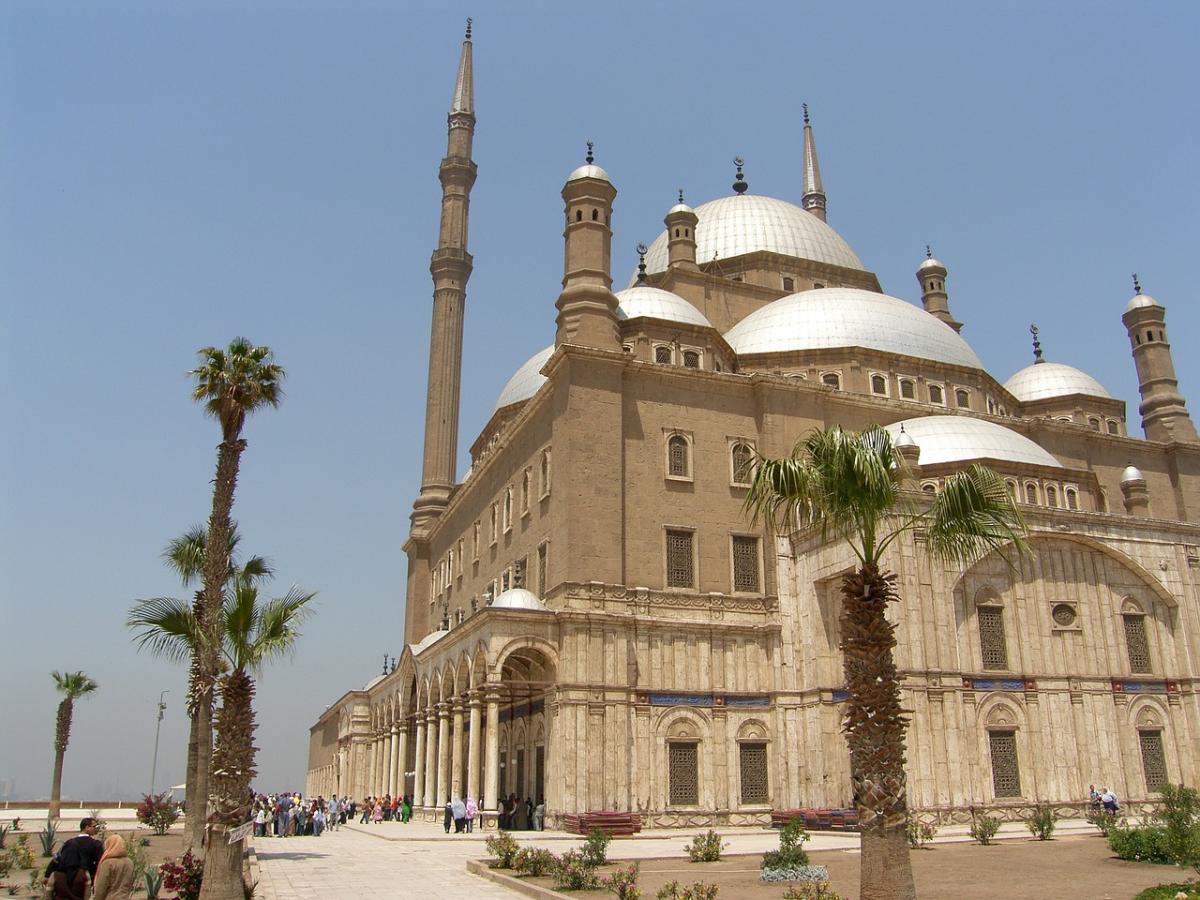
Cairo, Egypt - Perched majestically atop the Citadel of Saladin, the historic seat of Egyptian power for nearly 700 years, the Mosque of Muhammad Ali is an iconic landmark and an enduring symbol of Cairos skyline. Popularly known as the Alabaster Mosque for the extensive use of this gleaming stone on...
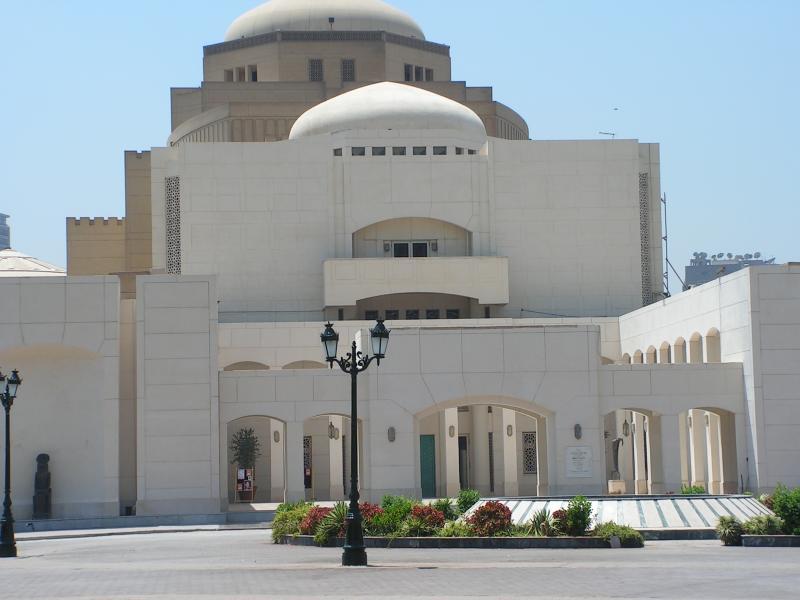
The Cairo Opera House, a magnificent architectural gem nestled on Gezira Island in the Nile, stands as the epicenter of performing arts in Egypt. Officially known as the National Cultural Centre, it is a vibrant hub that showcases a rich tapestry of local and international artistic expressions, from...