Luxor Temple: A Complete Guide to Its History, Architecture, and Facts
Nestled on the east bank of the Nile River within the modern city of Luxor, the Luxor Temple stands as a breathtaking testament to the grandeur and enduring legacy of ancient Egypt . Known in ancient times as Ipet Resyt, or "the southern sanctuary," this sprawling complex is not merely a relic of the past but a site of over 3,400 years of continuous religious worship . Unlike other temples dedicated to a specific deity or the deification of a pharaoh in death, Luxor Temple's primary purpose was the celebration and rejuvenation of divine kingship . It was the epicenter of one of ancient Egypt's most important religious events, the Opet Festival, and remains a powerful symbol of pharaonic glory .
A Layered History: The Pharaohs Who Built and Rebuilt Luxor
The construction of Luxor Temple began around 1400 BCE and spanned centuries, with successive pharaohs adding their own monumental contributions to the sacred space . The temple is primarily the vision of two powerful pharaohs, Amenhotep III and Ramesses II, but its history is also marked by dramatic periods of religious upheaval, restoration, and foreign adaptation .
Amenhotep III (c. 1390-1352 BCE): The original heart of the temple was commissioned by this prolific 18th Dynasty builder during a period often considered a golden age of Egyptian art and architecture . His vision was to create a stage for the rejuvenation of kingship itself, and his section is characterized by elegance, balance, and sophisticated craftsmanship . He was responsible for the inner sanctuaries, the magnificent Sun Court, and the elegant Processional Colonnade .
The Amarna Heresy and Its Reversal: The temple's development was dramatically interrupted by Amenhotep III's successor, Amenhotep IV, who changed his name to Akhenaten . He instigated a radical religious revolution, abandoning Egypt's traditional gods in favor of a single deity, the sun disk Aten . Akhenaten closed the temples to the powerful cult of Amun, moved the capital to a new city called Akhetaten, and dispatched agents to erase Amun's name from monuments across Egypt . As a primary center for Amun's worship, Luxor Temple fell into a period of abandonment and ideological opposition .
Tutankhamun and Horemheb (c. 1336-1295 BCE): Following Akhenaten's death, his successors worked swiftly to restore the old religion . Tutankhamun abandoned Akhetaten and began the process of repairing and completing the structures at Luxor . He is credited with finishing the decorations of the Processional Colonnade, with reliefs famously depicting the Opet Festival . The restoration was aggressively continued by Horemheb, who not only added his own reliefs but also usurped many of Tutankhamun's inscriptions, recarving them with his own name to claim credit for restoring order (Ma'at) .
Ramesses II (c. 1279-1213 BCE): This 19th Dynasty pharaoh, known for his colossal building projects, made the most dramatic additions to the temple with a clear agenda to immortalize his own reign . His additions are defined by their sheer scale and overwhelming sense of power . He constructed the massive First Pylon, the Great Court, and colossal statues of himself, creating a new, imposing entrance to the complex . He was also known to usurp statues of previous pharaohs, recarving them with his own name and features .
Later Additions: The temple's sacred nature was recognized by later rulers, including Alexander the Great, who had a barque shrine rebuilt in his name . During the Roman era, the temple was transformed into a legionary fortress and an imperial cult chapel, a history detailed further below . This long history of additions and modifications has created a unique architectural journey through different eras of Egyptian history .
Architectural Marvels: A Walk Through the Temple
Luxor Temple's layout is a journey from the public outer courts to the sacred inner sanctums, with each section designed to inspire awe and reverence . The two main construction phases reveal distinct artistic sensibilities .
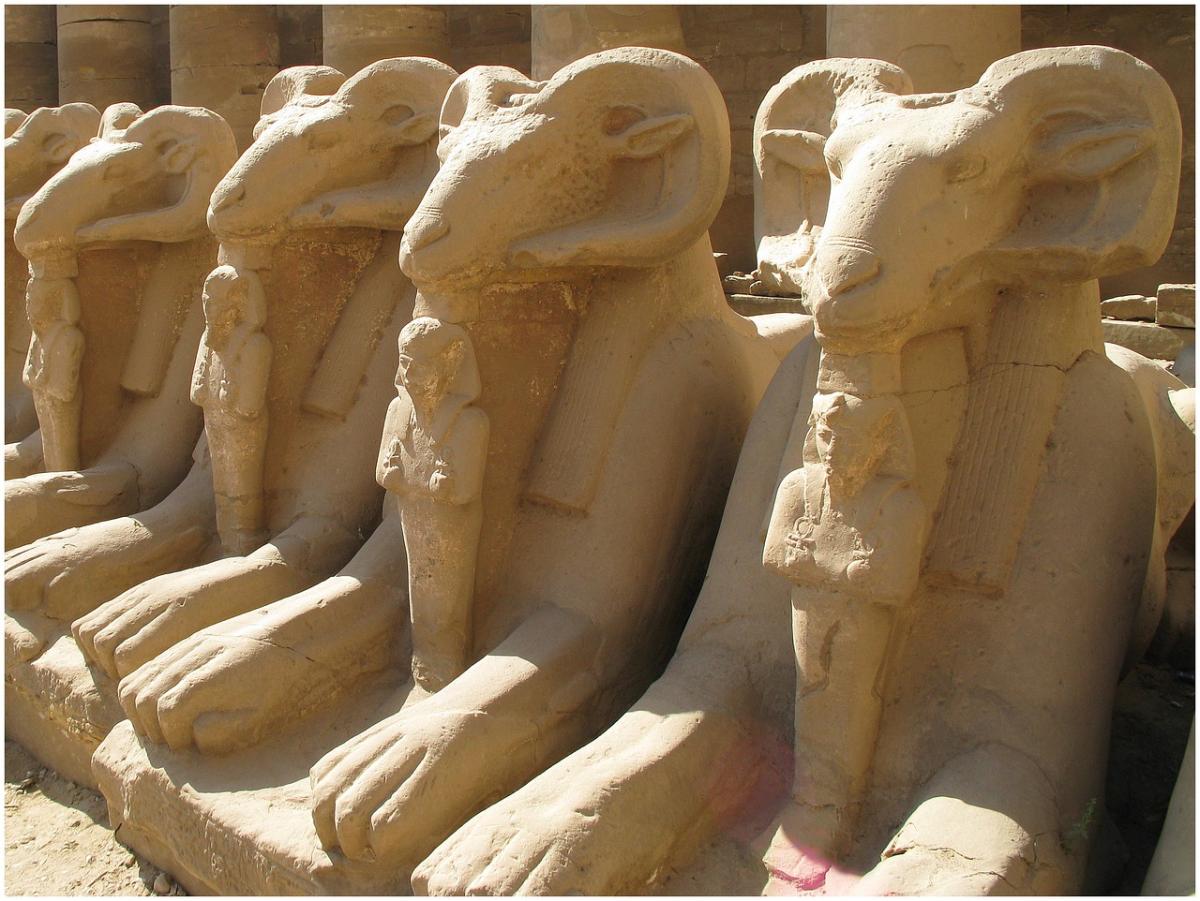
The Avenue of Sphinxes
This magnificent 1.7-mile (2.7 km) ceremonial road was the primary land route connecting Luxor Temple to the vast Karnak Temple complex, serving the grand processions of the Opet Festival . While earlier pharaohs like Hatshepsut and Amenhotep III contributed to it, the avenue as seen today was most extensively built by Nectanebo I of the 30th Dynasty . It is lined with over 1,057 restored statues, a mix of human-headed and ram-headed sphinxes .
- Modern Restoration: Buried for centuries under the modern city, the avenue's restoration was a monumental project spanning over 70 years . The first statues were found in 1949 by archaeologist Mohammed Zakaria Ghoneim . A systematic effort to uncover the entire path began in 2005 but faced the immense challenge of removing hundreds of homes, mosques, and a church built directly on top of it . After a pause following the 2011 revolution, work resumed, culminating in a spectacular, internationally televised reopening ceremony on November 25, 2021 .
The First Pylon of Ramesses II
The monumental entrance to the temple, the First Pylon, stands 79 feet (24 meters) high and 213 feet (65 meters) wide . Its massive facade is covered in sunken reliefs that function as a massive billboard for Ramesses II's political and military might . These carvings vividly narrate his purported victory at the Battle of Kadesh . In front of the pylon once stood two towering red granite obelisks and six colossal statues of Ramesses . Today, only one obelisk remains .
- The Parisian Obelisk: In 1830, Muhammad Ali Pasha, the ruler of Egypt, gifted both obelisks to France as a diplomatic gesture to foster good relations and recognize Jean-François Champollion's decipherment of hieroglyphs . The task of moving the 227-tonne western obelisk was an unprecedented 19th-century engineering feat led by Jean-Baptiste Apollinaire Lebas . A custom flat-bottomed barge, the Luxor, was built and sailed to Egypt . After digging a canal to the temple, the team carefully lowered the monolith in 1831, enduring outbreaks of cholera and dysentery while waiting months for the Nile flood to refloat the heavy barge . The obelisk finally arrived in Paris and was erected in the Place de la Concorde on October 25, 1836, before a crowd of 200,000 . In a famously unequal exchange, France gave Egypt a mechanical clock that rarely worked . France officially renounced its claim to the second obelisk in 1981 .
The Great Court of Ramesses II
Beyond the pylon lies a vast peristyle courtyard surrounded by a double row of 74 papyrus-bud columns . This court is unique as it is not perfectly aligned with the rest of the temple; this skewed axis was a deliberate deviation required to align the temple's entrance with the processional avenue from Karnak . Within this court also stands the historic Abu Haggag Mosque, a testament to the site's continuous use as a place of worship .
The Processional Colonnade of Amenhotep III
This majestic corridor, stretching over 300 feet (100 meters), features 14 massive, 52-foot (16-meter) high columns designed to resemble open-flower papyrus plants . The walls are decorated with intricate reliefs completed during the reigns of Tutankhamun and Seti I, which serve as a stone-carved chronicle of the Opet Festival .
The Sun Court of Amenhotep III
Leading from the colonnade is an elegant courtyard, measuring about 45 by 56 meters, also known as the Peristyle Court of Amenhotep III . It is surrounded on three sides by a graceful double row of papyrus-bundle columns . Its ancient function was as a "Hall of Appearance" for the Opet Festival, where rituals of divine kingship were renewed .
Inner Sanctuaries
The rear of the temple contains the most sacred spaces, referred to as the "Secret Chamber" (Ipet-resyt) where the key rituals of the Opet Festival took place .
- Hypostyle Hall: A more intimate hall with 32 columns leading to the inner sanctuaries .
- Barque Shrines: Chapels used to house the ceremonial boats that carried the statues of the gods during festivals . One was rebuilt by Alexander the Great .
- The Birth Room: This chamber features reliefs that served a profound theological purpose: to publicly assert Amenhotep III's divine origins . The intricate carvings, executed in a refined and elegant raised relief style, narrate the story of the god Amun visiting Queen Mutemwiya to conceive the divine heir . This subtle, high-quality carving contrasts sharply with the faster, more dramatic sunken relief favored by Ramesses II for his exteriors .
- Sanctuary of Amun: The innermost sacred space where the cult statue of the god Amun would have been housed .
Religious Significance: The Opet Festival
Luxor Temple was the spiritual heart of ancient Thebes, dedicated to the Theban Triad-Amun-Re, his consort Mut, and their son Khonsu . The temple's most vital function was its role in the Opet Festival, an annual celebration of fertility and divine kingship that seamlessly blended religious solemnity, political legitimization, and public jubilation .
The Grand Procession
The festival typically began in the second month of Akhet, the season of the Nile's inundation, symbolically linking the theme of rebirth with the life-giving floodwaters . Its duration expanded over the centuries, from 11 days in the New Kingdom to as long as 27 days by the reign of Ramesses III . The centerpiece was a grand procession where the cult statues of the Theban Triad were carried out of Karnak Temple in ornate barques, traveling either by land along the Avenue of Sphinxes or by river on the Nile to reach Luxor Temple . This was a rare opportunity for the public to see their gods, and the streets were filled with musicians, dancers, and feasting .
Secret Rituals of Royal Rebirth
Upon arrival at Luxor Temple, the most profound ceremonies took place in the inner sanctums, hidden from public view . The purpose of these secret rituals was the renewal of the pharaoh's divine kingship . In a sacred chamber, coronation rites were repeated to magically transfer the divine ka, or life-force, from the god Amun to the king, reaffirming his right to rule . Through these rituals, the pharaoh emerged from Luxor Temple spiritually reborn as the son of Amun-Re .
A Site of Continuous Worship
The history of Luxor Temple did not end with the pharaohs . Its sacred nature was adapted by successive cultures, making it one of the oldest sites of continuous worship in the world .
Roman Era: Fortress and Imperial Cult: After conquering Egypt, the Romans repurposed the temple into a legionary fortress and the administrative center for Thebes . Around 300 CE, during the reign of Emperor Diocletian, they converted an inner sanctuary originally dedicated to the goddess Mut into a chapel for the Imperial Cult . To do this, they removed pharaonic columns, built a raised apse, and covered the ancient reliefs with plaster . On this new surface, imperial artists painted elaborate frescoes depicting the four co-emperors of the Tetrarchy-the only known surviving large-scale wall paintings from this period .
Christian Period: In 395 CE, the Roman imperial chapel was itself converted into a Christian church, continuing the site's religious use . For years, 19th-century visitors even mistook the robed figures in the Roman frescoes for Christian saints .
Islamic Period: The Abu Haggag Mosque: In the 13th century, the Abu Haggag Mosque was constructed in the Court of Ramesses II . At the time, the temple was largely buried under sand, and the mosque was built on the exposed, higher ground . Named after the revered Sufi saint Sheikh Yusuf Abu al-Haggag, the mosque remains an active place of worship today . The annual festival for the saint features a procession with boat-shaped floats, a tradition widely seen as a modern echo of the ancient Opet Festival's sacred barque journey .
Modern Challenges and Conservation Efforts
While Luxor Temple has survived for millennia, it faces a host of modern threats that jeopardize its structural integrity . A concerted effort by Egyptian authorities and international organizations is underway to preserve the monument .
Threats and Pressures
- Groundwater and Salt Damage: The most severe threat is the rise in the local water table due to irrigation and urban expansion . Salt-laden groundwater seeps into the temple's sandstone foundations, and as it evaporates, salt crystals form and expand, causing the stone and its invaluable reliefs to flake and disintegrate .
- Environmental and Urban Pressures: The temple is also vulnerable to temperature fluctuations, wind erosion, and damaging vibrations from the surrounding city .
A Concerted Preservation Campaign
To combat these threats, major preservation projects have been implemented by Egyptian authorities and partners like the World Monuments Fund (WMF) and the University of Chicago's Epigraphic Survey (Chicago House) .
- Groundwater Mitigation: A large-scale project, funded by USAID, was launched to lower the water table by installing a system of deep wells to divert groundwater away from the temple .
- Restoration and Documentation: The ambitious restoration of the Avenue of Sphinxes served as a major urban revitalization project, creating a vital buffer zone around the temple . Meanwhile, conservators use advanced techniques like 3D laser scanning to create detailed digital archives before cleaning and reassembling thousands of fallen stone fragments to reconstruct entire wall scenes .
Luxor Temple Today: A Living Museum
In 1979, Luxor Temple, along with the other archaeological sites in Thebes, was inscribed as a UNESCO World Heritage Site . It is one of Egypt's most captivating and accessible ancient monuments, located directly in the heart of the modern city . A visit, particularly at sunset or after dark when it is dramatically illuminated, is a walk through millennia of history, where one can stand in the footsteps of pharaohs, Roman legionaries, and modern worshippers alike .
Executive Summary
Luxor Temple, known to the ancient Egyptians as Ipet Resyt ("the southern sanctuary"), is a magnificent temple complex on the east bank of the Nile . Primarily constructed by Amenhotep III and Ramesses II, its main purpose was the annual rejuvenation of divine kingship through the Opet Festival . The temple's history is marked by dramatic transformations, including its abandonment during the religious revolution of Akhenaten and subsequent restoration by Tutankhamun and Horemheb .
Architecturally, the temple is renowned for its monumental First Pylon of Ramesses II, the elegant Processional Colonnade of Amenhotep III, and the recently restored Avenue of Sphinxes that connects it to Karnak Temple . One of the pylon's two original obelisks now stands in Paris, the result of a diplomatic gift and a monumental 19th-century engineering feat .
The site is unique for its over 3,400 years of continuous worship . During the Roman era, it was converted into a legionary fortress, and an inner sanctuary was transformed into an Imperial Cult Chapel around 300 CE, featuring the only known surviving frescoes of the Tetrarchy . This was later converted to a Christian church, and today the 13th-century Abu Haggag Mosque remains active within the first court .
Today, as a UNESCO World Heritage site, the temple faces significant threats from groundwater and urban encroachment . Major international and Egyptian conservation efforts are underway to preserve the monument, including a large-scale groundwater-lowering project and the ambitious restoration of the Avenue of Sphinxes, which reopened in 2021 . Luxor Temple remains one of Egypt's most impressive and historically layered monuments, offering a profound connection to the spiritual and political life of the ancient world .
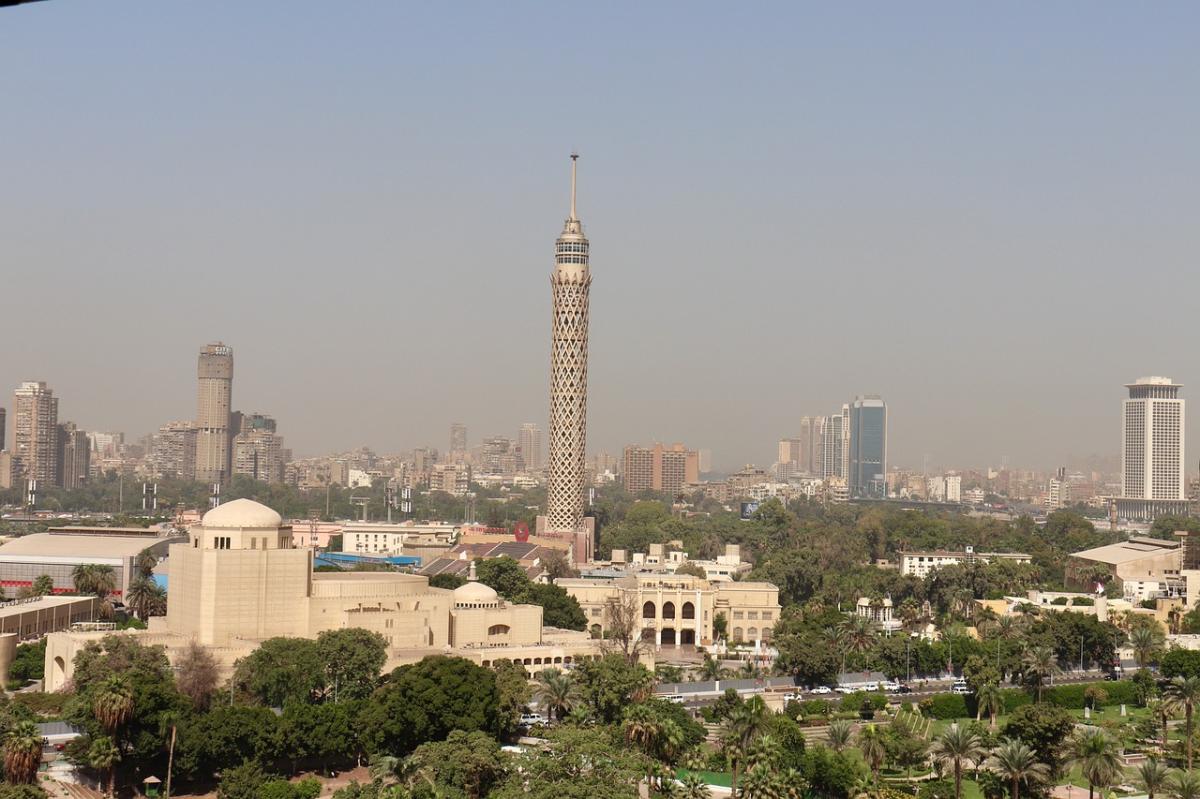
Proudly standing on Gezira Island in the heart of Cairo, the Cairo Tower, or Burj Al-Qahira, is a prominent feature of the citys skyline and a testament to modern Egyptian architecture. Reaching a height of 187 meters (614 feet), it is one of the tallest structures in Egypt and North Africa. For decades...
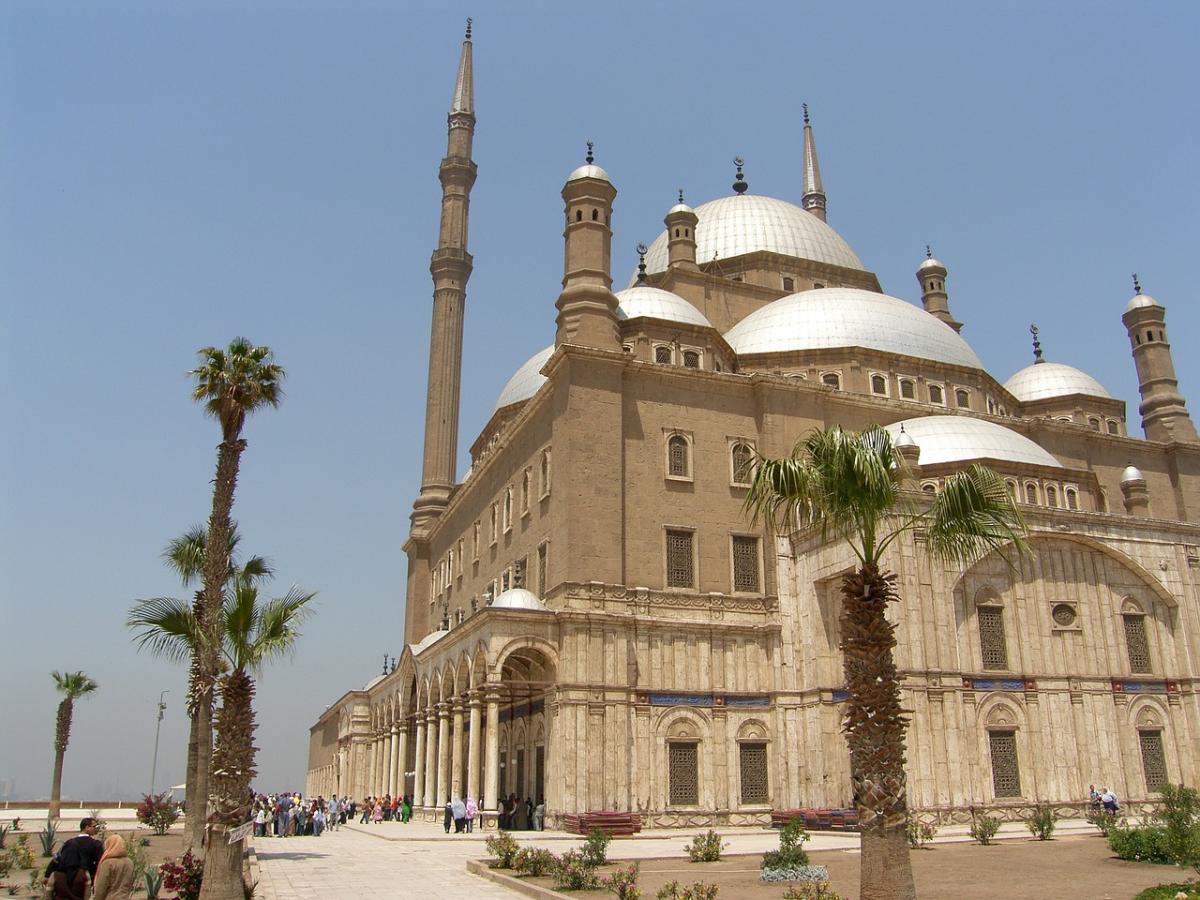
Cairo, Egypt - Perched majestically atop the Citadel of Saladin, the historic seat of Egyptian power for nearly 700 years, the Mosque of Muhammad Ali is an iconic landmark and an enduring symbol of Cairos skyline. Popularly known as the Alabaster Mosque for the extensive use of this gleaming stone on...
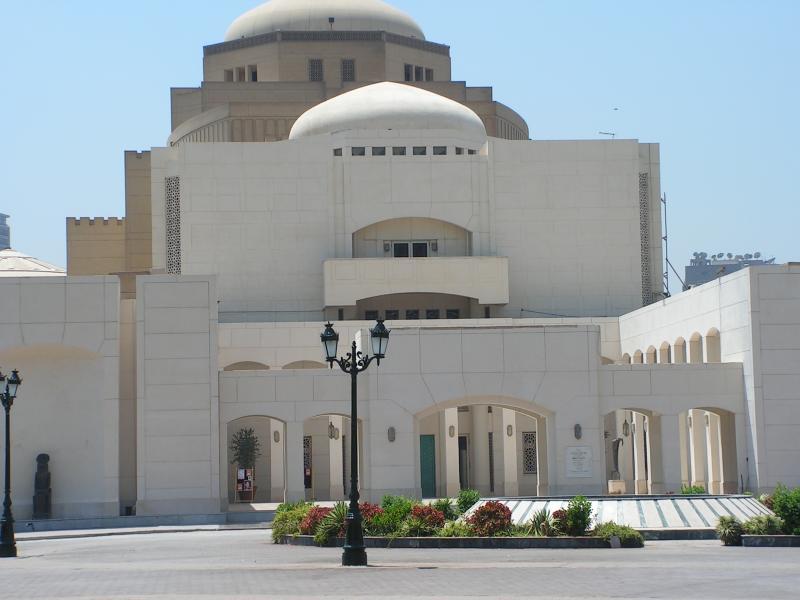
The Cairo Opera House, a magnificent architectural gem nestled on Gezira Island in the Nile, stands as the epicenter of performing arts in Egypt. Officially known as the National Cultural Centre, it is a vibrant hub that showcases a rich tapestry of local and international artistic expressions, from...