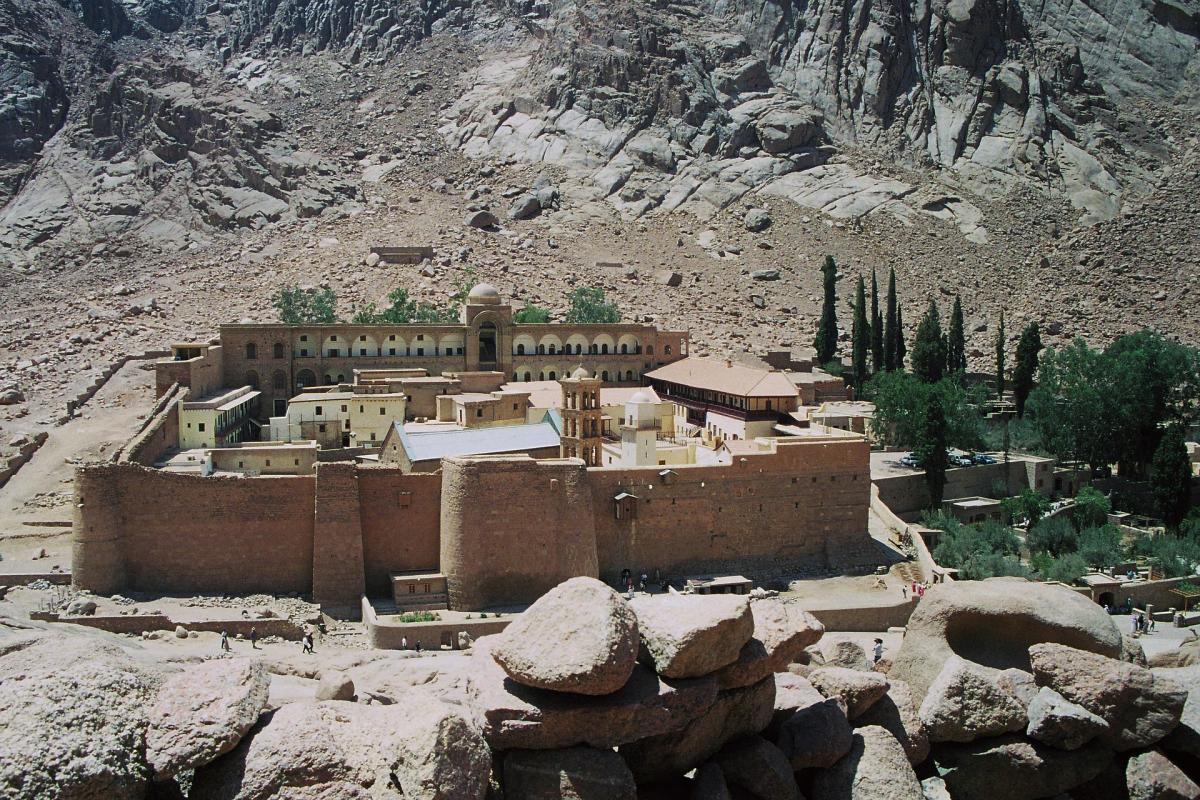
Saint Catherines Monastery: A Beacon of Faith and History in the Sinai
Nestled at the foot of Mount Sinai in the rugged heart of the Sinai Peninsula, Egypt, Saint Catherine's Monastery stands as a testament to centuries of faith, history, and art. Officially known as the Sacred Autonomous Royal Monastery of Saint Catherine of the Holy and God-Trodden Mount Sinai, it is the world's oldest continuously inhabited Christian monastery and a site of immense spiritual significance to Christianity, Islam, and Judaism. As a UNESCO World Heritage site, its formidable walls protect a treasure trove of religious and cultural artifacts that span centuries.
A Rich and Enduring History
The origins of monastic life at Mount Sinai date back to the 4th century AD, when hermits were drawn to this desolate and sacred landscape. The monastery itself was built by order of the Byzantine Emperor Justinian I between 548 and 565 AD to protect the monks and enclose the sacred site of the Burning Bush. To ensure its protection and serve the monastic community, Justinian also reportedly dispatched some 200 soldiers and their families from Wallachia (modern Romania), the Balkans, and Anatolia. These settlers, originally Christian, formed the nucleus of what would become the Jebeliya tribe, whose name means "the Mountain People". Over the centuries, they converted to Islam and intermarried with local Arab tribes, yet they retained their distinct identity and a profound, hereditary connection to the monastery.
The monastery was originally dedicated to the Virgin Mary or the Transfiguration, but its name was later changed to honor Saint Catherine of Alexandria, a Christian martyr from the early 4th century, after her relics were brought to the site.
The Jebeliya Alliance: A 1,500-Year Symbiotic Relationship
A unique and enduring alliance has existed between the monastery and the local Jebeliya Bedouin tribe for a millennium and a half. This symbiotic relationship, born from Emperor Justinian's decree, has woven a complex tapestry of shared history and mutual dependence that is central to the monastery's survival.
A Hereditary Covenant of Roles and Responsibilities
This historical foundation gave rise to a deeply ingrained system of hereditary roles, duties, and privileges that has defined the relationship for centuries.
Duties of the Jebeliya:
- Protection: Their primary function is to serve as the hereditary guardians of the monastery. This commitment was vividly demonstrated during the political instability of the Arab Spring, when Jebeliya tribesmen took up arms to guard the monastery's perimeter after police forces withdrew, stating, "The Monastery is our history".
- Labor and Expertise: The Jebeliya have traditionally been employed by the monastery for maintenance and daily tasks. They are renowned for their horticultural skills, learned from the monks, and cultivate their own mountain orchards (bustan), a practice rare among nomadic peoples. They also supply the monastery with produce.
- Guides: Many Jebeliya work as guides for the pilgrims and tourists who visit the monastery and climb the sacred Mount Sinai.
Privileges and Support from the Monastery:
- Sustenance and Economic Support: The monastery has historically provided the Jebeliya with economic support and sustenance. A notable tradition that continues today is the distribution of bread, which is now often made side-by-side by monks and Bedouins.
- Mediation and Welfare: The Archbishop of Sinai has traditionally acted as a mediator in tribal disputes. The Bedouins also turn to the monastery for medical assistance, with the monastery even bringing doctors from Greece annually to treat the tribe.
Architectural Marvels: A Fortress of Faith
The monastery's architecture is a harmonious blend of defensive necessity and spiritual purpose, forming a layered narrative of its long history.
Overall Layout and Fortress Walls
The complex resembles a small, fortified town, a design born from its isolated and historically vulnerable location. Its ground plan is an irregular trapezoid, enclosed by monumental fortress walls constructed by Justinian's architect, Stephanos of Aila.
- The Walls: Built from massive blocks of local red granite, the walls vary in height from 8 to 35 meters and are 2 to 3 meters thick. These imposing fortifications have protected the monastery for over fourteen centuries and have never been breached.
- Access: Originally, the primary entrance was a door set high up in the walls, emphasizing its defensive nature; goods and people were hoisted up by a pulley system.
The Main Basilica (Katholikon)
The heart of the monastery is the Church of the Transfiguration, a magnificent three-aisled basilica built concurrently with the walls in the 6th century.
- Structure: Constructed of granite, it features a central nave, a narthex, and an apse. Twelve massive granite columns, representing the twelve months of the year, separate the nave from the side aisles.
- Historic Features: Much of the structure is original, including its 1,400-year-old carved Lebanese cedar doors. The apse is dominated by the world-renowned 6th-century mosaic of the Transfiguration.
The Chapel of the Burning Bush
Tucked directly behind the main altar of the basilica lies the monastery's holiest site: the Chapel of the Burning Bush.
- Sacred Ground: Tradition holds that it marks the exact spot where God spoke to Moses from a bush that burned but was not consumed. An earlier chapel was first ordered on this site by Empress Helena, mother of Constantine the Great, in the 4th century.
- The Bush: The bush itself, a rare species of bramble (Rubus sanctus), was carefully transplanted just outside the chapel wall to allow for construction and continues to grow there today.
- Reverence: As a sign of respect for the "holy ground," all who enter must remove their shoes, just as Moses was commanded to do. The chapel is distinguished by the absence of an iconostasis, and a silver star beneath the altar marks the spot where the bush's roots are believed to be.
The Fatimid-Era Mosque: A Symbol of Coexistence
A powerful symbol of the long history of peaceful coexistence at Sinai, a small mosque stands within the monastery walls, its minaret rising gracefully alongside the basilica's bell tower.
- Construction: It was built in 1106 AD during the reign of the Fatimid Caliph al-Amir bi-Ahkam Allah, likely by converting an existing guesthouse. Its construction was a gesture of goodwill and a strategic measure to ensure the monastery's protection.
- Purpose and Features: The mosque served local Bedouin Muslims who worked at and protected the monastery, such as the Jebeliya, as well as Muslim pilgrims. It contains a beautifully crafted wooden minbar (pulpit), one of only three complete examples surviving from the Fatimid period, and three mihrabs (prayer niches indicating the direction of Mecca).
The Life and Legacy of Saint Catherine of Alexandria
According to Christian tradition, Catherine was a virgin and martyr of the early 4th century, born in Alexandria around 287 AD to a noble family. Renowned for her intellect, she was highly educated in philosophy and rhetoric. After converting to Christianity, she declared herself a "bride of Christ". During persecutions under Emperor Maxentius, she confronted him, leading to a debate where she converted fifty of his best pagan philosophers to Christianity; they were all subsequently martyred.
Enraged, Maxentius had Catherine imprisoned and tortured, but angels tended her wounds. She was condemned to death on a spiked breaking wheel, but the device miraculously shattered when she touched it, giving rise to the term "Catherine wheel". She was ultimately beheaded. Tradition holds that angels then transported her body to the highest peak in the Sinai, now Mount Saint Catherine. Centuries later, around 800 AD, monks were led by a dream to discover her incorrupt body. Her relics were brought to the monastery, turning it into a major pilgrimage destination and gradually giving it its current name.
The Ashtiname of Muhammad: A Charter of Protection
A key element in the monastery's remarkable survival has been its relationship with Muslim rulers, largely defined by the Ashtiname of Muhammad, a purported charter of protection from the Prophet Muhammad himself. The name "Ashtiname" is Persian for "Letter of Peace". According to tradition, a delegation from the monastery received the charter, sealed with the Prophet's handprint, in 628 AD. The document grants Christians freedom of religion, protection of life and property, and exemption from military service and certain taxes.
While its authenticity is debated by scholars, the Ashtiname has been honored by successive Muslim rulers, including the Ottomans and Napoleon Bonaparte, serving as a "protective talisman" that ensured the monastery's survival and reinforced the principle of peaceful coexistence with its Bedouin neighbors.
Priceless Treasures of Art and Knowledge
The monastery's isolation and protected status have preserved some of Christianity's most priceless artistic and literary treasures.
The Radiant Transfiguration Mosaic
Dominating the apse of the main basilica is a magnificent 6th-century mosaic commissioned by Emperor Justinian I. It is a masterpiece of early Byzantine art that survived the Iconoclastic Controversies of the 8th and 9th centuries.
- Iconography: The mosaic depicts Christ's transfiguration, with a luminous Christ at the center flanked by the prophets Moses and Elijah. Below, the apostles Peter, James, and John are shown overwhelmed by the divine vision.
- Artistic Style: Set against a quintessential Byzantine gold background, the scene uses gold, silver, and glass tesserae to create a luminous surface that serves as a window into the divine.
- Theological Significance: The mosaic is a powerful theological statement affirming the dual nature of Christ as both human and divine, providing a glimpse of the Resurrection.
A Library of Incalculable Value
The library of Saint Catherine's is the world's oldest continuously operating library, holding a collection second only to the Vatican Library in its importance. Its collection includes over 3,300 manuscripts in Greek, Arabic, Syriac, Georgian, Slavonic, and other languages.
- The Saga of the Codex Sinaiticus: The library's most famous treasure was the Codex Sinaiticus, the oldest complete manuscript of the New Testament, dating to the mid-4th century. Its controversial removal by scholar Constantin von Tischendorf in 1859 on behalf of the Russian Tsar remains a complex chapter in its history. The manuscript was later sold by the Soviet government to the British Museum in 1933 and now resides primarily in the British Library.
- The Syriac Sinaiticus: This is a late 4th or early 5th-century palimpsest-a manuscript where the original text was scraped off and overwritten. Its under-text contains a Syriac translation of the four Gospels that is one of only two surviving manuscripts of this early version, making it critically important for biblical studies.
- Arabic and Georgian Collections: The library holds around 600 Arabic manuscripts and 86 Georgian manuscripts, reflecting the monastery's cosmopolitan history. The Georgian collection includes a 9th-century copy of the Mok'c'evay K'art'lisay, a collection of Georgian Chronicles.
A Unique Treasury of Byzantine Icons
The monastery houses an unparalleled collection of over 2,000 early Byzantine icons. This collection is a unique survival because the Sinai Peninsula was under Muslim rule during the Byzantine Iconoclasm (8th-9th centuries), insulating it from the widespread destruction of religious images that occurred elsewhere in the empire. Many of the earliest icons (6th-7th century) use the encaustic technique, where pigments are mixed with hot wax, giving them a unique depth and luminosity.
- Christ Pantocrator: The oldest known icon of its type, this 6th-century masterpiece is famed for its dual portrayal of Christ's divine and human natures.
- Theotokos and Child with Saints Theodore and George: A 6th-century encaustic icon, it depicts the Virgin Mary enthroned with the Christ Child, flanked by warrior saints. It is celebrated for its blend of classical naturalism in the faces of Mary and the angels with a more formal, stylized depiction of the saints.
- Icon of Saint Peter: An early 7th-century encaustic portrait showing the apostle holding the keys to the kingdom, with medallions of Christ, the Virgin, and John the Theologian above him.
- The Ladder of Divine Ascent: This late 12th-century icon is a powerful visual allegory of the ascetic struggle, depicting monks ascending a ladder to Christ while being pulled down by demons.
Modern Significance and Contemporary Challenges
Today, Saint Catherine's continues its ancient traditions as a functioning Greek Orthodox monastery, administered by the autonomous Church of Sinai. In 2002, the Saint Catherine Area was inscribed on the UNESCO World Heritage List for its outstanding universal value. However, the monastery and its allied Jebeliya community face profound modern pressures.
UNESCO World Heritage Status
The site was recognized based on several criteria :
- Criterion (i): It represents a masterpiece of human creative genius, integrating Byzantine architecture and priceless art into a dramatic landscape.
- Criterion (iii): It is an exceptional testimony to a Christian monastic tradition and its symbiotic relationship with the surrounding community.
- Criterion (iv): It is the oldest Christian monastery to have survived intact and maintained its original function without interruption since the 6th century.
- Criterion (vi): The area, centered on Mount Sinai, is a sacred site of universal significance to three world religions: Christianity, Islam, and Judaism.
Contemporary Threats: Development and Dispossession
The ancient pact between the monastery and the Jebeliya faces its most significant threat from modern development and political shifts.
- The "Great Transfiguration Project": Launched by the Egyptian state in 2021, this massive tourism development plan includes the construction of luxury hotels, villas, and shopping centers in the sacred landscape immediately surrounding the monastery.
- Impact on the Jebeliya: The project has had devastating consequences for the local tribe. A centuries-old Jebeliya cemetery was paved over for a parking lot, homes have been demolished, and ancient trees have been uprooted. There is a growing fear that the influx of outside workers will displace the Jebeliya, making them a minority in their ancestral lands.
- Land Rights and Marginalization: The rise of mass tourism since the 1980s has often marginalized the Bedouins in favor of workers from the Nile Valley. Compounding this, a recent Egyptian court ruling declared the monastery's lands as state property, undermining its historic ownership and severing the legal basis of its land-based relationship with the Jebeliya who have cultivated it for generations.Summary
Saint Catherine's Monastery is a unique and invaluable site of global importance. As the oldest continuously inhabited Christian monastery, it has preserved an unbroken history of faith for over seventeen centuries at a location sacred to Christianity, Islam, and Judaism. Its formidable Justinian-era architecture, including massive granite walls and the ancient Basilica of the Transfiguration, has protected it for millennia. A cornerstone of its history is the 1,500-year symbiotic alliance with the local Jebeliya Bedouin tribe, descendants of soldiers sent by Justinian to be the monastery's hereditary guardians. This pact of mutual support has been crucial to the monastery's survival and is a powerful symbol of interfaith coexistence, further exemplified by the Fatimid-era mosque housed within its walls. The monastery's priceless collections survived the Byzantine Iconoclasm, leaving it with the world's most important collection of early Byzantine icons-including the Christ Pantocrator-and the magnificent 6th-century Transfiguration Mosaic. Its library, the oldest in continuous operation, famously housed the Codex Sinaiticus and still contains other invaluable texts like the Syriac Sinaiticus. The monastery's namesake, Saint Catherine of Alexandria, is honored through her relics, which made the site a major pilgrimage destination. A key factor in its remarkable survival has been the Ashtiname of Muhammad, a charter of protection that was historically honored by successive Muslim rulers. Recognized as a UNESCO World Heritage Site, Saint Catherine's and its ancient alliance with the Jebeliya now face existential threats from a massive state-led development project that endangers the region's sacred landscape and cultural heritage.
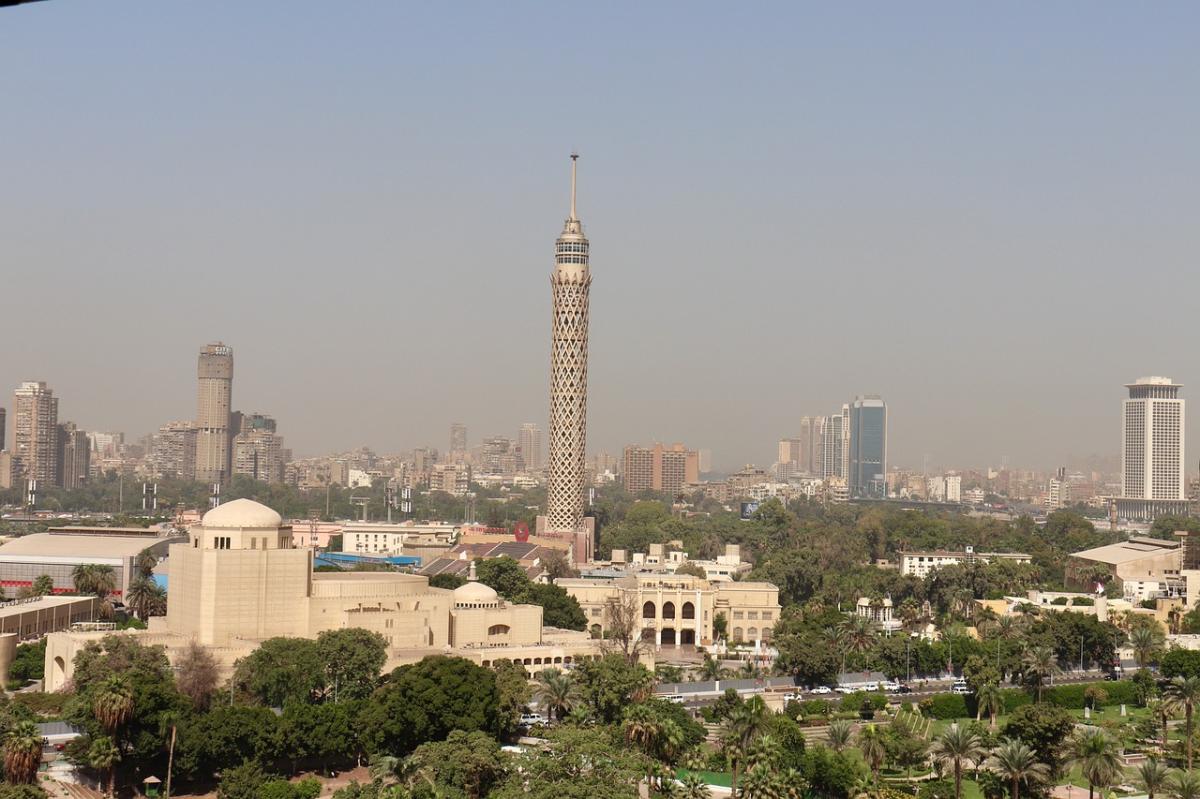
Proudly standing on Gezira Island in the heart of Cairo, the Cairo Tower, or Burj Al-Qahira, is a prominent feature of the citys skyline and a testament to modern Egyptian architecture. Reaching a height of 187 meters (614 feet), it is one of the tallest structures in Egypt and North Africa. For decades...
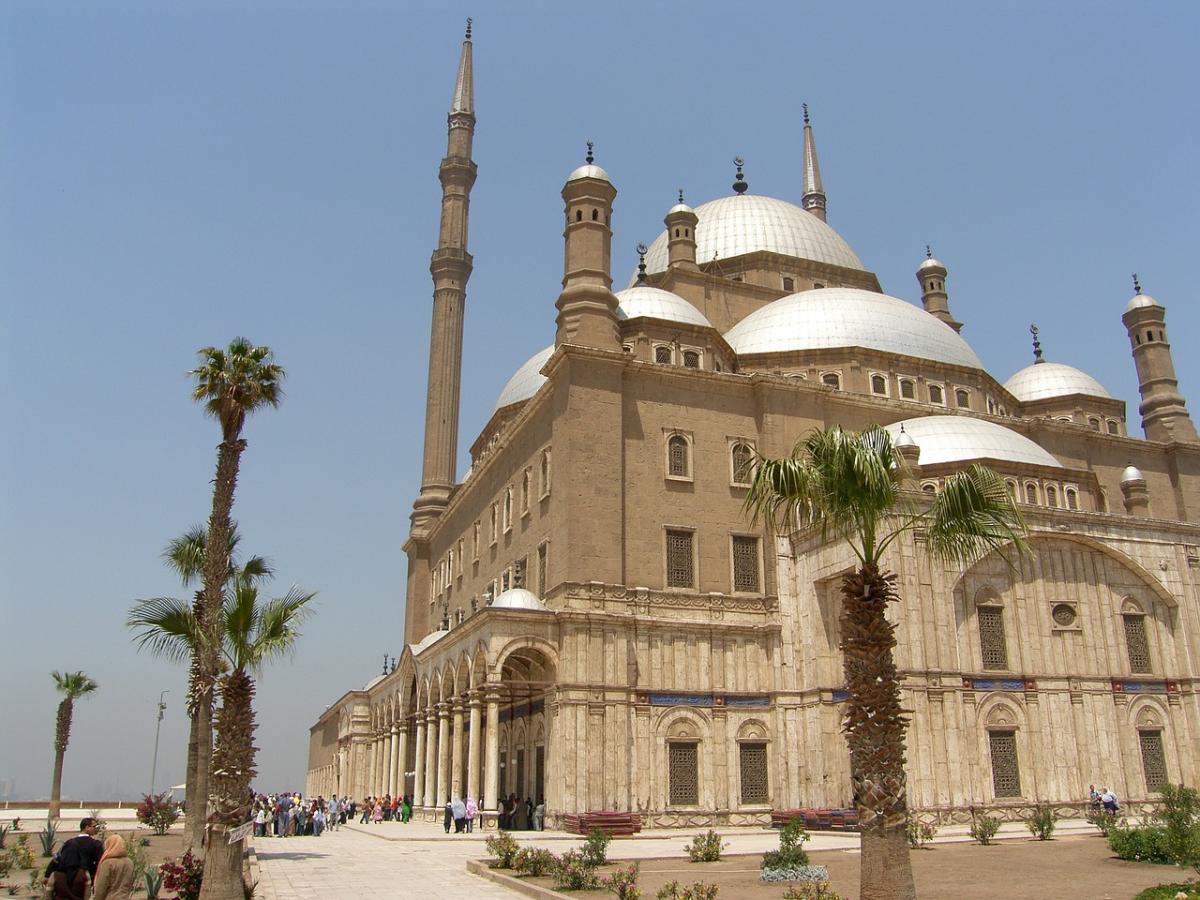
Cairo, Egypt - Perched majestically atop the Citadel of Saladin, the historic seat of Egyptian power for nearly 700 years, the Mosque of Muhammad Ali is an iconic landmark and an enduring symbol of Cairos skyline. Popularly known as the Alabaster Mosque for the extensive use of this gleaming stone on...
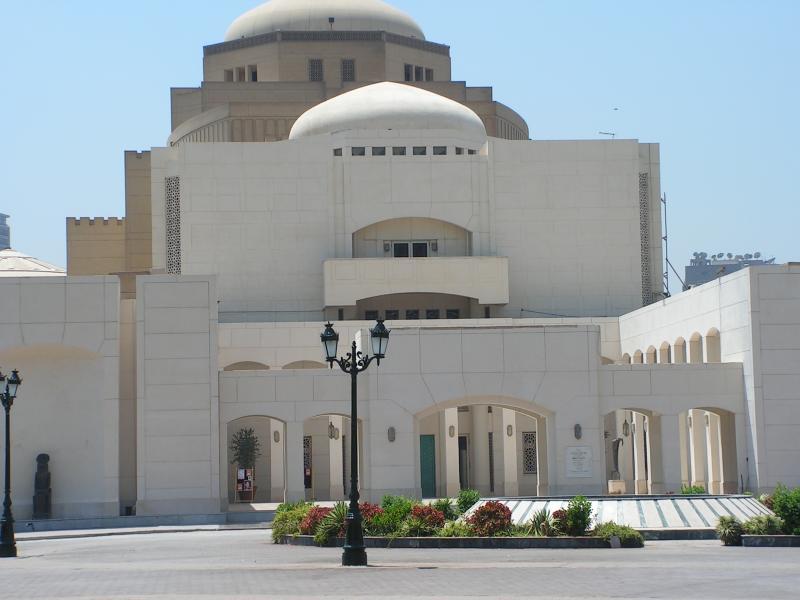
The Cairo Opera House, a magnificent architectural gem nestled on Gezira Island in the Nile, stands as the epicenter of performing arts in Egypt. Officially known as the National Cultural Centre, it is a vibrant hub that showcases a rich tapestry of local and international artistic expressions, from...