The Solar Boat Museum: A Glimpse into the Pharaonic Afterlife
This report explores the history, significance, and evolution of the museum dedicated to one of ancient Egypt's most astounding discoveries: the Khufu ship. We will examine the original Solar Boat Museum on the Giza Plateau, delve into the scholarly debates surrounding the vessel's purpose, explore the profound role of these solar barques in the pharaonic conception of the afterlife, detail the sophisticated construction methods used to build them, and chronicle the vessel's celebrated move to its new, state-of-the-art home at the Grand Egyptian Museum (GEM). The report also provides a comprehensive look at the ongoing restoration of a second solar boat, which is being reassembled in public view at the new museum.
The Original Solar Boat Museum: A Controversial Landmark
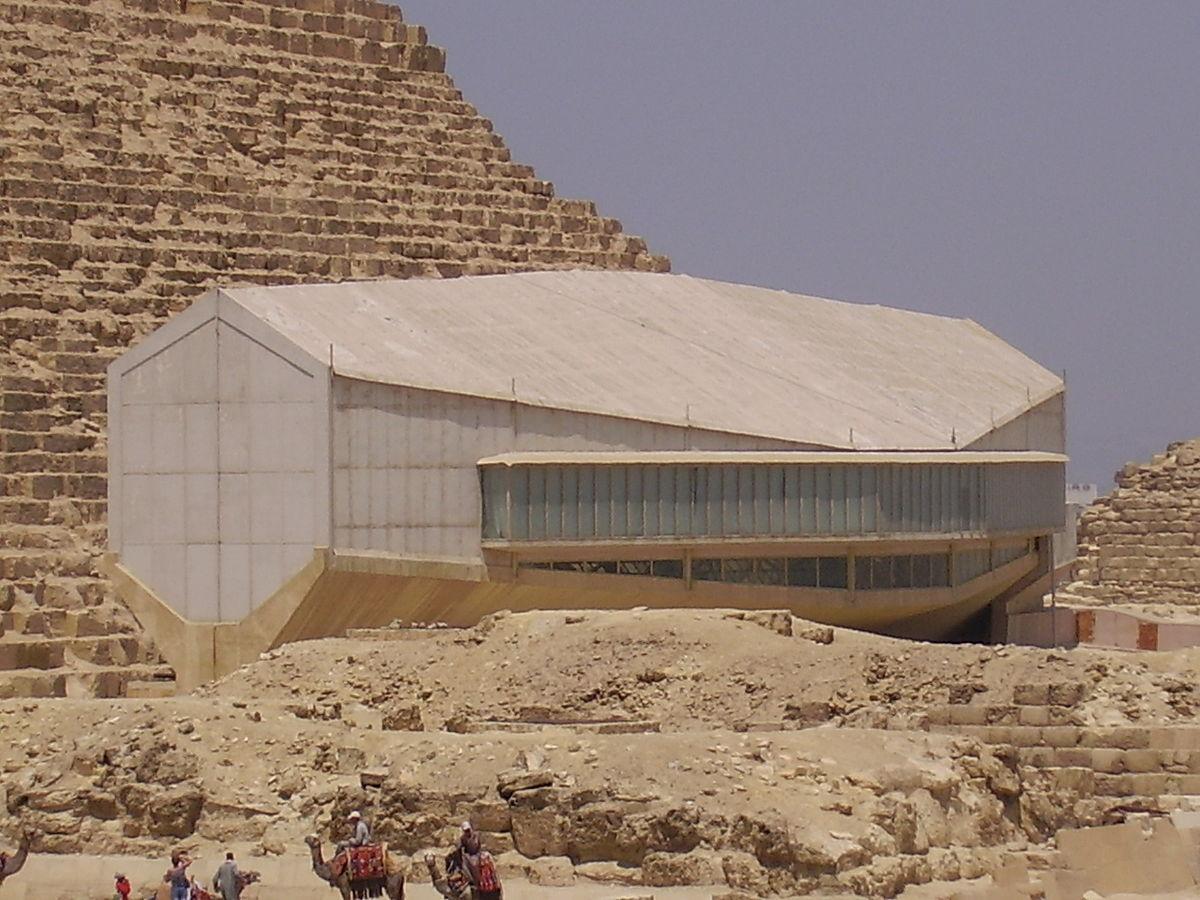
For nearly four decades, a distinctive building stood on the south side of the Great Pyramid of Khufu, housing the magnificent solar boat. Its history is one of archaeological triumph, architectural compromise, and eventual concession to modern museological standards.
Design and Construction
Following the boat's discovery in 1954, a lengthy restoration was required. Construction on a museum to house the reassembled vessel began in 1961, and the building officially opened in 1982. The architectural concept was fundamentally utilitarian, prioritizing the preservation and display of the massive boat over any aesthetic statement that might compete with the pyramids. The museum was erected directly over the pit where the boat was found, a decision that integrated the archaeological context into the visitor experience. The structure itself was a modest, rectangular building of reinforced concrete and steel, raised on pilotis to avoid direct contact with any underlying archaeological features.
The Visitor Experience
The interior was designed to offer a comprehensive viewing experience of its singular marvel.
- A Focused Exhibit: The centerpiece was the fully reconstructed 143-foot-long (43.6-meter) Khufu ship, elevated on a support system within a long, single hall. The environment was climate- and humidity-controlled to protect the fragile wood, and visitors often wore cloth shoe coverings to minimize dust.
- Multiple Perspectives: Viewing platforms on multiple levels allowed visitors to see the boat from above, alongside, and from the ground floor to view its underside.
- Archaeological Context: The museum incorporated the original limestone-lined pit where the vessel was discovered, offering a unique glimpse into its millennia-long slumber.
- Supporting Displays: The experience was enriched by photographs documenting the discovery and reconstruction, a modern model of the barque, a selection of the original restoration tools, and a small gift shop.
An "Eyesore" on a Sacred Landscape
Despite its crucial preservation role, the museum faced long-standing criticism. Many considered its modern, functionalist design an "aesthetic disaster" and an "eyesore" that marred the sacred landscape of the Giza Plateau. It was often described as an out-of-place "warehouse" or "airport terminal" that created a "visual disruption" on the panoramic views of the Great Pyramid. Furthermore, concerns grew that the facility lacked the advanced technology for long-term preservation and was not equipped with adequate accessibility for visitors with disabilities. These factors ultimately sealed its fate.
Discovery of a 4,600-Year-Old Marvel
The story of the Khufu ship began not by chance, but through the meticulous work and persistent intuition of Egyptian archaeologist Kamal el-Mallakh, who also held a degree in architecture. In 1954, while overseeing the removal of debris along the southern side of the Great Pyramid, el-Mallakh's experience at the site led him to notice an anomaly. The southern enclosure wall was built closer to the pyramid than the other walls, a deviation from the precise symmetry prized by ancient Egyptian builders. This sparked a hunch that something important was deliberately concealed.
A Hunch Becomes Reality
As his team cleared away sand and rubble, they uncovered a row of 41 massive limestone blocks. Beneath this, they found limestone powder from the royal quarries of Tura and a layer of pink cement, materials that indicated a deliberate, high-status sealing. Despite initial skepticism, el-Mallakh persistently lobbied for permission to investigate further.
On May 26, 1954, with grudging consent, he began drilling a hole into one of the thick blocks. As the drill broke through, a faint, sweet aroma-the distinct scent of cedar wood, preserved for millennia-wafted out. Lying on his stomach and using a mirror to reflect sunlight into the pit, el-Mallakh's eyes adjusted to the gloom. He first saw the perfectly preserved tip of an oar, then planks, and ropes. Overcome with emotion, he shouted to his ecstatic crew, "It is the boat! It is the boat!".
A National and Global Sensation
Inside the pit, perfectly preserved for nearly 4,600 years, lay a full-sized ship from around 2500 BC, meticulously disassembled into 1,224 pieces and arranged in 13 layers. The discovery sparked a "global storm of interest" and became a source of immense national pride for Egypt. The find was hailed as one of the most significant of the 20th century, rivaling the discovery of Tutankhamun's tomb. The monumental task of reassembling this giant puzzle was undertaken by chief restorer Ahmed Youssef Moustafa, a meticulous process that took 14 years to complete.
Construction: The "Shell-First" Method
The Khufu boat is a masterpiece of ancient naval engineering, built without a single metal nail. Egyptian shipwrights employed a "shell-first" construction technique, which is the reverse of most modern shipbuilding methods. They first built the outer "shell" of the hull by fitting planks together and only then inserted the internal framework.
Materials of Choice: The primary material was high-quality Lebanon cedar, a prized import valued for its durability and the long planks it yielded. For smaller, crucial components, other woods were used. The tenons for the joints were crafted from hard, dense Christ's thorn wood (Ziziphus spina-christi), while the ropes for lashing were made from strong and flexible Halfa grass (Desmostachya bipinnata).
Ingenious Joinery: The genius of the construction lies in its joinery.
- Mortise-and-Tenon Joints: Planks were connected using unpegged mortise-and-tenon joints. A mortise (hole) was carved into the edge of one plank, and a corresponding tenon (projection) made of Christ's thorn wood was fitted into it, snugly aligning the planks.
- Lashing: Instead of using pegs or nails, builders drilled thousands of V-shaped channels on the interior faces of the planks. They then threaded Halfa grass ropes through these holes, effectively "sewing" the boat together from the inside. This intricate system of internal stitching provided both strength and flexibility.
- Joggling: The edges of the planks were also carved to interlock like puzzle pieces, a technique known as joggling, which further enhanced the hull's stability.
The resulting vessel had a flat bottom and no keel, a design perfectly suited for navigating the Nile River.
The Purpose of the Khufu Ship: Celestial Vessel or Earthly Craft?
The primary function of the Khufu ship has been a subject of spirited scholarly debate, with theories divided between a purely ritualistic purpose and more practical uses.
The Mythological Solar Barque Theory
The most widely accepted theory posits that the Khufu ship is a solar barque, a ritual vessel intended to transport the resurrected king across the heavens with the sun god Ra. This interpretation is heavily supported by ancient Egyptian religious texts, such as the Pyramid Texts, and iconography. These sources depict the sun god traversing the sky by day in a boat called the Mandjet and the underworld by night in the Mesektet.
- A Divine Journey: As a divine figure, the pharaoh was expected to join Ra on this cyclical journey, ensuring his own rebirth and the continued order of the cosmos. Prominent Egyptologist Zahi Hawass is a staunch advocate of this view, identifying the first Khufu boat as the Mandjet for the day journey. He suggests the second, still-being-restored boat was the Mesektet for the perilous night voyage.
- Ritual Burial: According to this theory, the boat was never intended for extensive use on water but was a purely ritual object. Its meticulous disassembly and careful burial in a sealed pit next to the pyramid underscore its profound ritual importance, ready to be magically reassembled for the king's eternal voyage.
Practical Use Theories
Despite the strength of the mythological interpretation, some evidence, such as signs of wear on the timbers and ropes, has led some scholars to propose more practical functions. The boat's discoverer, Kamal el-Mallakh, was among those who initially leaned towards a practical use.
- Funerary Barge: One prominent theory suggests the boat was used as a funerary barge to transport the embalmed body of King Khufu from his palace at Memphis across the Nile to his final resting place at the Giza necropolis.
- Vessel Used During the Pharaoh's Lifetime: Another possibility is that Khufu used the boat during his reign for pilgrimages to sacred sites. After its use, it would have been decommissioned and ritually buried to serve him in the afterlife.
However, the lack of rigging for sailing and the pristine condition of much of the wood present challenges to the idea of it being a fully functional, long-term vessel.
Theological Significance: Sailing into the Afterlife
The solar barque is a central element in ancient Egyptian funerary beliefs, intricately woven into the concepts of royal resurrection, eternal life, and the maintenance of cosmic order, or Ma'at.
Royal Resurrection and Eternal Life: Ancient Egyptians believed death was a transition to another state of being. The solar barque was the vehicle for this transformation, allowing the deceased king to ascend to the heavens and be reborn each day with the rising sun, mirroring Ra's daily cycle. This association with the sun god guaranteed the king's resurrection and eternal existence. The nightly journey through the underworld was a battle against the forces of chaos, symbolized by the serpent Apep. The successful navigation of these dangers in the solar barque symbolized the triumph of life over death, ensuring the king's perpetual renewal.
The Maintenance of Cosmic Order (Ma'at): The concept of Ma'at encompassed truth, justice, balance, and cosmic order. The pharaoh's role on earth was to uphold Ma'at, and his successful journey in the solar barque was a continuation of this vital function on a cosmic scale. By joining Ra, the king actively participated in maintaining universal order, ensuring the continued rising of the sun and the stability of creation.
A Monumental Journey to the Grand Egyptian Museum
To better preserve this unique artifact and restore the integrity of the Giza Plateau, the decision was made to relocate the Khufu ship. In August 2021, the 4,600-year-old vessel embarked on a historic 48-hour journey to its new home, followed by the demolition of its former one.
The August 2021 Transfer: An Engineering Marvel
The complex operation involved transporting the 20-ton, 42-meter-long boat as a single piece, as dismantling the fragile artifact was deemed too risky.
- The Protective Cage: The boat was secured in a specially constructed protective metal cage lined with scientific foams to cushion the delicate wood and absorb shocks.
- The Specialized Vehicle: A remote-controlled "smart vehicle" imported from Belgium was used for the transport. This vehicle was equipped with advanced technology to absorb vibrations and adapt to uneven terrain, ensuring a smooth ride for the priceless cargo.
- The Journey: The vehicle moved at a slow and steady pace, taking about 10 hours to complete the 7.5 to 8-kilometer trip to the Grand Egyptian Museum. The successful transfer was hailed as a major achievement, ensuring that the "biggest and oldest organic artifact made of wood in the history of humanity" would be preserved for future generations.
A New Beginning at the GEM
Today, the first Khufu ship is a centerpiece of the new Khufu Boats Museum on the GEM campus, where it is preserved in a state-of-the-art, climate-controlled environment. Following the boat's transfer, the original museum building was fully dismantled in late 2021, erasing its presence from the Giza Plateau and restoring an uninterrupted view of the southern face of the Great Pyramid.
The Second Solar Boat: A Public Restoration
The second pit discovered by Kamal el-Mallakh in 1954 remained sealed for decades. A preliminary investigation in 1987 revealed that its contents were not as well-preserved as the first boat.
- The Egyptian-Japanese Project: A joint Egyptian-Japanese project was launched to excavate and restore the second boat. The collaboration between the Egyptian Ministry of Tourism and Antiquities and a team from Waseda University, supported by the Japan International Cooperation Agency (JICA), officially began excavation in 2011.
- Extraction and Conservation: The meticulous extraction of approximately 1,700 wooden pieces was completed in 2021. Each fragile piece was documented, stabilized, and transported to the GEM for conservation.
- A Live Exhibit: In a unique approach, the reassembly of the second solar boat is being conducted in public view at the GEM. Visitors can witness conservators and engineers painstakingly piece together the vessel, offering an unparalleled educational experience. Once finished, the two solar boats of King Khufu will be displayed together, offering new insights into the shipbuilding technology and funerary beliefs of the Old Kingdom.
Summary
The original Solar Boat Museum, which opened on the Giza Plateau in 1982, was a utilitarian structure built to house the 4,600-year-old Khufu ship. The vessel was discovered on May 26, 1954, by archaeologist Kamal el-Mallakh in a sealed pit beside the Great Pyramid. For decades, the museum was criticized as an "eyesore" that disrupted the ancient landscape and lacked modern conservation technology.
The ship's purpose is debated, with the leading theory identifying it as a ritual "solar barque" for Pharaoh Khufu's use in the afterlife. This vessel would allow him to join the sun god Ra on his daily journey across the sky in the Mandjet (day boat) and through the underworld in the Mesektet (night boat), ensuring his rebirth and upholding cosmic order (Ma'at). Alternative theories suggest it had practical uses, such as a funerary barge or a vessel used by the king during his lifetime.
The ship is a marvel of ancient engineering, constructed from Lebanon cedar using a "shell-first" method with intricate rope lashings and no metal nails. In August 2021, to ensure its long-term preservation, the intact 20-ton ship was moved to the Grand Egyptian Museum (GEM) in a complex 48-hour operation. The original museum was then demolished, restoring the view of the pyramid.
At the GEM, the ship is now housed in a dedicated, state-of-the-art building. Furthermore, a second solar boat is the subject of a major Egyptian-Japanese restoration project. Its approximately 1,700 wooden pieces are being publicly reassembled at the GEM, allowing visitors to witness the conservation process live.
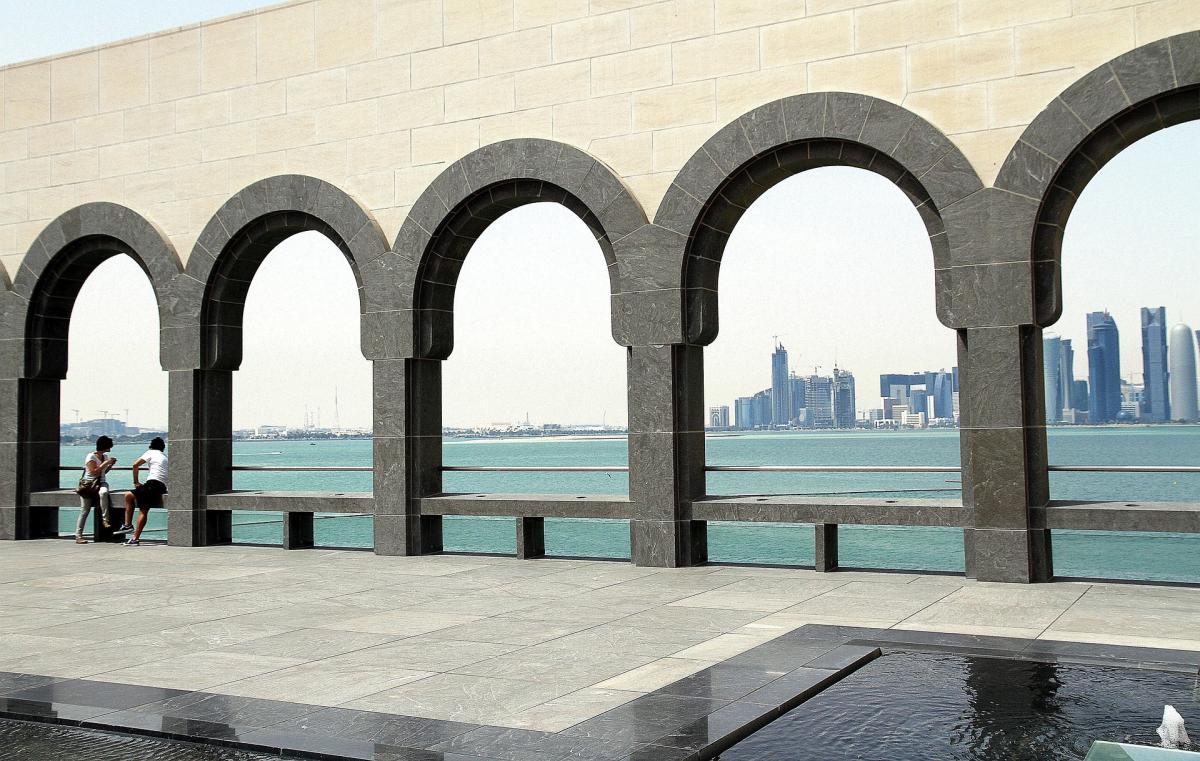
Nestled in the heart of historic Cairo, the Museum of Islamic Art (MIA) stands as a testament to the rich and diverse artistic heritage of the Islamic world. Considered the largest museum of its kind globally, it houses an unparalleled collection of over 100,000 artifacts that span more than 1,200 years...
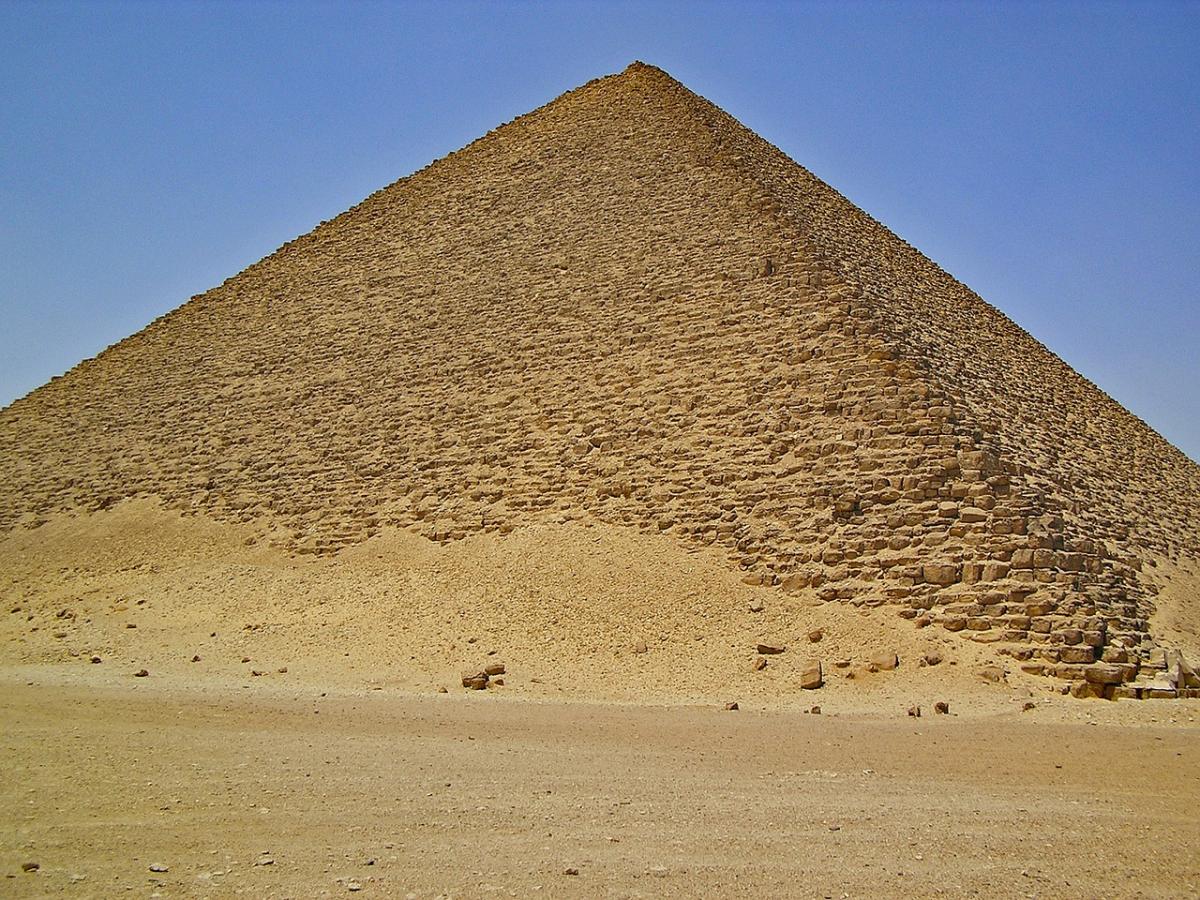
Nestled in the desert on the west bank of the Nile River, approximately 40 kilometers south of Cairo, lies the ancient royal necropolis of Dahshur. This significant archaeological site, part of the larger Memphis necropolis and a UNESCO World Heritage Site, is a testament to the architectural ingenuity...
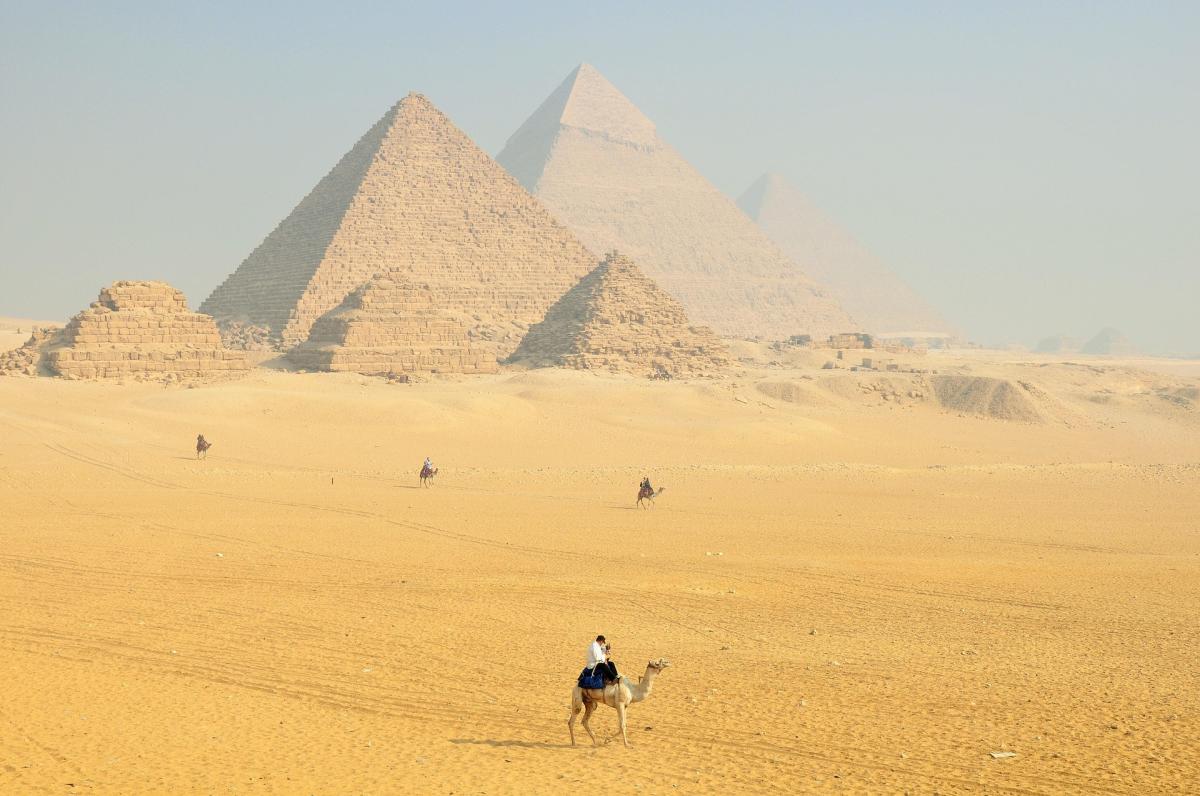
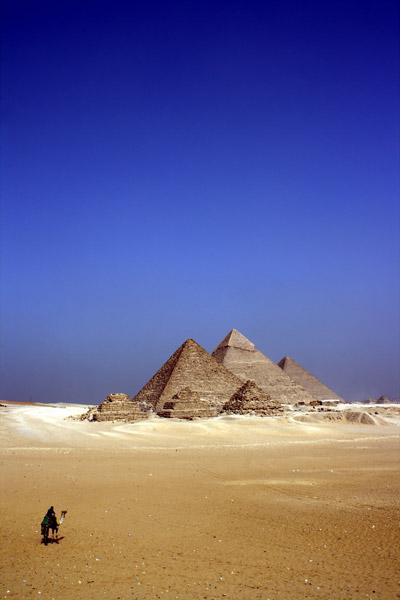
The Giza pyramid complex, a testament to human ingenuity and ambition, stands on the Giza Plateau at the edge of the Western Desert, approximately 13 km (8.1 mi) southwest of Cairos city center. These monumental structures, the last remaining of the Seven Wonders of the Ancient World, have captivated...